Copyright © 2026 Yorke Antique Textiles
.avif)

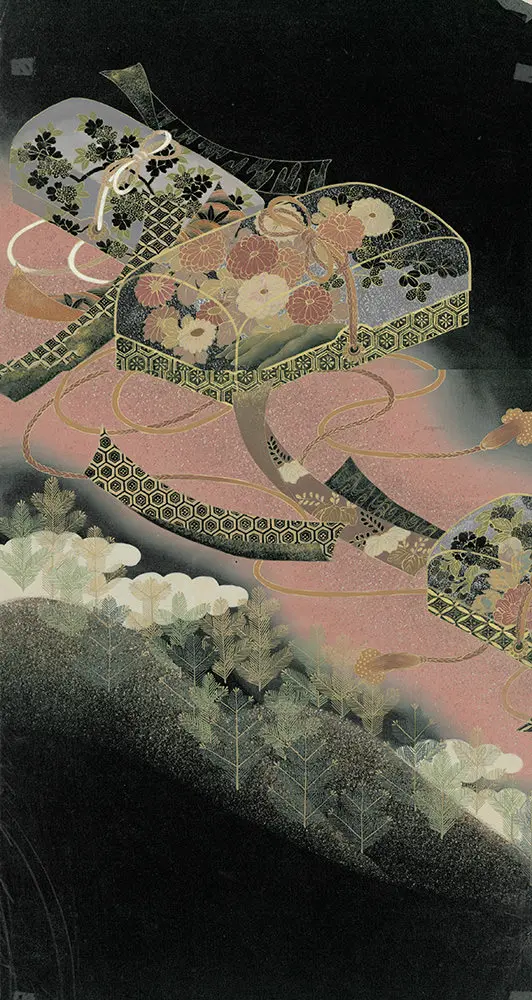
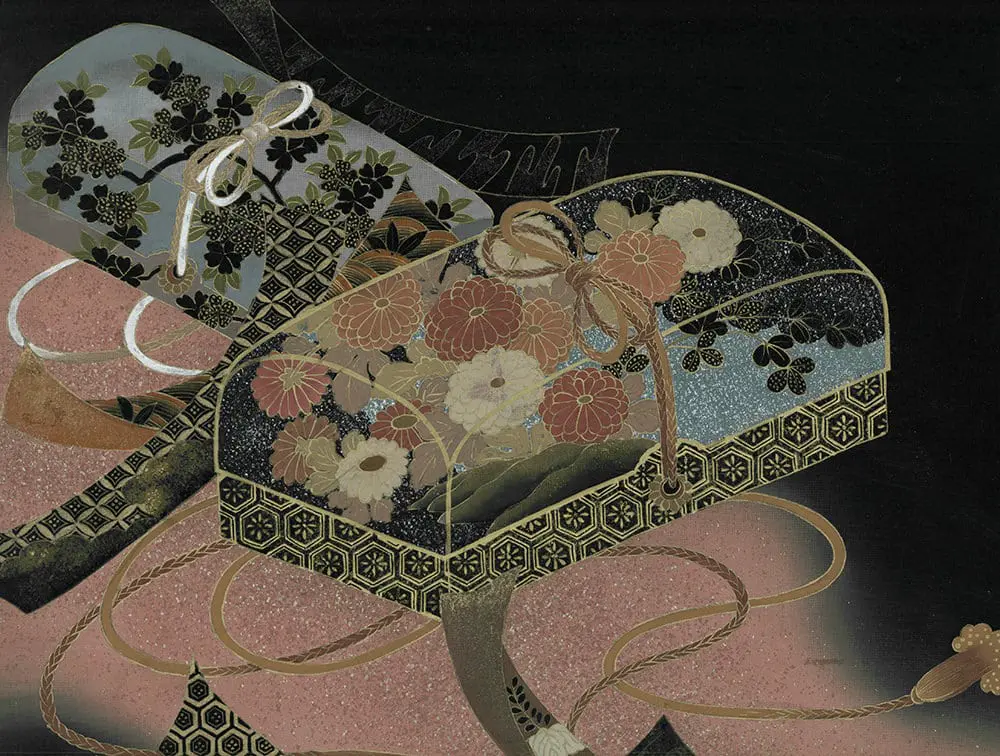
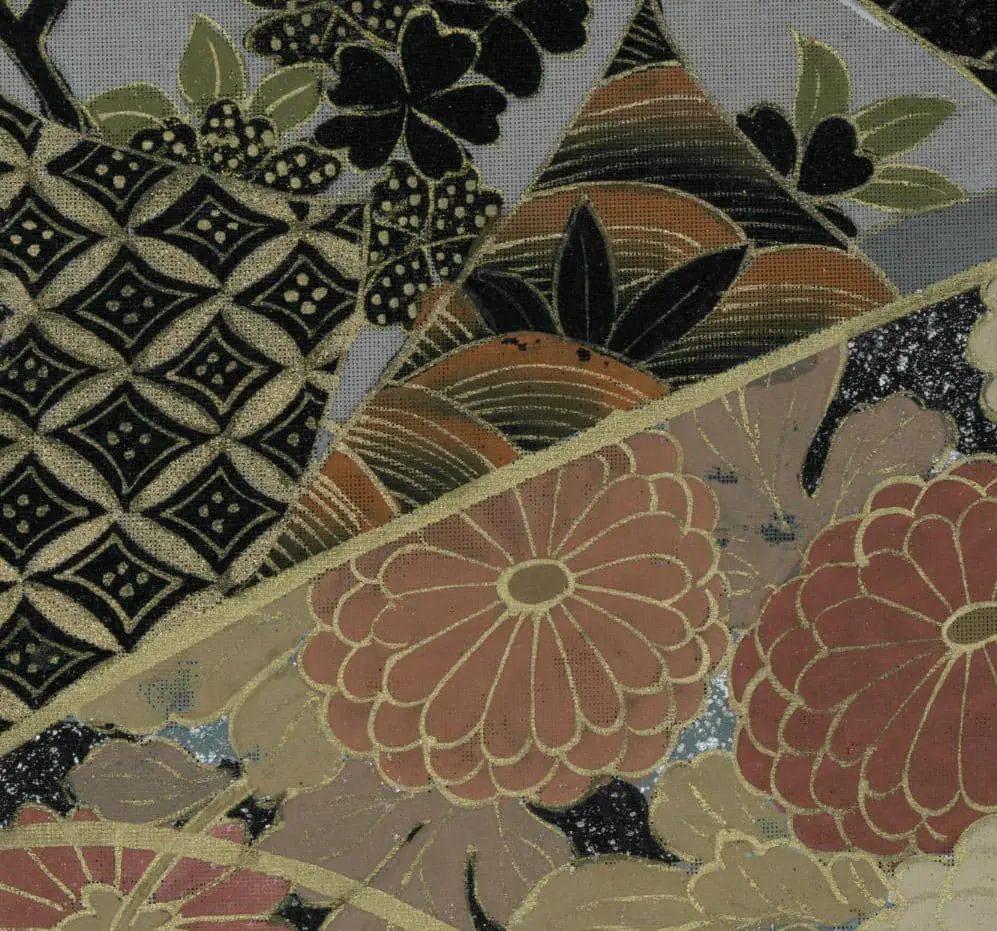
This exquisite hand-painted artwork is an original yūzen painting on a semi-transparent silk screen, created during the Mid to Late Showa period (1950–1980). Measuring 16 inches by 30 inches (41 cm x 76 cm), this piece likely served as a high-fidelity model for a woven or dyed obi. The artwork is in very good condition, showcasing the meticulous detail and fluid color transitions characteristic of traditional Kyoto dyeing techniques on a delicate silk canvas.
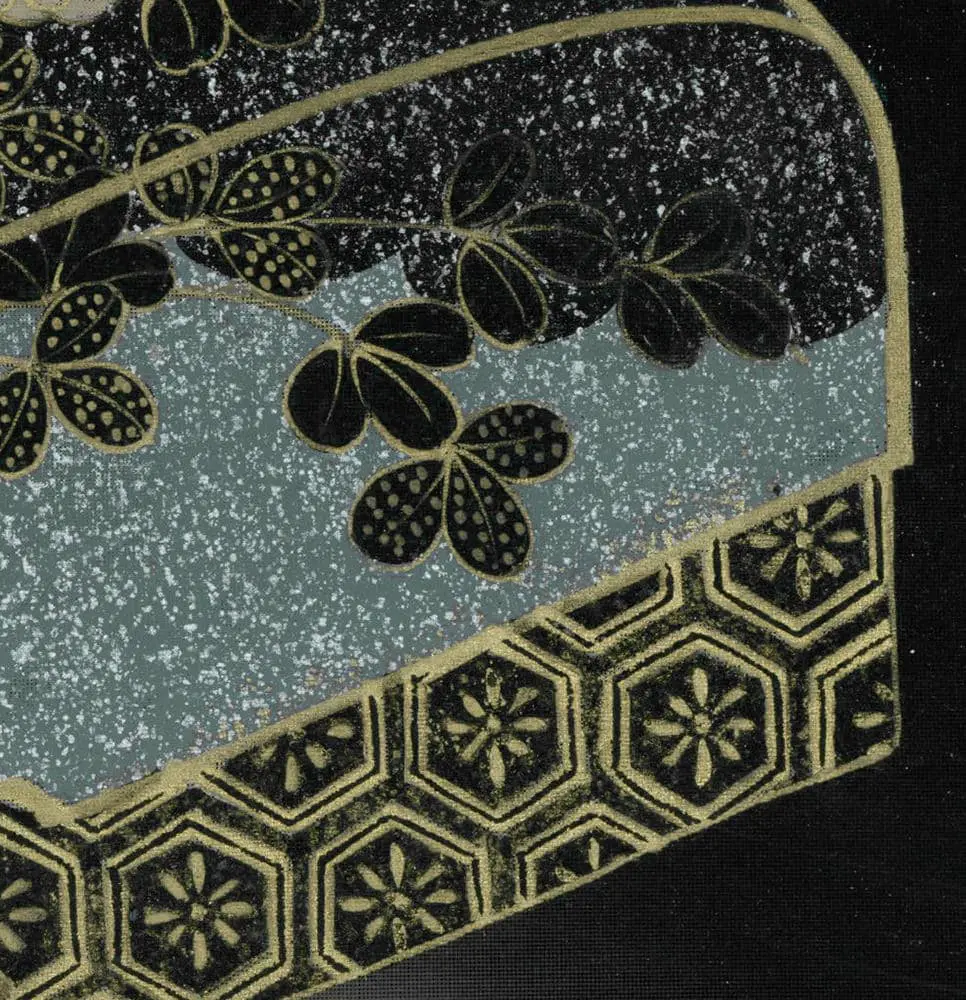
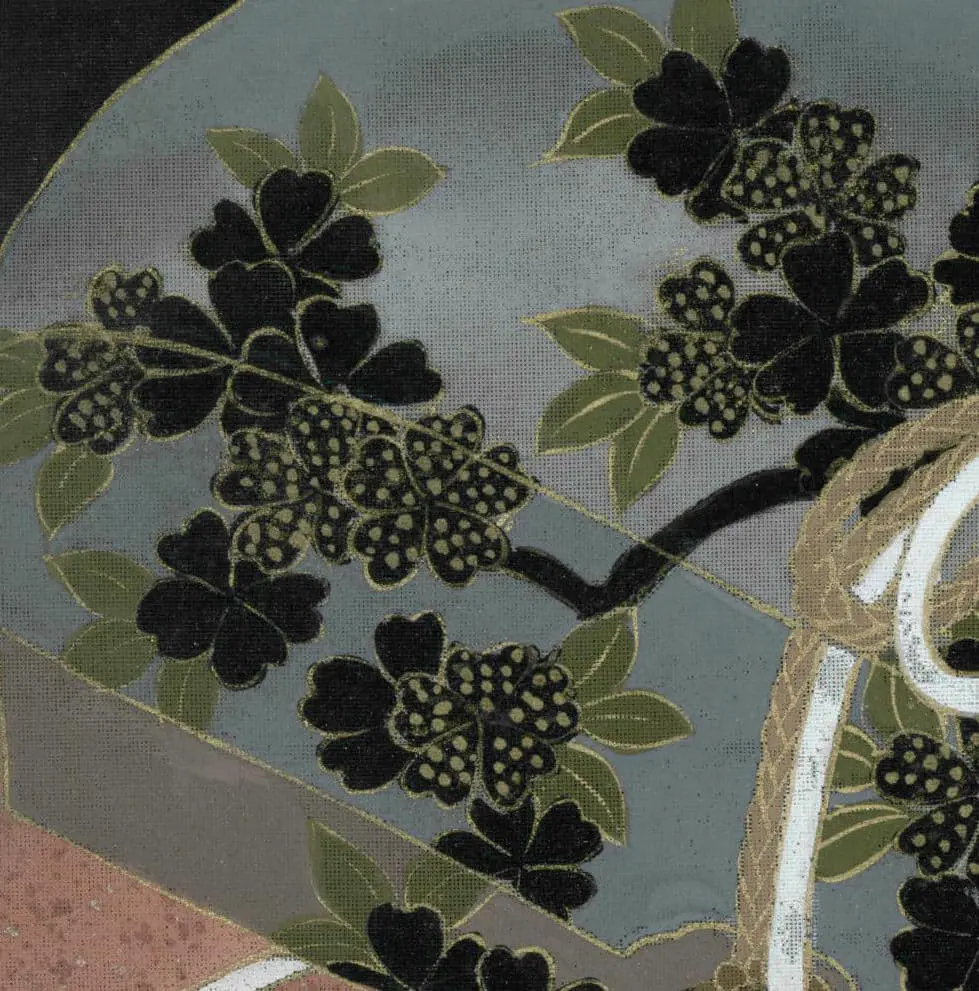
The composition features a sophisticated arrangement of decorative lacquerware boxes (tebako) and ceremonial fans drifting through a dreamlike landscape. One central box is rendered with a transparent quality, revealing a lush interior of chrysanthemums and autumnal foliage, while its exterior is adorned with golden Kikkō (tortoise shell) geometric borders. These elements float over a soft blush-pink and smoky-grey "mist" that transitions into a dramatic, deep black void at the bottom. In the foreground, stylized pine trees (matsu) are rendered in pale gold and sage green stippling, emerging from the darkness like a forest in the early morning light. Braided silk cords and golden tassels weave through the scene, adding a sense of rhythmic connection and formal elegance.

Payment Options: We primarily accept PayPal for all transactions. Credit and debit cards are not accepted. If you prefer to pay by personal check instead of PayPal, please note this preference in the "Additional comments" field when placing your order.Ordering Process
To receive your PayPal invoice, simply fill out the form.
Shipping Details: We ship all orders to the address associated with your PayPal payment. Please ensure your PayPal shipping address is current and accurate.A phone number is required during checkout, as our shipping carrier may need to contact you regarding delivery questions.Shipping RatesUnited States and Canada: $20International destinations (air mail): $40
