Copyright © 2026 Yorke Antique Textiles
.avif)

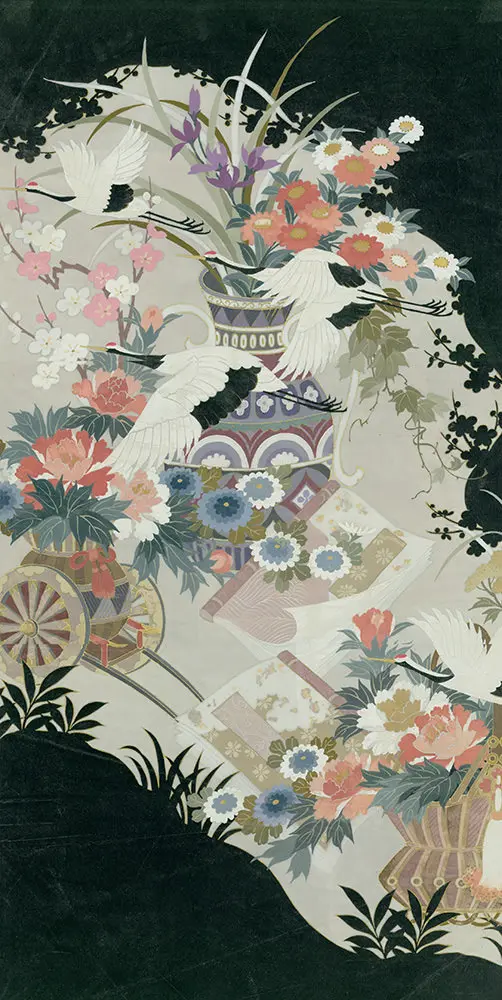
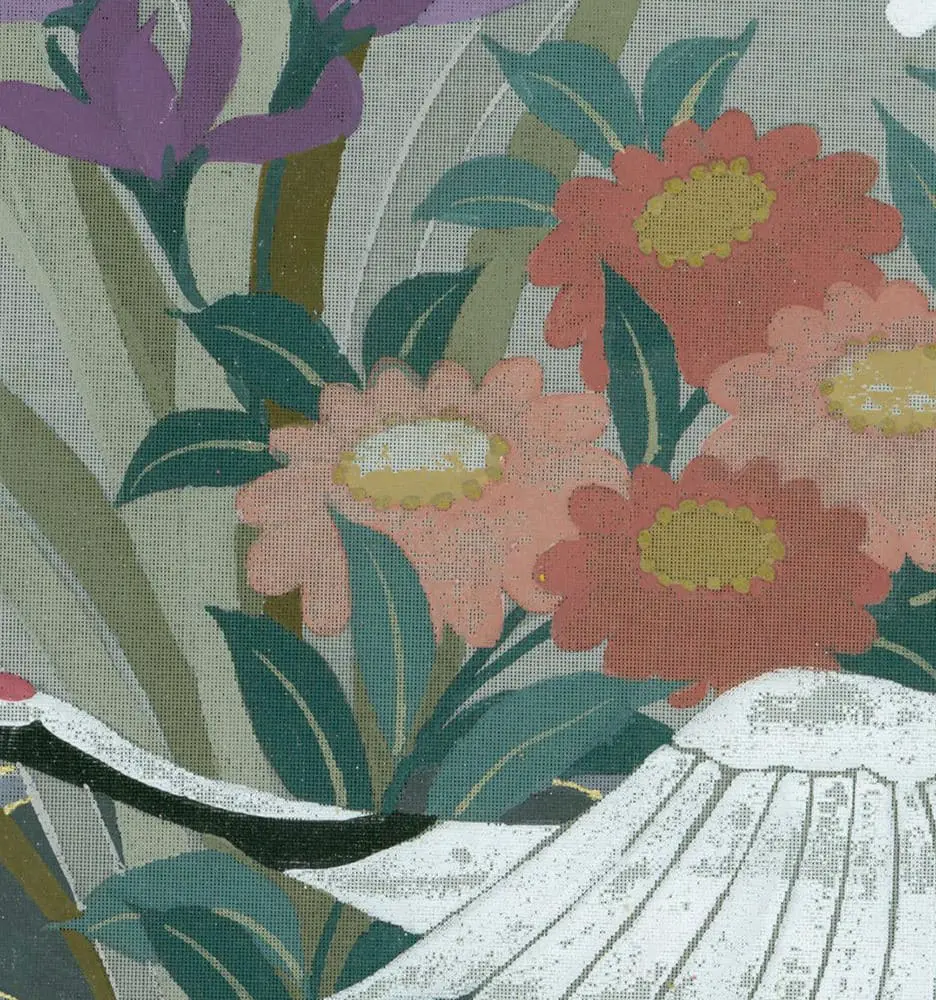
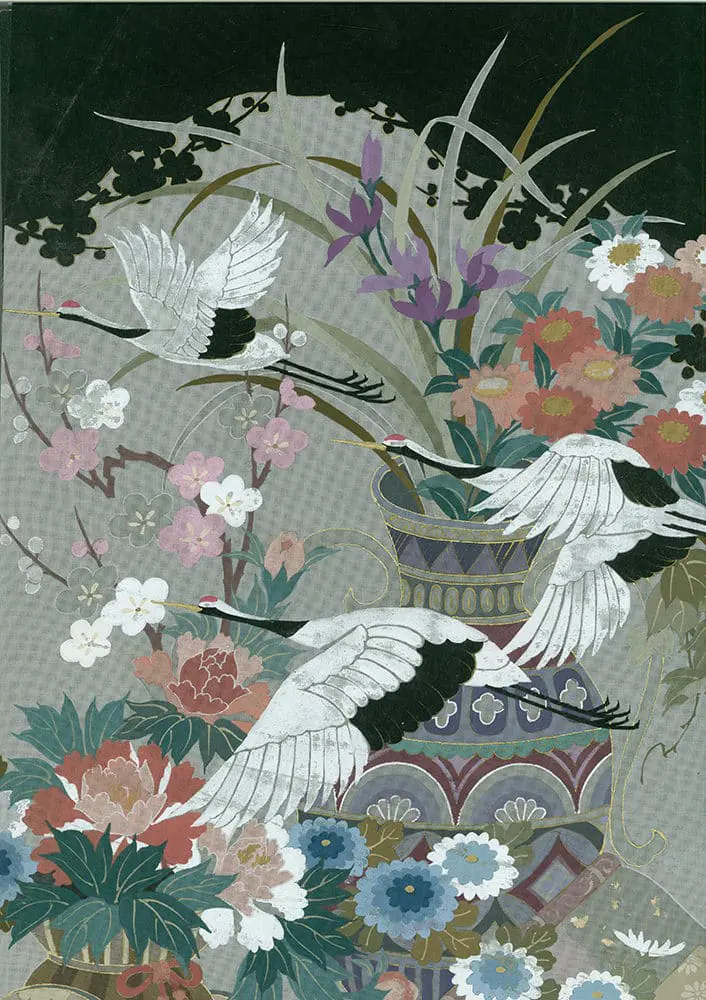
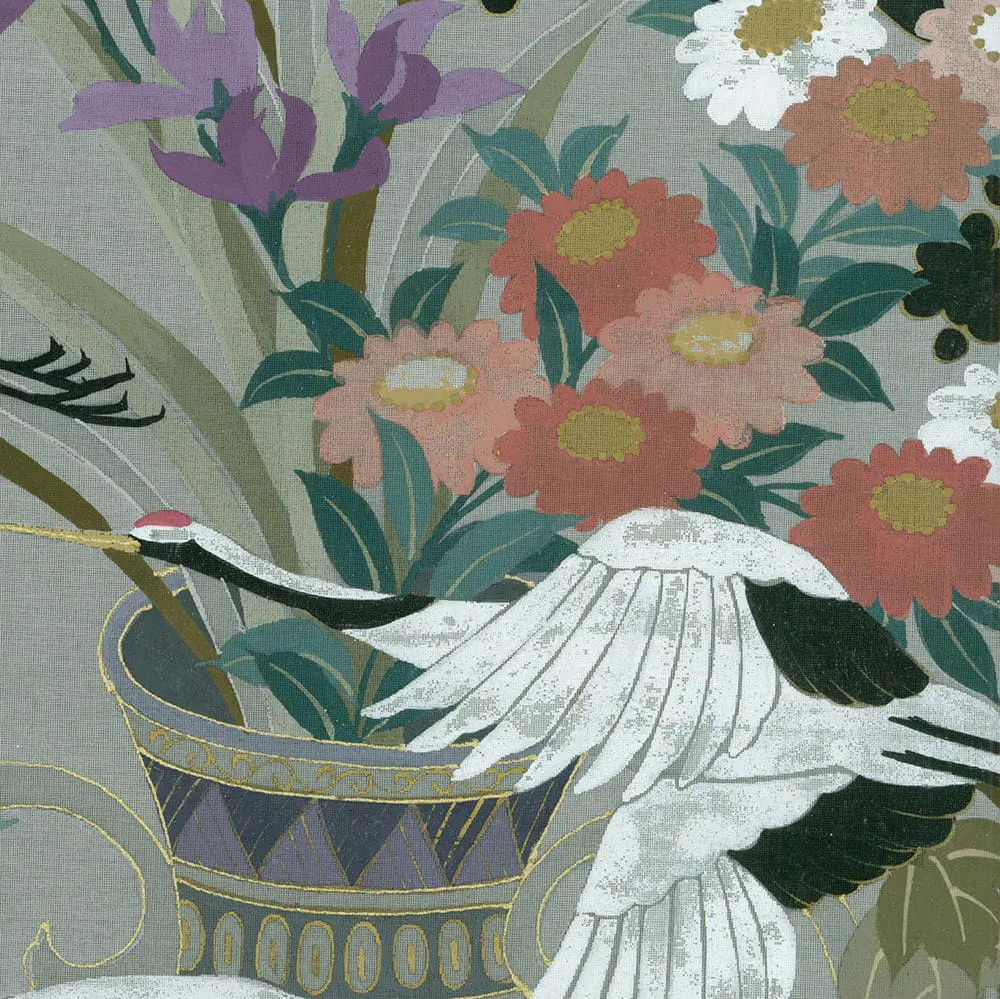
This masterful hand-painted artwork is an original yūzen painting on a semi-transparent silk screen, dating to the Mid to Late Showa period (1950–1980). Measuring 16 inches by 30 inches (41 cm x 76 cm), this distinctive piece likely served as a high-fidelity model for a woven or dyed obi, the wide traditional belt worn with a kimono. The artwork is in very good condition, showcasing the fluid color transitions and fine white resist lines characteristic of Kyoto’s historic yūzen dyeing heritage.
The composition is a celebratory landscape featuring three red-crowned cranes (tanchozuru) in flight, soaring over a lush collection of auspicious symbols. Below the cranes, an ornate flower cart (hanaguruma) and a tall, patterned ceramic vase overflow with an abundance of seasonal blossoms, including deep coral peonies (botan), vibrant blue and white chrysanthemums (kiku), and delicate pink cherry blossoms. Scattered throughout the scene are partially unrolled scrolls (makimono), which traditionally represent wisdom and the passage of time. The design is set against a soft, cream-colored field that transitions into a dark, textured charcoal ground at the bottom, suggesting a forest floor or a deep pond.

Payment Options: We primarily accept PayPal for all transactions. Credit and debit cards are not accepted. If you prefer to pay by personal check instead of PayPal, please note this preference in the "Additional comments" field when placing your order.Ordering Process
To receive your PayPal invoice, simply fill out the form.
Shipping Details: We ship all orders to the address associated with your PayPal payment. Please ensure your PayPal shipping address is current and accurate.A phone number is required during checkout, as our shipping carrier may need to contact you regarding delivery questions.Shipping RatesUnited States and Canada: $20International destinations (air mail): $40
