Copyright © 2026 Yorke Antique Textiles
.avif)

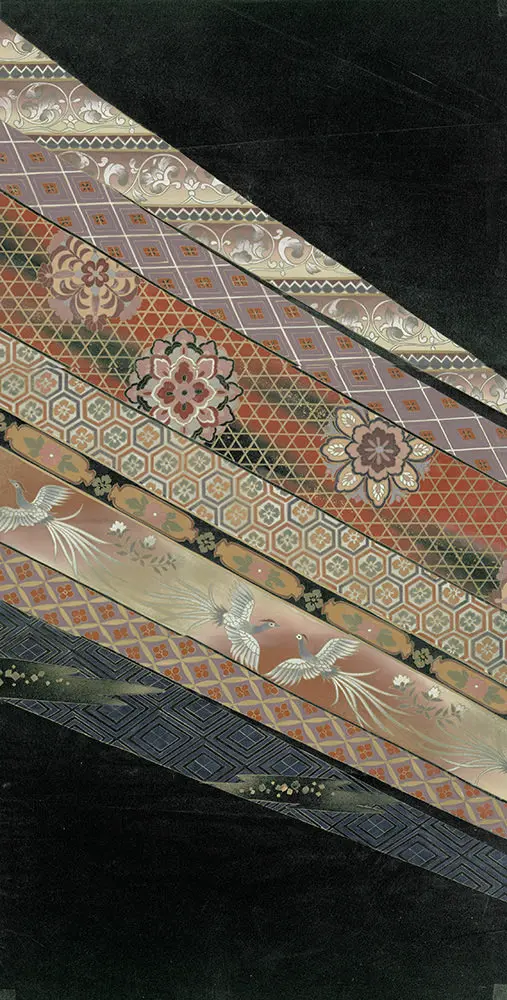
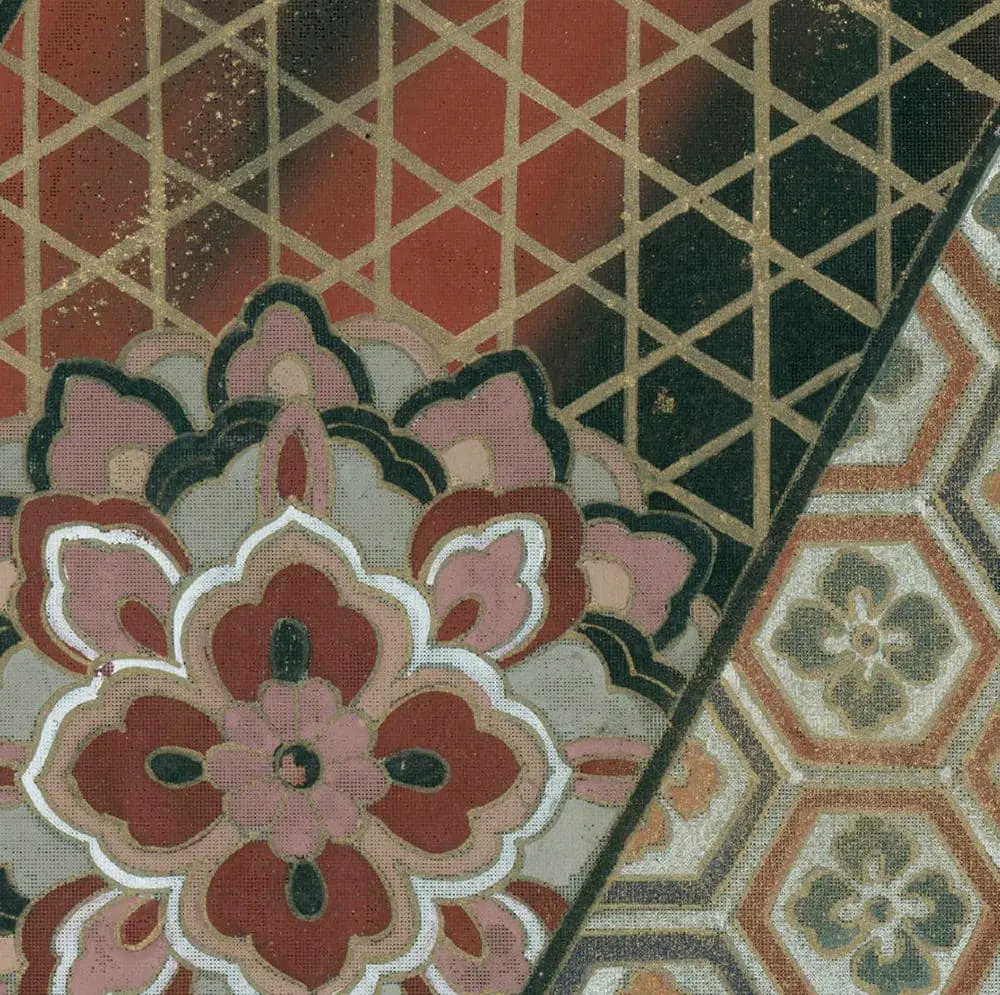
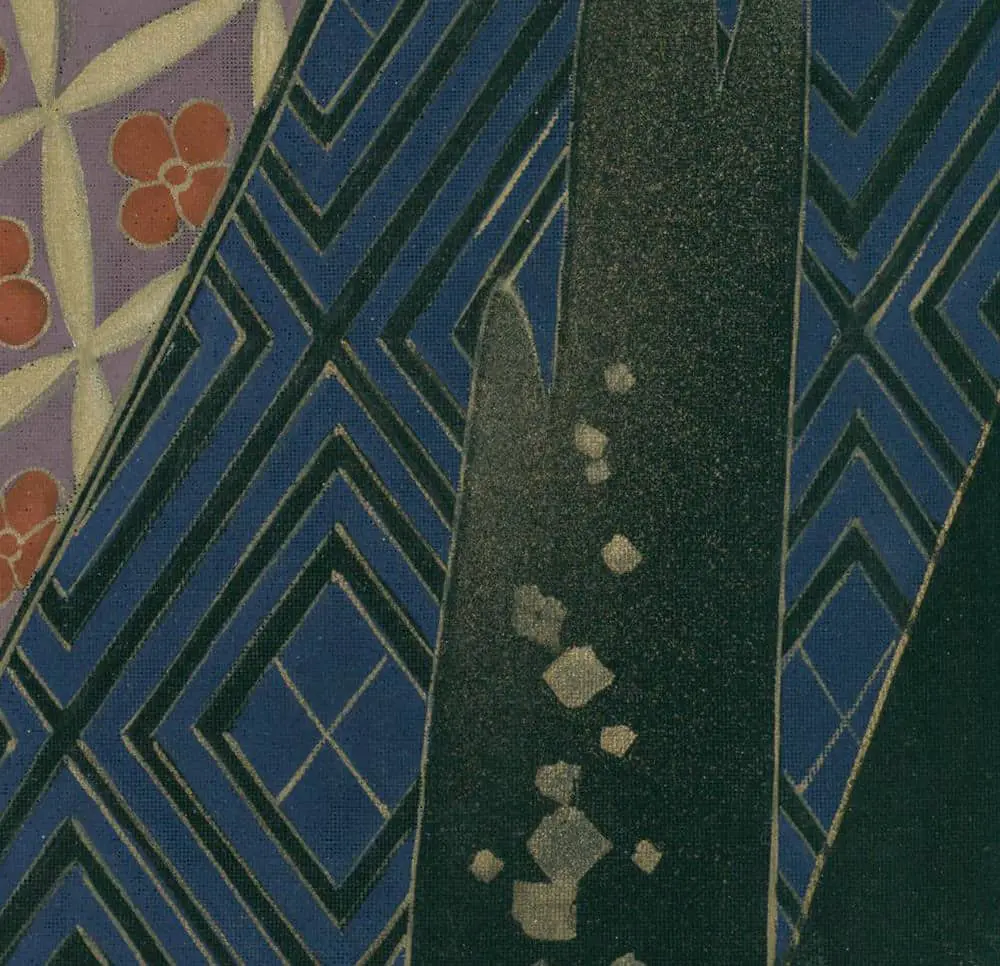
This exquisite hand-painted artwork is an original yūzen painting on a semi-transparent silk screen, dating to the Mid to Late Showa period (1950–1980). Measuring 16 inches by 30 inches (41 cm x 76 cm), this piece likely served as a high-fidelity model for a formal obi, the wide traditional sash worn with a kimono. The artwork is in very good condition, showcasing the precise drafting and elegant color theory characteristic of Kyoto's renowned yūzen dyeing tradition on a delicate silk canvas.
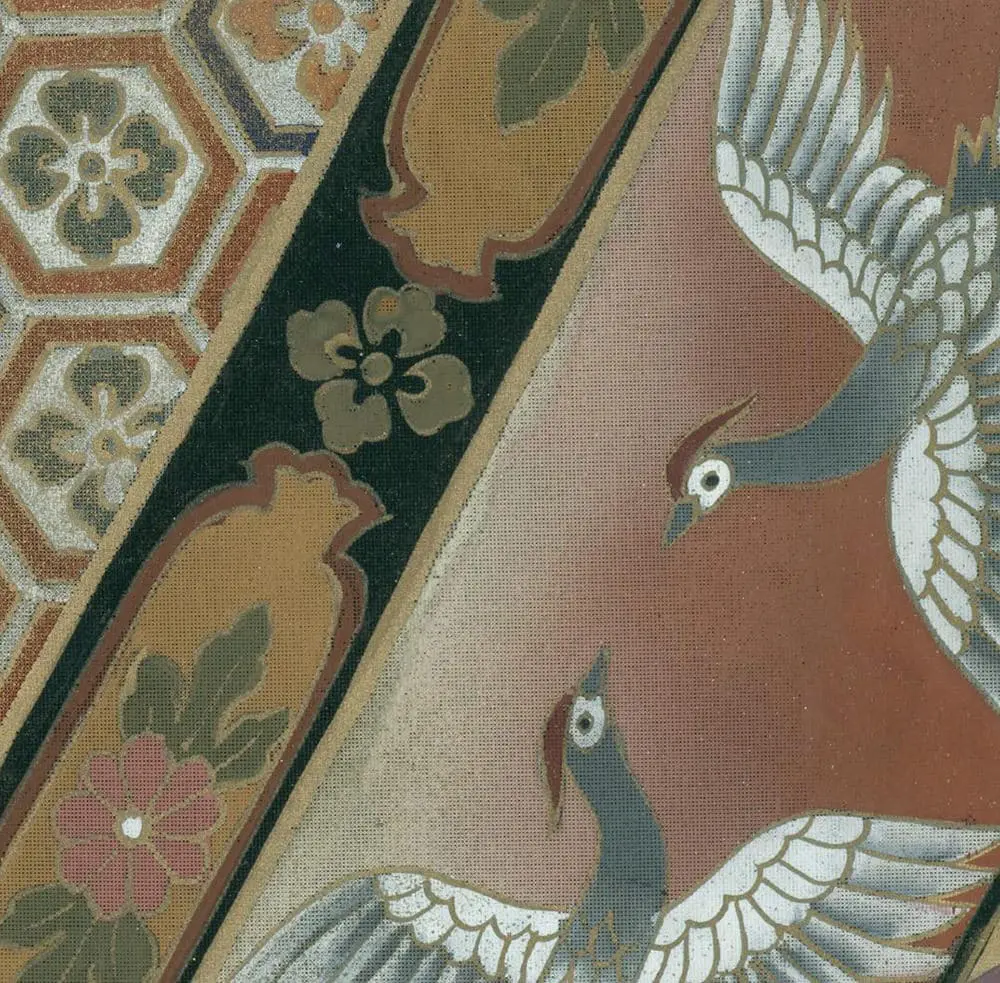
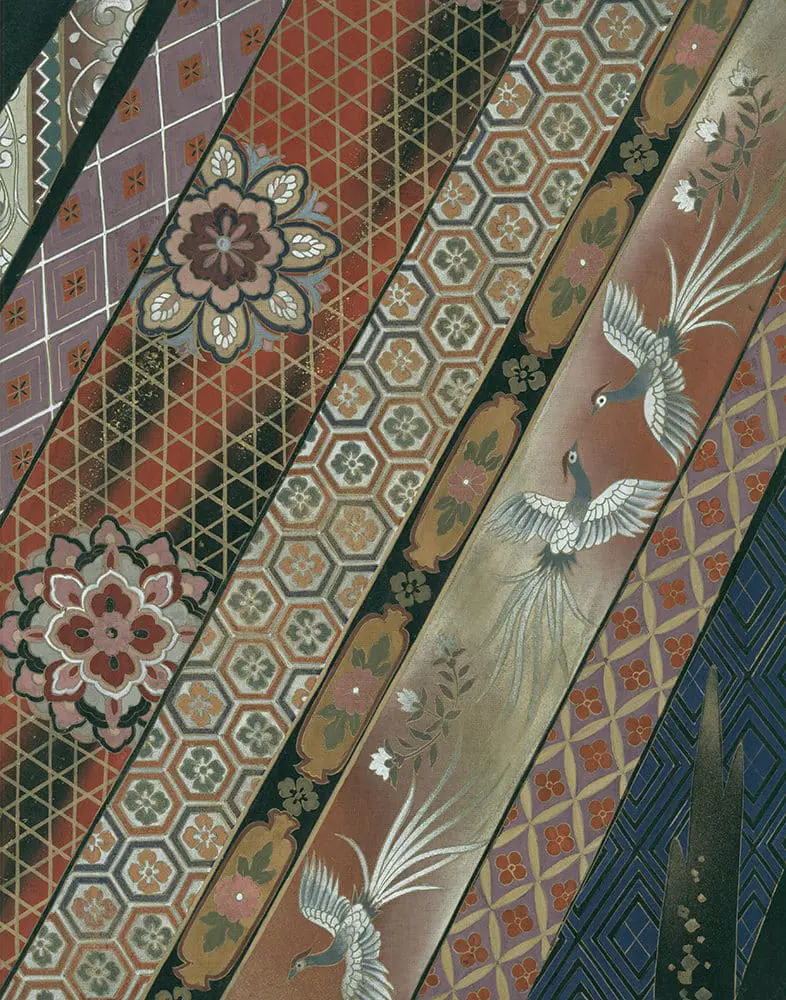
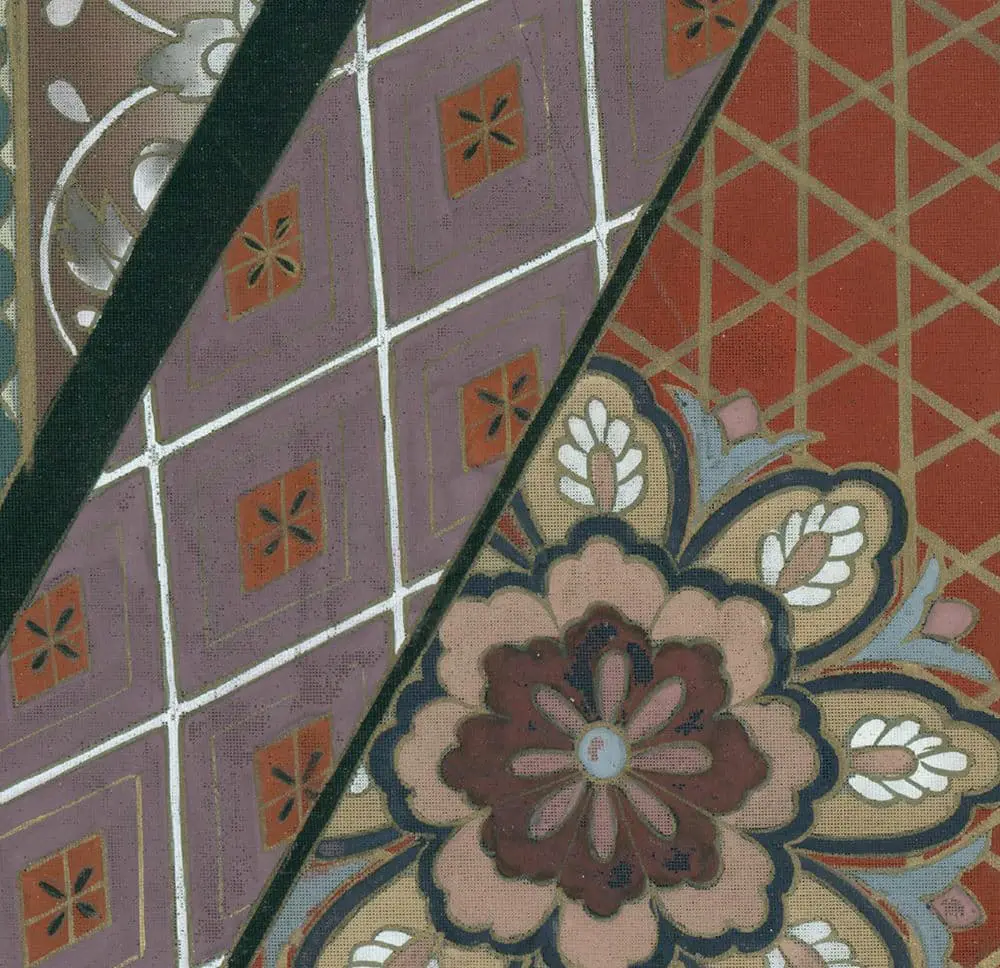
The composition is defined by a series of bold, diagonal ribbons or bands that slice across a dramatic, deep black ground. These ribbons feature a diverse array of traditional geometric and botanical patterns, including purple diamond lattices (hishi), rust-red honeycomb (kikkō) grids, and intricate floral scrolls. Central to the narrative is a wider, dusty-rose band depicting two graceful phoenixes (hō-ō) with long, sweeping tail feathers, surrounded by small white blossoms. The artist has used shimmering metallic-toned pigments and fine, calligraphic linework to delineate the complex borders, creating a sense of layered, textile-like depth.

Payment Options: We primarily accept PayPal for all transactions. Credit and debit cards are not accepted. If you prefer to pay by personal check instead of PayPal, please note this preference in the "Additional comments" field when placing your order.Ordering Process
To receive your PayPal invoice, simply fill out the form.
Shipping Details: We ship all orders to the address associated with your PayPal payment. Please ensure your PayPal shipping address is current and accurate.A phone number is required during checkout, as our shipping carrier may need to contact you regarding delivery questions.Shipping RatesUnited States and Canada: $20International destinations (air mail): $40
