Copyright © 2026 Yorke Antique Textiles
.avif)

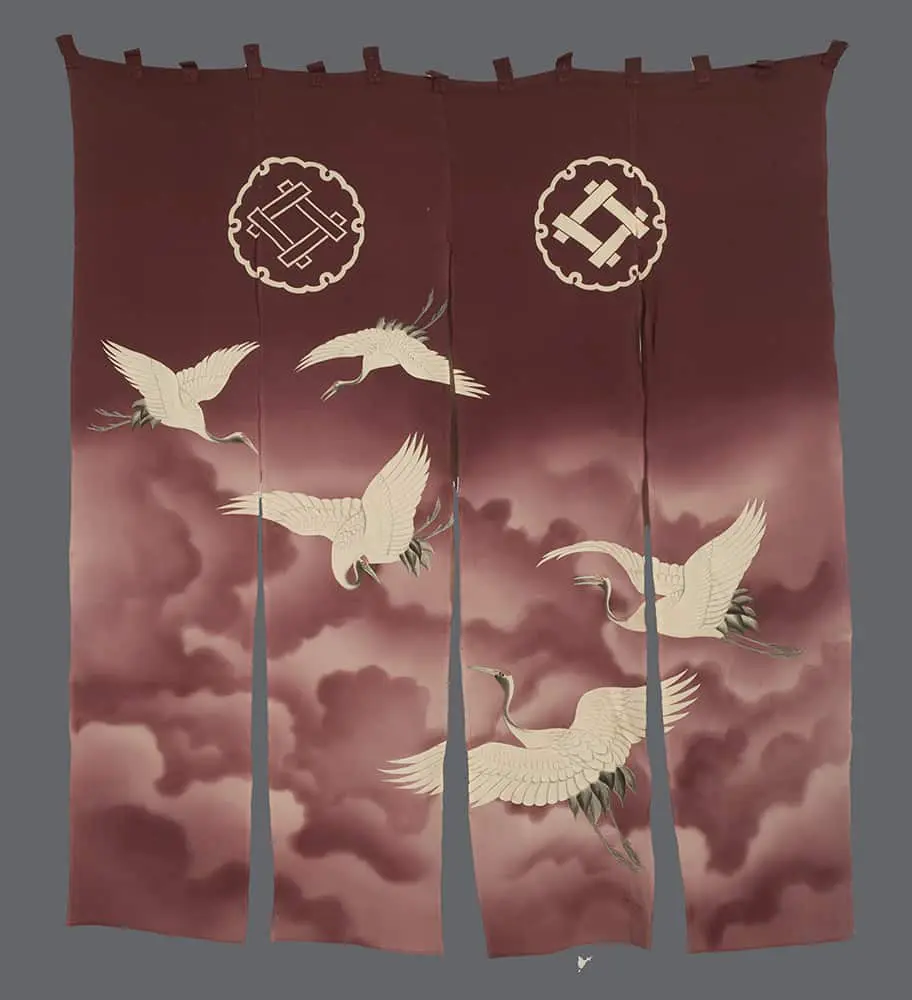
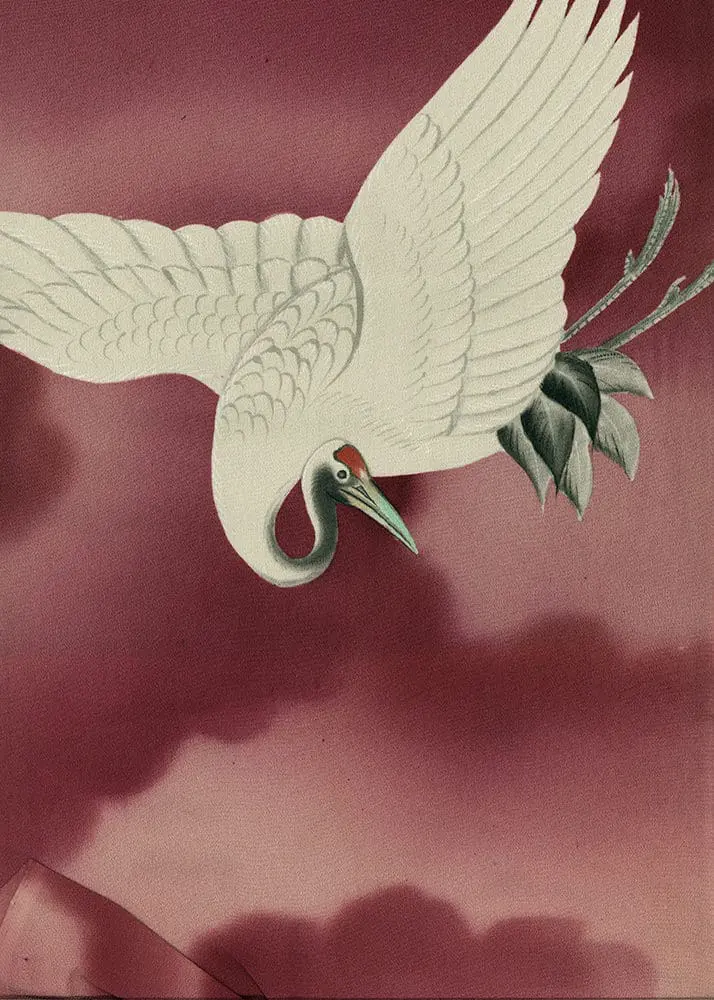
This exquisite four-panel silk Kaga noren (ceremonial doorway curtain) originates from the Ishikawa Prefecture and dates to the late Meiji or Taisho period (1890–1926). Measuring 51 inches wide by 61 inches tall (130 cm by 155 cm), the textile features a dramatic color gradation (bokashi) transitioning from a deep maroon at the top to a dusty rose at the bottom, mimicking a sky filled with soft, billow clouds.
The central motif depicts five mandarin cranes in various states of flight, rendered with fine white detailing and grey-green wingtips. These cranes are sacred symbols in Japan, representing good fortune, fidelity, and a long, prosperous life. At the top of the two central panels, the groom's family crest (mon)—a stylized diamond-lattice design within a floral border—is prominently featured in white resist-dye. Traditionally, this curtain was hung at the entrance of the groom's family Buddhist room for up to two weeks during wedding celebrations; the bride's act of bowing as she passed through symbolized her transition into her new family and her commitment to their ancestors. The piece is in very good condition.
This artwork is featured on pages 404-405 of Ceremonial Textiles of Japan, 18th to 20th Centuries. This book, published by Yorke Antique Textiles, can be previewed or purchased on our website here.

Payment Options: We primarily accept PayPal for all transactions. Credit and debit cards are not accepted. If you prefer to pay by personal check instead of PayPal, please note this preference in the "Additional comments" field when placing your order.Ordering Process
To receive your PayPal invoice, simply fill out the form.
Shipping Details: We ship all orders to the address associated with your PayPal payment. Please ensure your PayPal shipping address is current and accurate.A phone number is required during checkout, as our shipping carrier may need to contact you regarding delivery questions.Shipping RatesUnited States and Canada: $20International destinations (air mail): $40
