Copyright © 2026 Yorke Antique Textiles
.avif)

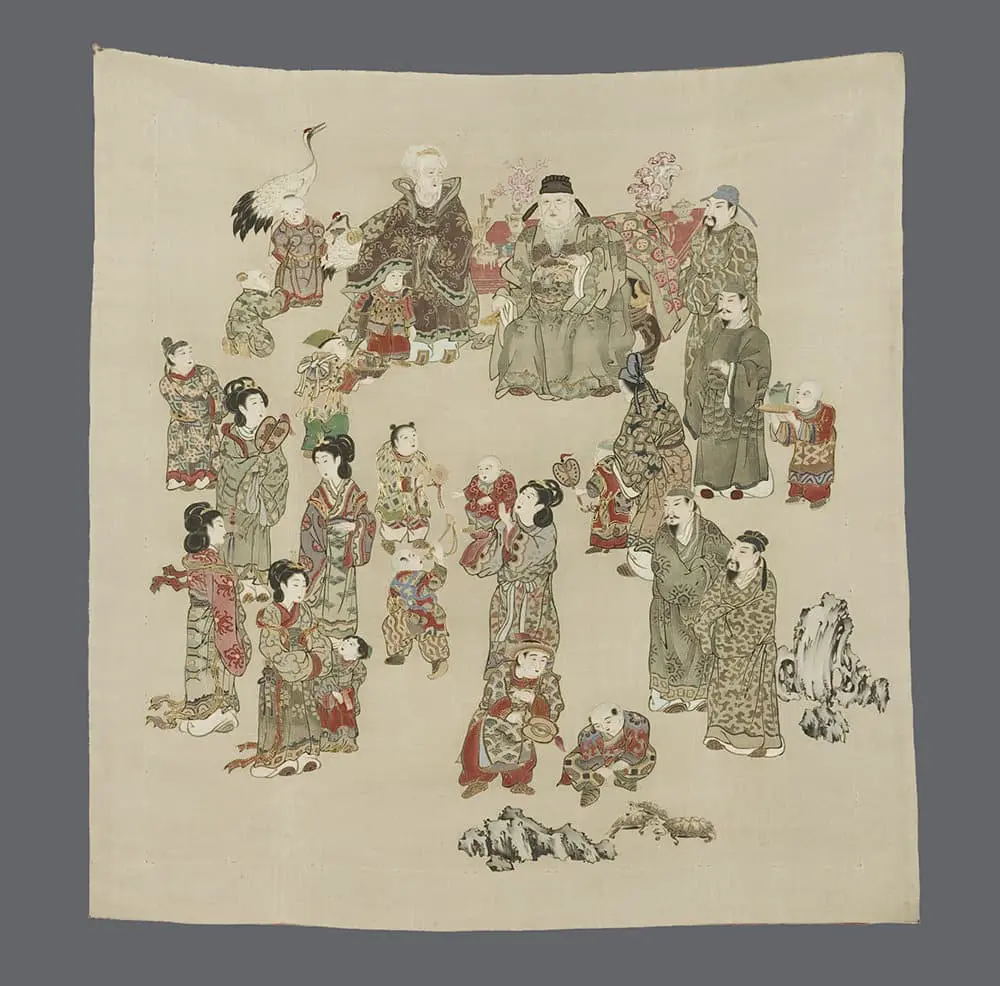

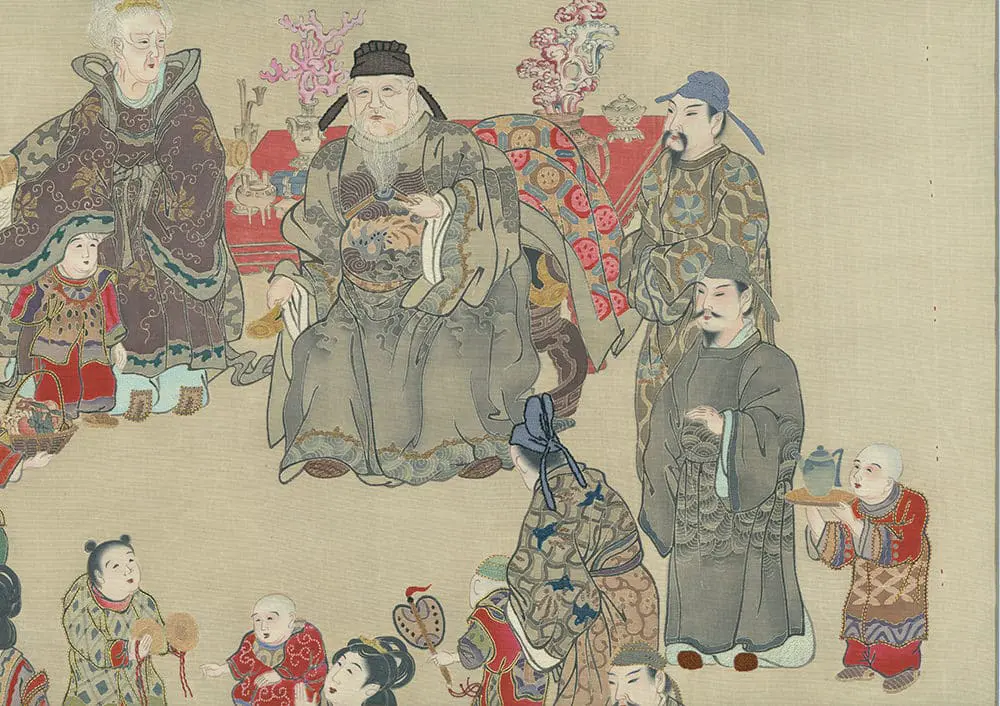
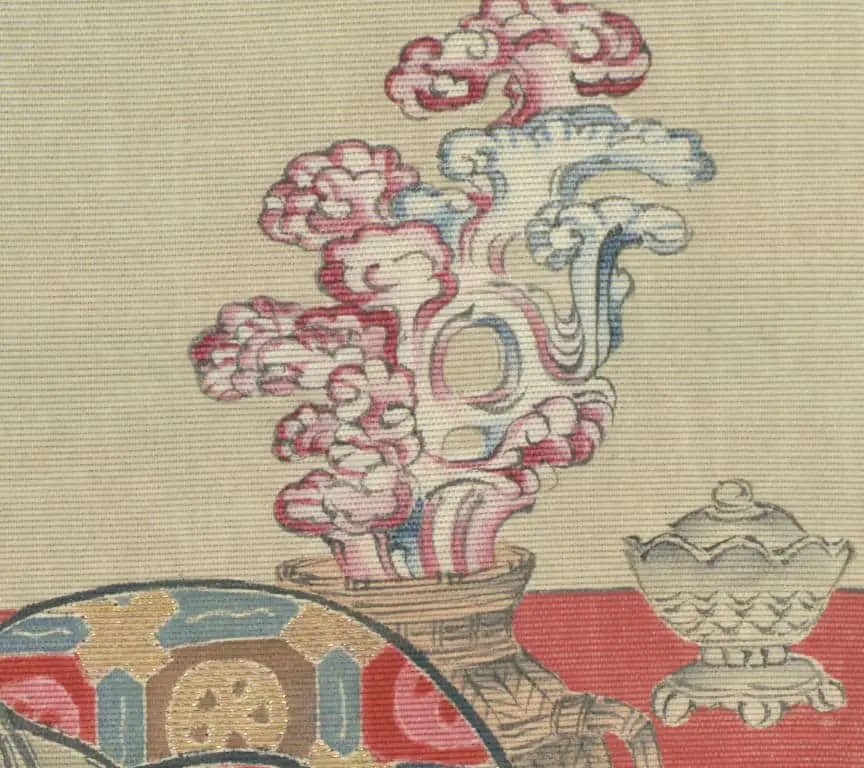
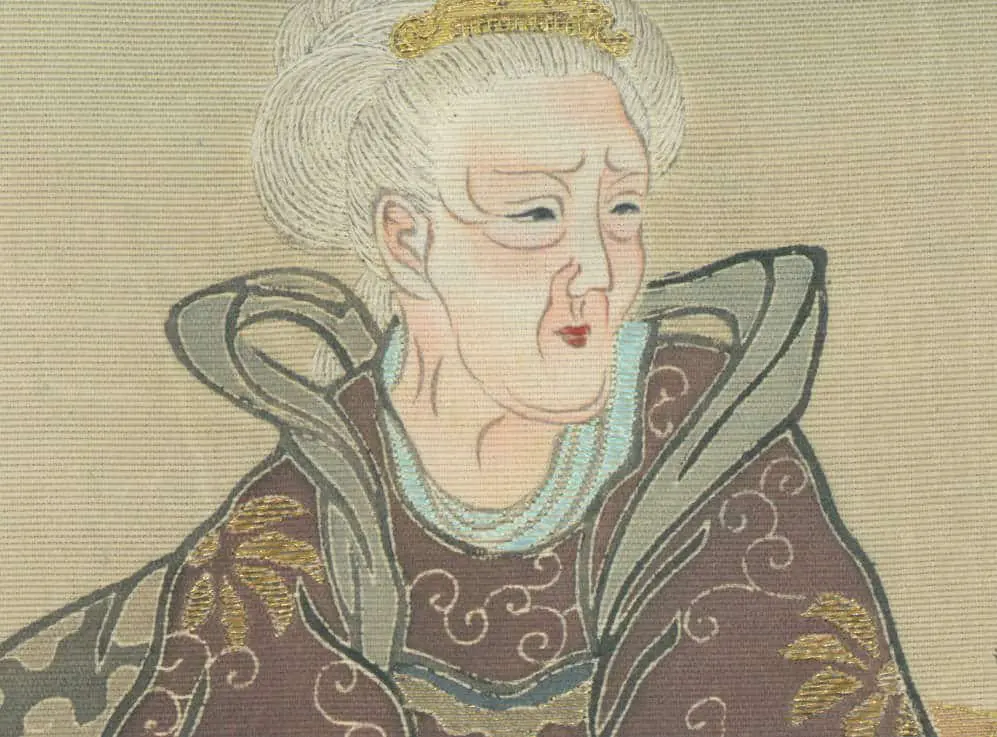
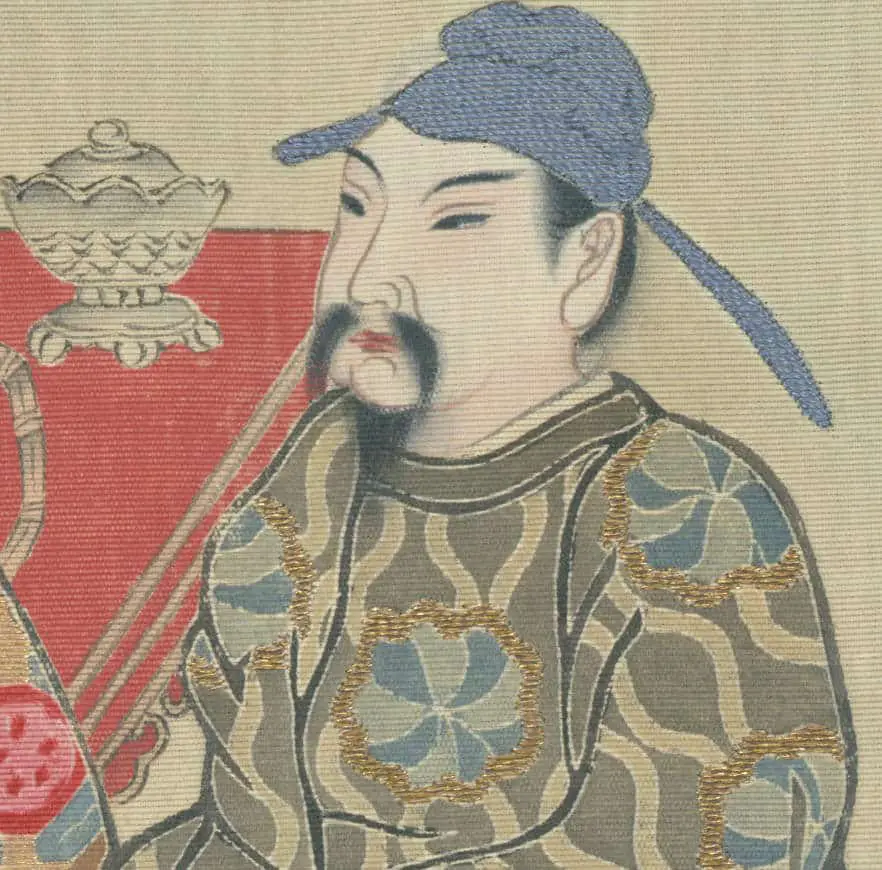

This exceptional silk fukusa (gift cover), dating from the late Edo to mid-Meiji period (1840–1880), is a masterpiece of Japanese narrative textile art. Measuring 26 inches by 27 inches (66 cm x 68.5 cm), the cloth portrays Emperor Kammu (737–806), the 50th emperor of Japan, surrounded by his imperial court. Kammu is historically revered for establishing Kyoto as the capital in 794, an act that inaugurated the Heian period, Japan's "Golden Age" of aesthetic refinement and cultural flourishing.
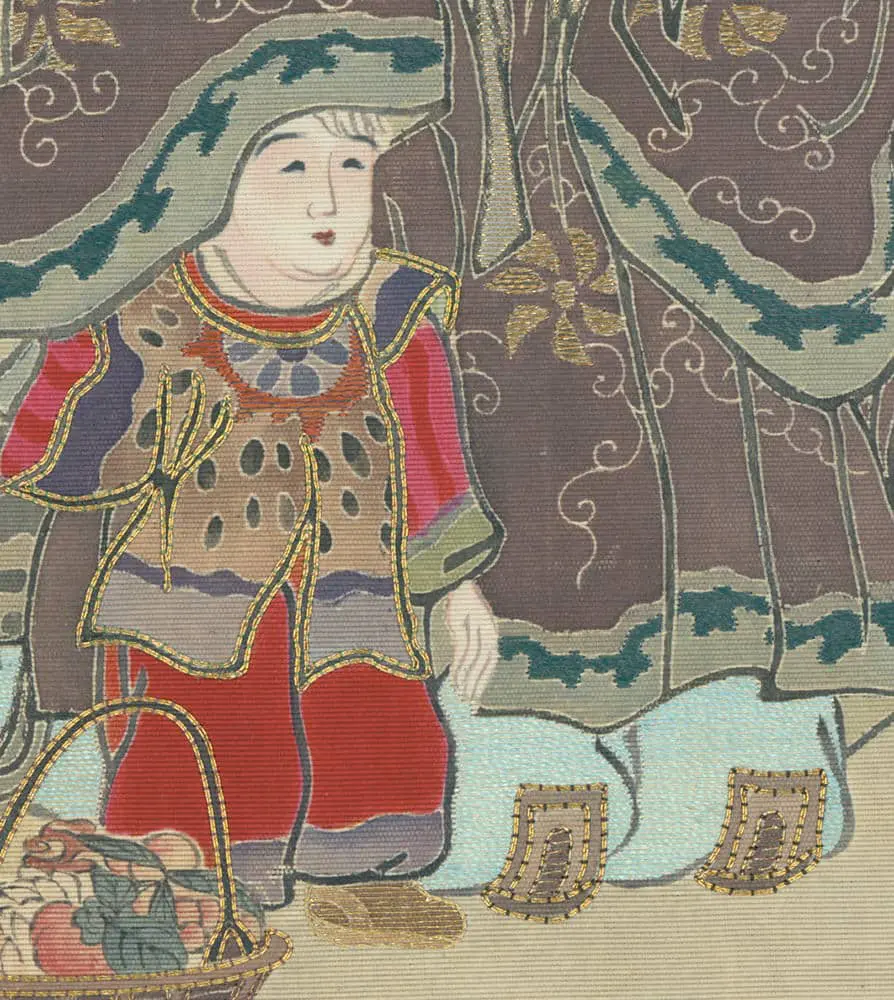
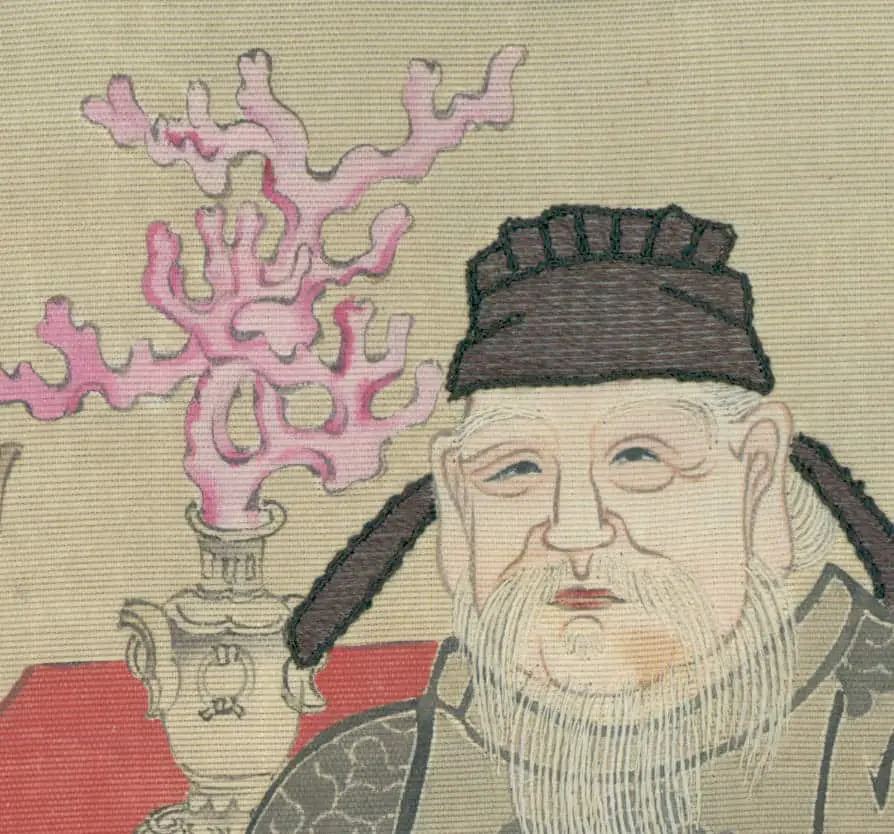
The scene is rendered with top-tier yuzen-dyeing and meticulous embroidery, likely commissioned by a wealthy family for a significant ceremonial occasion. The composition features the Emperor and his courtiers in elaborate robes, possibly representing the momentous 796 audience at the Daigoku-den Palace. Symbolic icons of longevity, including the crane and the minogame (long-tailed tortoise), appear within the courtly gathering, suggesting the fukusa was used for a longevity celebration to honor an elder. While the corner tassels are missing, the textile itself remains in very good condition.
This artwork is featured on pages 172-175 of Ceremonial Textiles of Japan, 18th to 20th Centuries. This book, published by Yorke Antique Textiles, can be previewed or purchased on our website here.

Payment Options: We primarily accept PayPal for all transactions. Credit and debit cards are not accepted. If you prefer to pay by personal check instead of PayPal, please note this preference in the "Additional comments" field when placing your order.Ordering Process
To receive your PayPal invoice, simply fill out the form.
Shipping Details: We ship all orders to the address associated with your PayPal payment. Please ensure your PayPal shipping address is current and accurate.A phone number is required during checkout, as our shipping carrier may need to contact you regarding delivery questions.Shipping RatesUnited States and Canada: $20International destinations (air mail): $40
