Copyright © 2026 Yorke Antique Textiles
.avif)

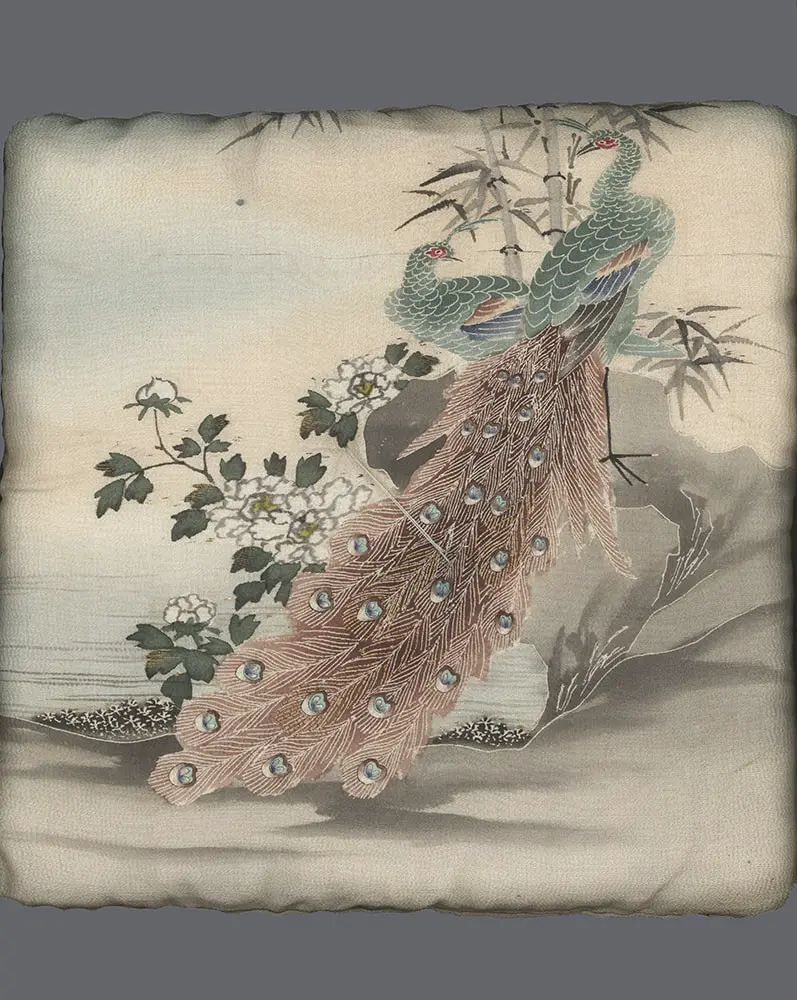

This elegant silk cushion, dating from the early to mid-Meiji period (1868–1900), is a fine example of the Japanese tradition of upcycling high-quality textiles. Measuring 12 inches by 12 inches (30 cm by 30 cm), the cushion was likely crafted from a panel of a 19th-century kimono and repurposed into its current form during the 20th century.
The face of the cushion features the yuzen-dyeing (yuzen-zome) technique, a sophisticated paste-resist process that allows for detailed, freehand pictorial designs on silk. The central motif portrays a majestic peacock perched among resilient bamboo stalks. In Japanese symbolism, the peacock represents splendor and protection from harm, while bamboo is a powerful icon of longevity, flexibility, and strength—together forming an auspicious theme of endurance and beauty. Despite its history of use, the cushion remains in good condition, preserving the vibrant pigments and fine itome (outline) lines characteristic of Meiji-era yuzen.

Payment Options: We primarily accept PayPal for all transactions. Credit and debit cards are not accepted. If you prefer to pay by personal check instead of PayPal, please note this preference in the "Additional comments" field when placing your order.Ordering Process
To receive your PayPal invoice, simply fill out the form.
Shipping Details: We ship all orders to the address associated with your PayPal payment. Please ensure your PayPal shipping address is current and accurate.A phone number is required during checkout, as our shipping carrier may need to contact you regarding delivery questions.Shipping RatesUnited States and Canada: $20International destinations (air mail): $40
