Copyright © 2026 Yorke Antique Textiles
.avif)

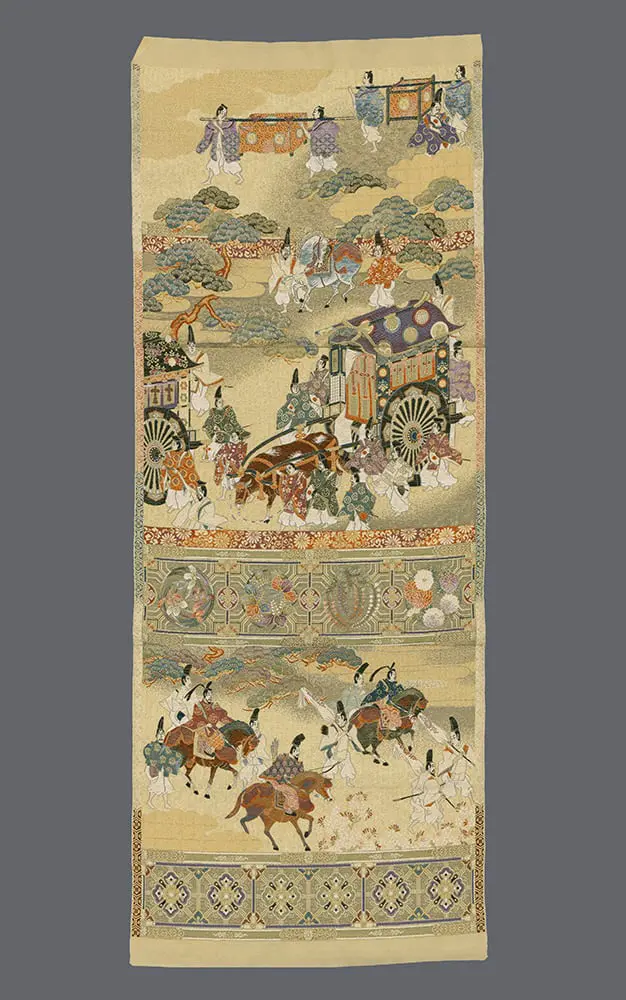
This extraordinary textile originates from Japan’s mid-Showa period (about 1950–1960) and is a scholarly example of the pinnacle of weaving technology used in luxury accessory design. This piece is a medashi, a specialized sample created by master weavers to showcase intricate patterns and colorways to discerning clients. Unlike a fabric remnant, a medashi is woven as a standalone piece and retains its original selvedges on all four sides, measuring 13 inches by 34 inches. It is preserved in excellent condition, serving as a rare artifact of the high-status obi design process.
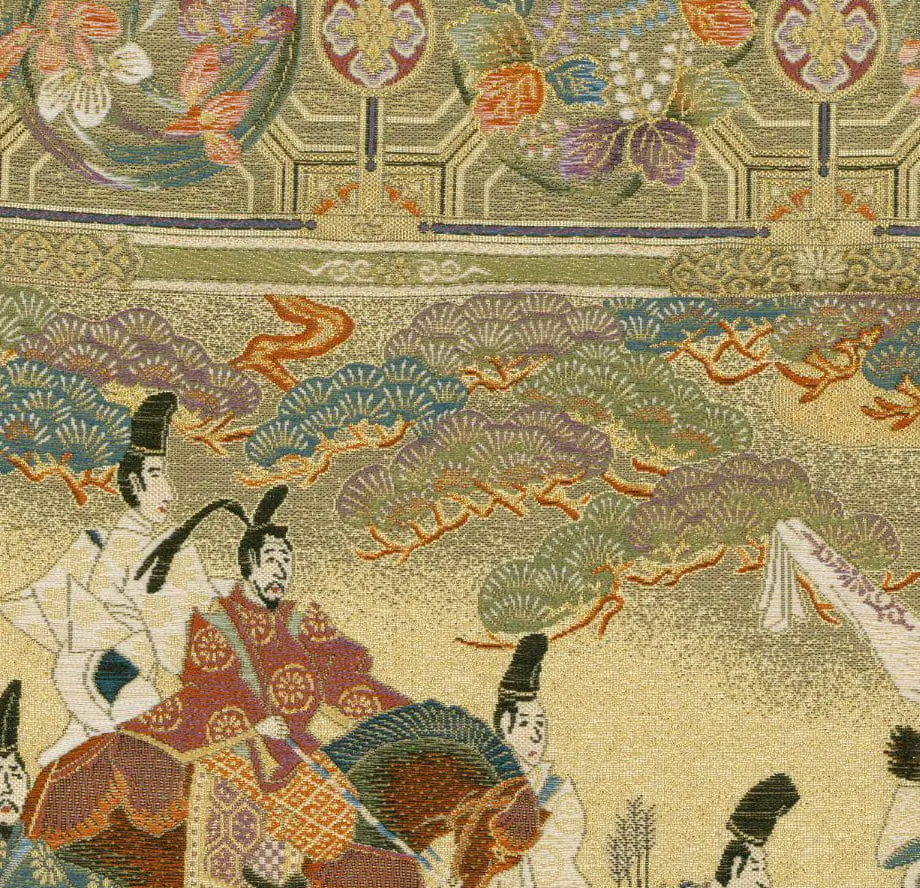
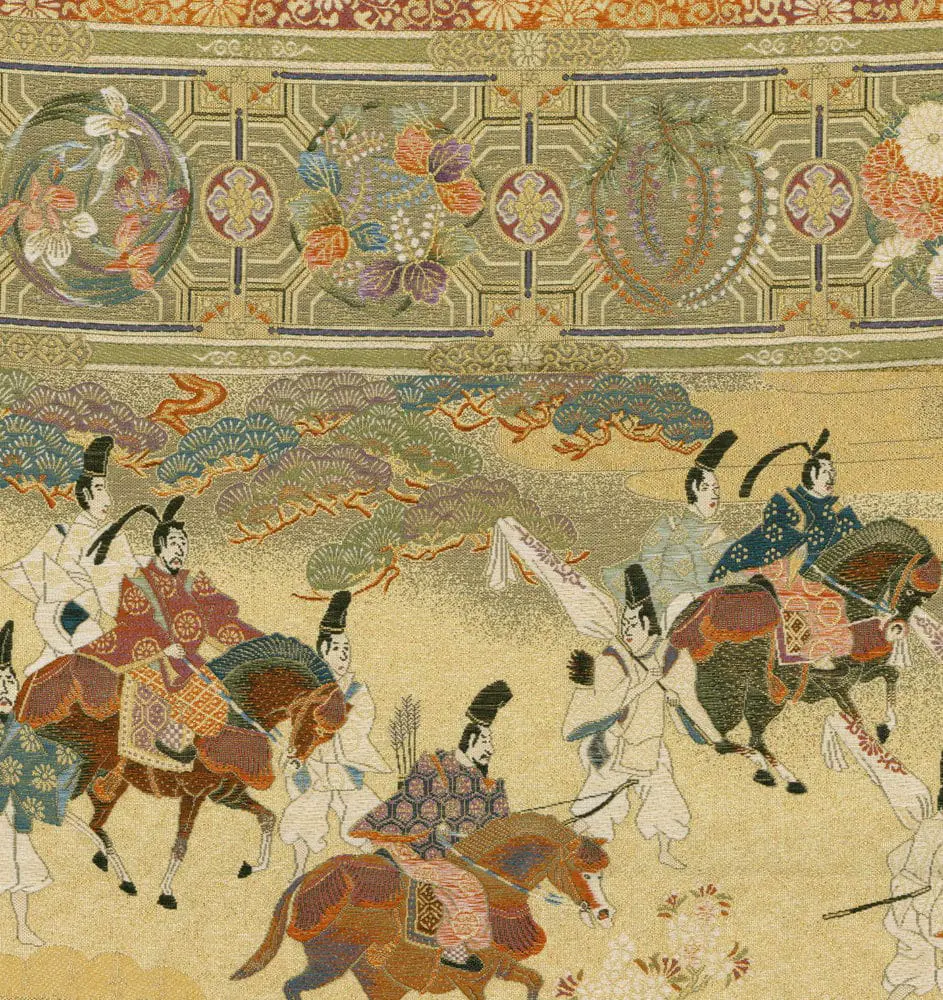
The visual narrative is a densely packed, multi-panel display of classical Japanese iconography rendered through the complex brocade technique. The central scenes depict a formal Heian-style procession, complete with a bullock carriage (goshoguruma), palanquins, and figures in traditional courtly attire set against a landscape of stylized pines and golden clouds. Horizontal bands of geometric lattices and floral roundels separate the figurative scenes, showcasing a mastery of thread-work and tonal complexity. The precision of the woven work is exceptionally detailed, utilizing a vast array of colored and metallic threads to create a three-dimensional, painterly effect that mimics the finest hand-painted scrolls.

Payment Options: We primarily accept PayPal for all transactions. Credit and debit cards are not accepted. If you prefer to pay by personal check instead of PayPal, please note this preference in the "Additional comments" field when placing your order.Ordering Process
To receive your PayPal invoice, simply fill out the form.
Shipping Details: We ship all orders to the address associated with your PayPal payment. Please ensure your PayPal shipping address is current and accurate.A phone number is required during checkout, as our shipping carrier may need to contact you regarding delivery questions.Shipping RatesUnited States and Canada: $20International destinations (air mail): $40
