Copyright © 2026 Yorke Antique Textiles
.avif)

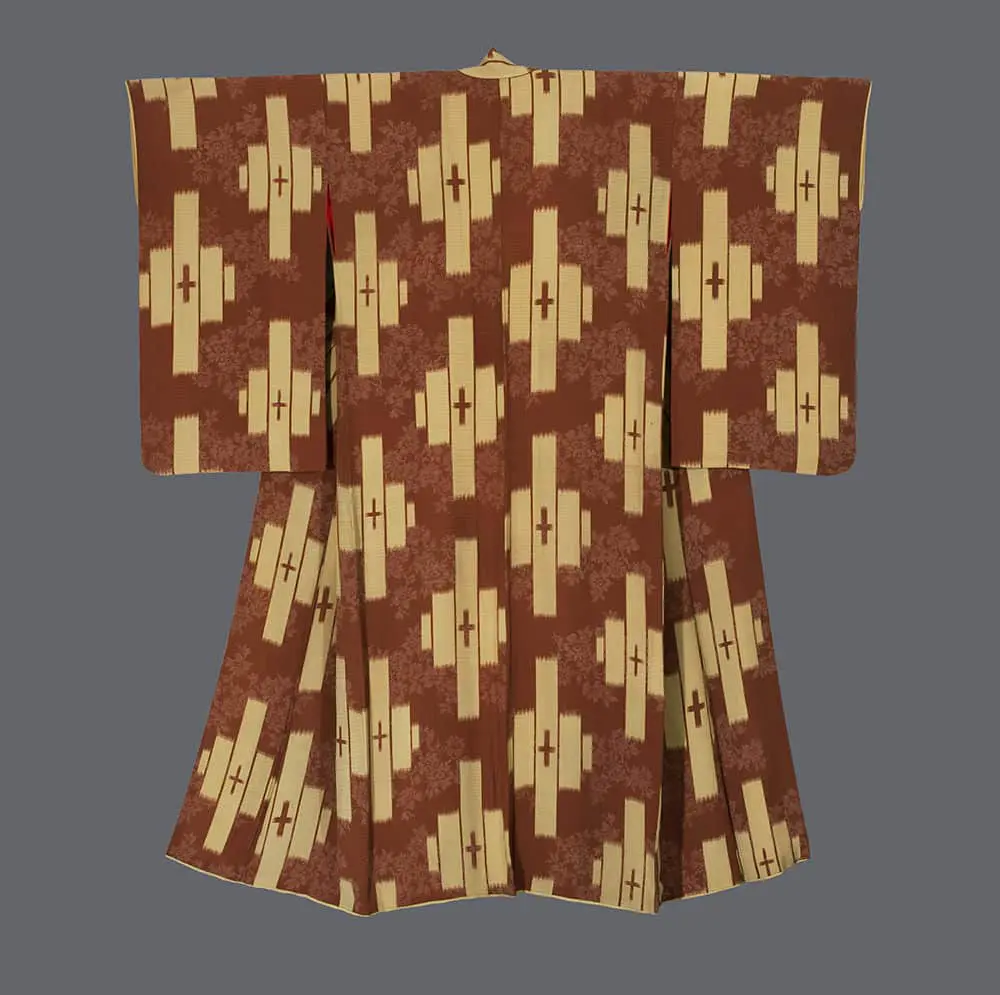

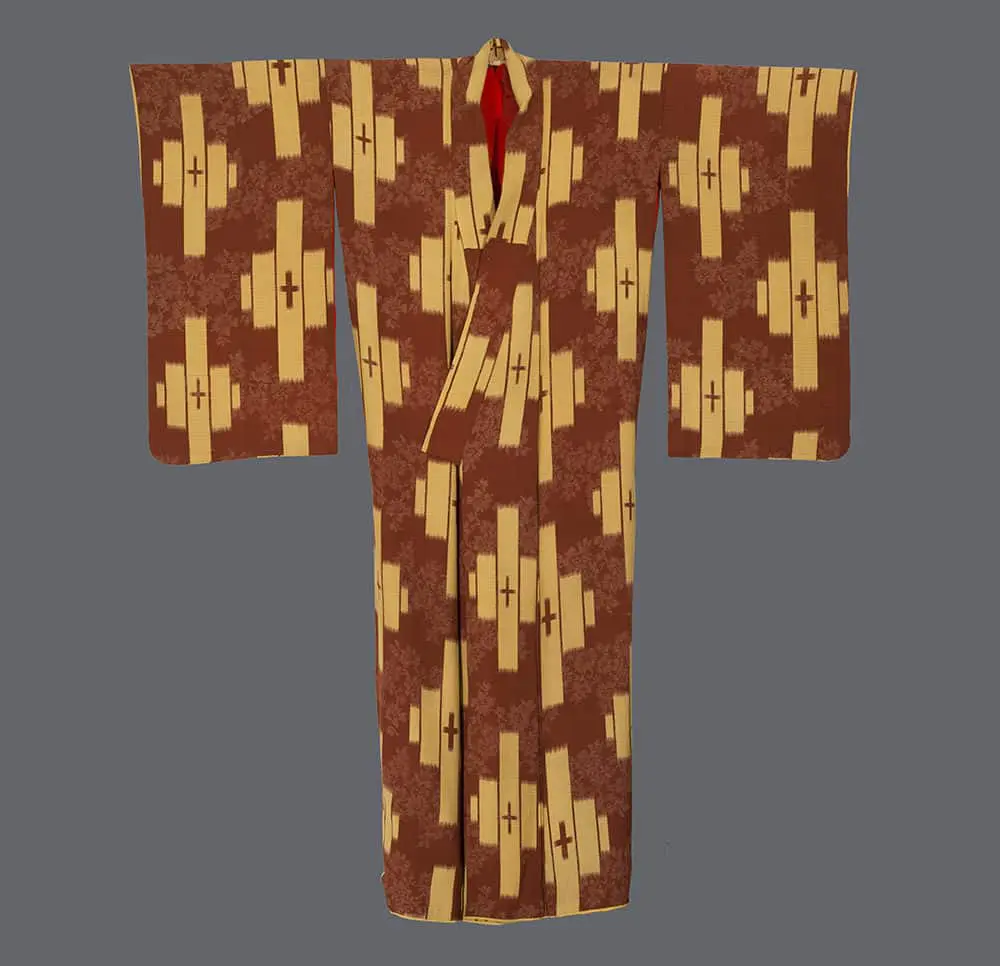
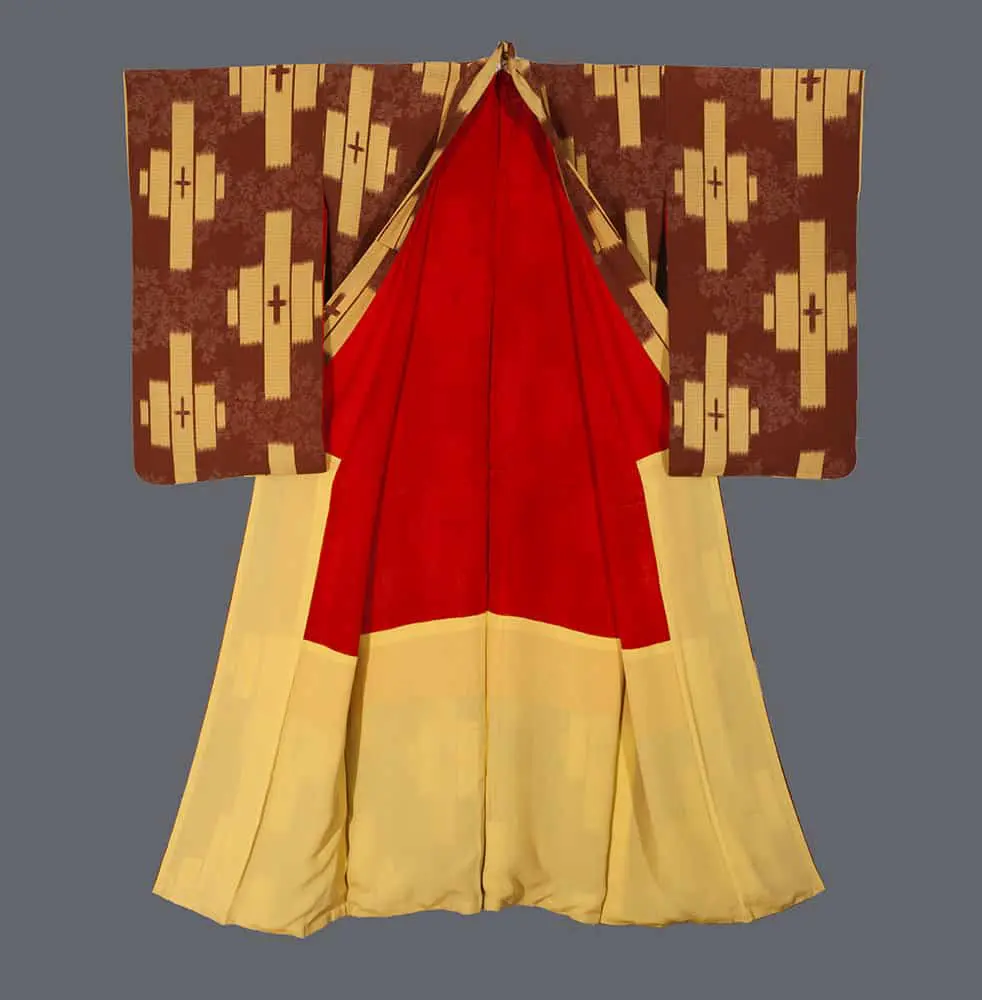
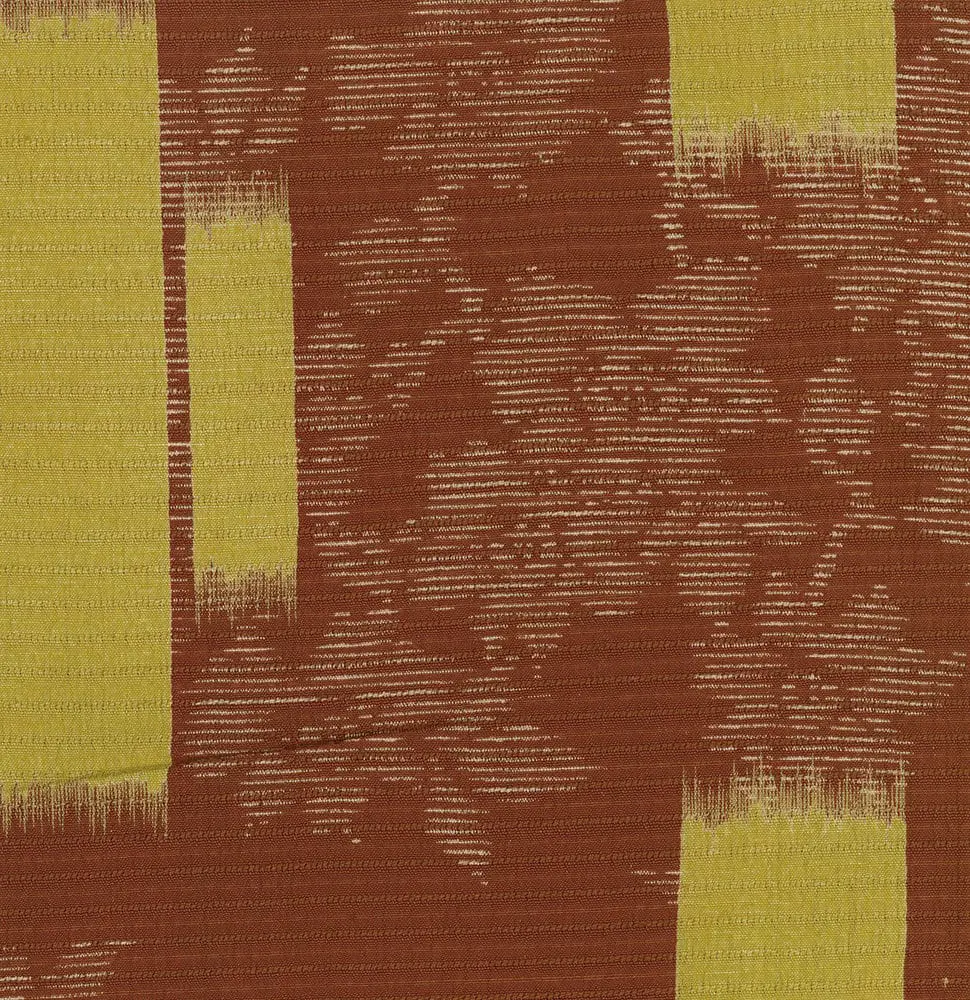

This kimono is a sophisticated example of Omeshi or high-end Kasuri (ikat) weaving, where the artistry is intrinsic to the structure of the fabric itself rather than applied to the surface. The design relies on threads that were resist-dyed prior to being woven on the loom. This laborious process creates the signature "stepped" or jagged edges where the beige and rust threads intersect. The close-up reveals a complex interplay of textures; a subtle, tonal floral damask appears to be woven into the rust-colored background, upon which the bold geometric figures float. This layering of a matte, geometric ikat pattern over a glossy, woven floral base creates the "subtle textural variations" that catch the light, giving the garment a depth that a flat print could never achieve.
The central motif is a massive, highly stylized variation of the igeta (well curb) or a stepped hishi (diamond) pattern. Traditionally, the well curb represents life-giving water and family protection, a common motif in Japanese folk textiles. However, the inclusion of the central cross shape introduces a distinct geometric boldness. In the context of the Taisho era, this may simply be a celebration of modern, grid-like geometry, or it could be a decorative nod to the Kurusu (Cross) motif. The staggering of these large blocks creates a rhythmic, architectural quality, transforming a rustic folk pattern into something imposing and graphic.
Artistically, this garment serves as a bridge between the Mingei (Folk Craft) movement and the cosmopolitan Taisho Roman aesthetic. The Mingei movement, led by philosophers like Yanagi Sōetsu, championed the beauty of "humble," hand-loomed fabrics like ikat. However, this kimono elevates that rustic technique into the realm of high fashion by exploding the scale of the pattern. While an older country kimono might feature small, repetitive splashes, this design magnifies the geometry to an almost abstract level. The result is a textile that feels surprisingly digital or "pixelated" to the modern eye, anticipating the grid-based art of the late 20th century while remaining grounded in the warmth of traditional craftsmanship.
Spanning approximately 49 inches (124 cm) from sleeve-end to sleeve-end, this kimono stands at a height of about 55 inches (140 cm).

Payment Options: We primarily accept PayPal for all transactions. Credit and debit cards are not accepted. If you prefer to pay by personal check instead of PayPal, please note this preference in the "Additional comments" field when placing your order.Ordering Process
To receive your PayPal invoice, simply fill out the form.
Shipping Details: We ship all orders to the address associated with your PayPal payment. Please ensure your PayPal shipping address is current and accurate.A phone number is required during checkout, as our shipping carrier may need to contact you regarding delivery questions.Shipping RatesUnited States and Canada: $20International destinations (air mail): $40
