Copyright © 2026 Yorke Antique Textiles
.avif)

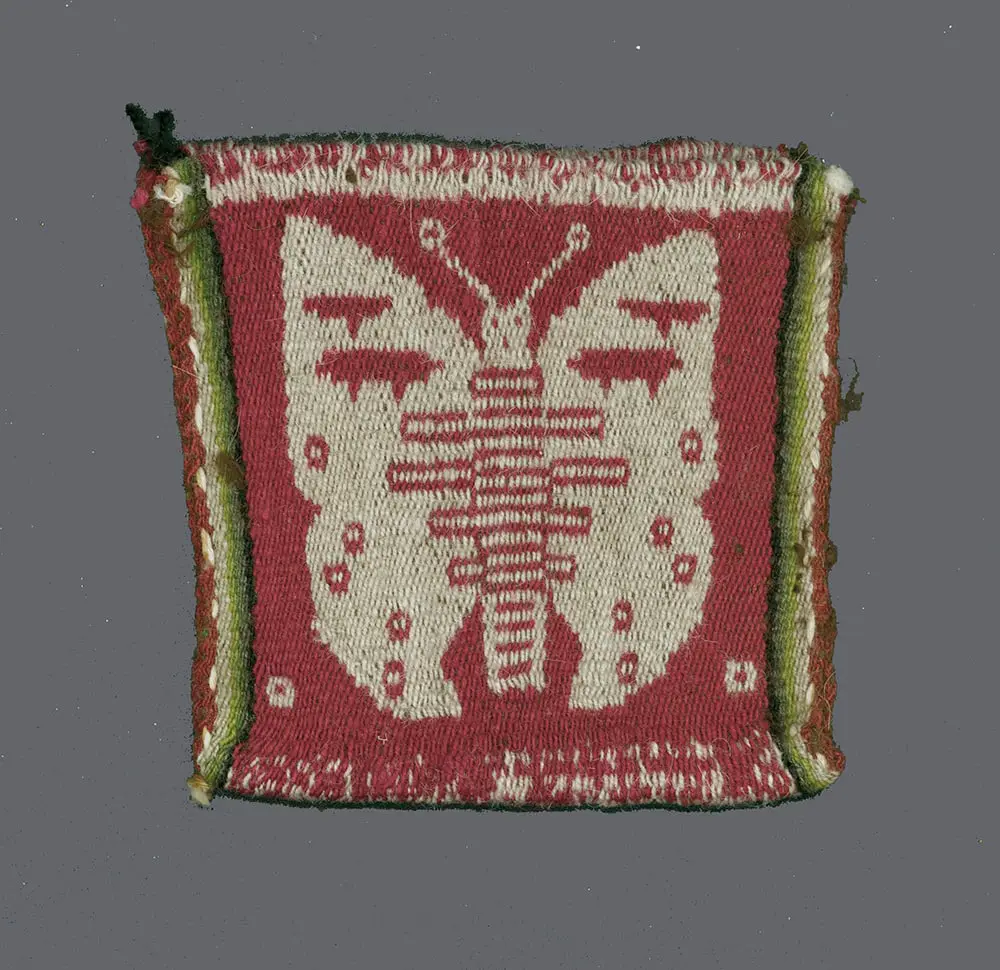
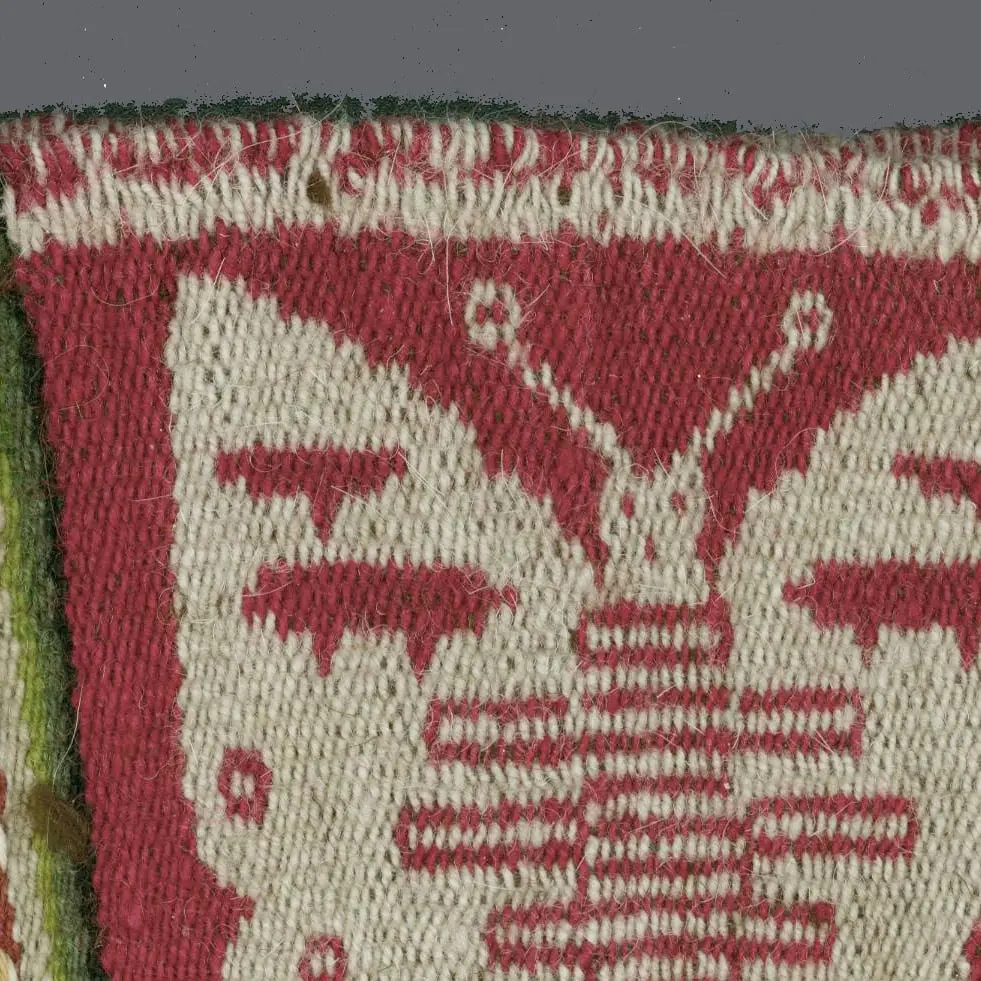
This handwoven ceremonial bag originates from the Department of Oruro in the Bolivian highlands. Dating to the early 20th century (1920–1940), the textile is a refined example of the double-cloth weaving technique, a complex Andean method that produces a reversible, two-layered fabric where the colors of the motifs are mirrored on the reverse side. Measuring approximately 4.5 inches by 5 inches (11 cm x 13 cm), the bag was specifically designed to carry sacred coca leaves, which are central to Aymara and Quechua social, medicinal, and ritual life.
The composition is centered around a prominent butterfly motif, an iconographic element that in the Andean cosmovision is often associated with themes of transformation, beauty, and the delicate balance of nature. This central figure is rendered with architectural precision, set against a high-contrast ground that highlights the graphic nature of the double-weave structure. The bag is typically constructed from finely spun camelid fibers—such as alpaca or llama—and often features a woven tubular edge finish or small decorative tassels at the lower corners, reflecting the high status and ceremonial pride of its male wearer.

Payment Options: We primarily accept PayPal for all transactions. Credit and debit cards are not accepted. If you prefer to pay by personal check instead of PayPal, please note this preference in the "Additional comments" field when placing your order.Ordering Process
To receive your PayPal invoice, simply fill out the form.
Shipping Details: We ship all orders to the address associated with your PayPal payment. Please ensure your PayPal shipping address is current and accurate.A phone number is required during checkout, as our shipping carrier may need to contact you regarding delivery questions.Shipping RatesUnited States and Canada: $20International destinations (air mail): $40
