Copyright © 2026 Yorke Antique Textiles
.avif)

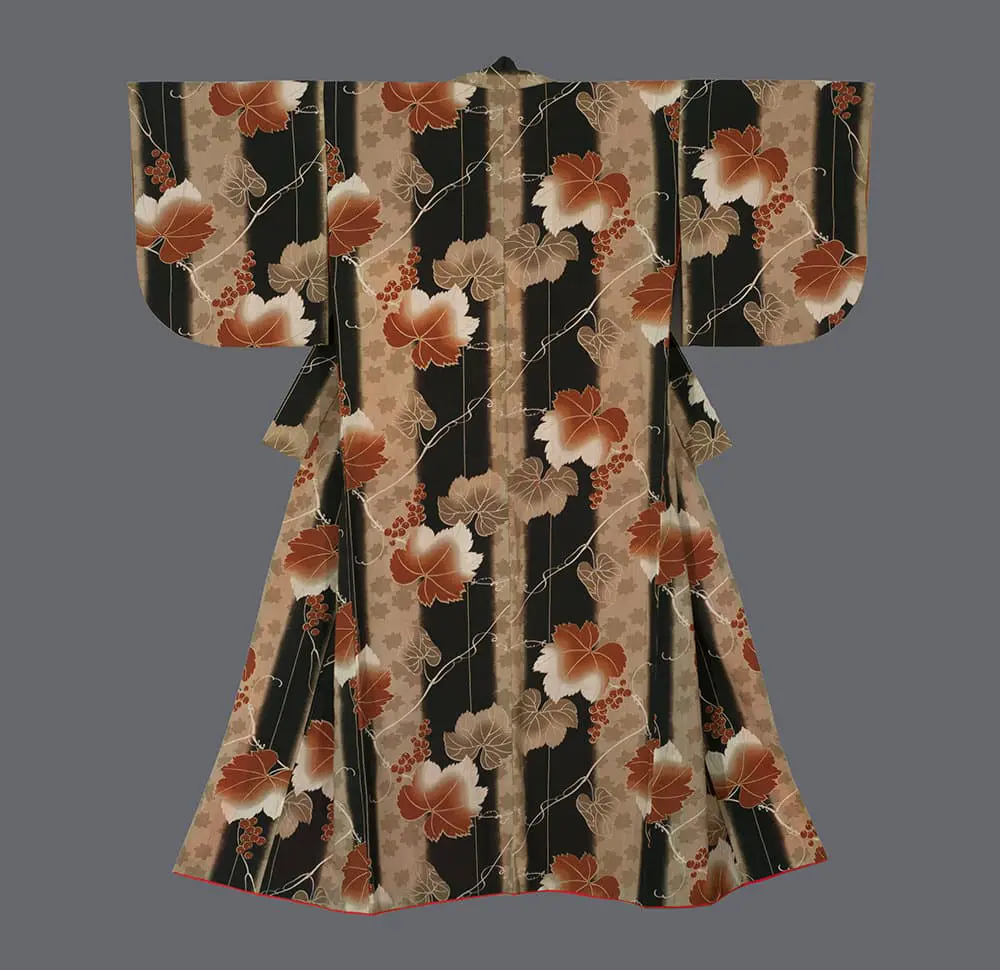


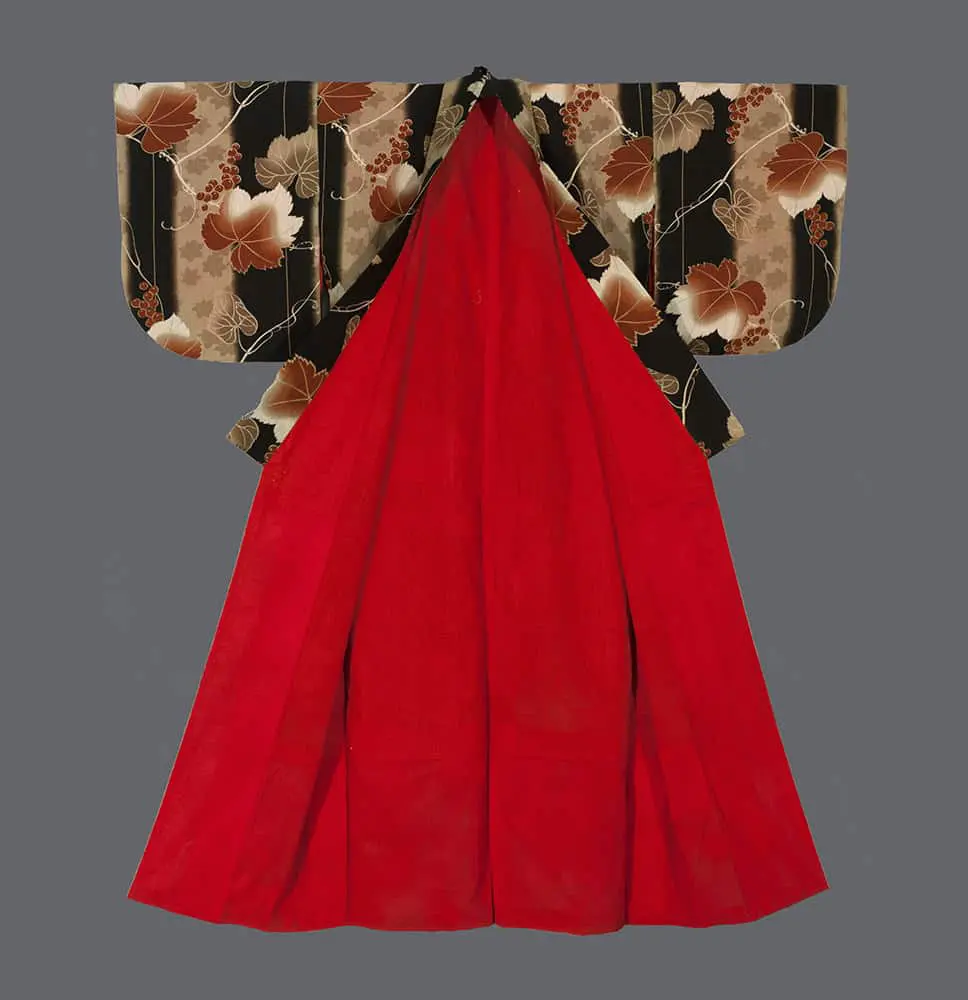


This soft wool kimono from the 1930s exemplifies the sophisticated design sensibilities of Japan's interwar period, when traditional motifs were often reimagined through modern artistic lenses. The composition features bold vertical stripes alternating between black and warm taupe, creating a strong graphic framework over which naturalistic grape vine imagery cascades.
The grape leaf (budō) motif appears throughout in rich autumnal tones—deep russet, warm orange, cream, and soft tan. Clusters of reddish grapes hang among the foliage, while delicate white tendrils spiral elegantly across the striped ground, adding movement and visual rhythm. Grape vines in Japanese art symbolize abundance, fertility, and continuity, as the interconnected vines suggest family bonds extending across generations. The motif also carries associations with autumn harvest and prosperity.
The choice of wool indicates this was intended as a practical everyday kimono for cooler months, offering warmth while maintaining elegance. The visible red lining at the hem (fuki) adds a subtle flash of color that would have been revealed during movement—a characteristic touch of refinement in Japanese dress.
However, there is a discreet 2x1cm hole on the back sleeve and some tiny holes at the hem. Its measurements are 46 inches (117 cm) from sleeve-end to sleeve-end and 53 inches (135 cm) in height.

Payment Options: We primarily accept PayPal for all transactions. Credit and debit cards are not accepted. If you prefer to pay by personal check instead of PayPal, please note this preference in the "Additional comments" field when placing your order.Ordering Process
To receive your PayPal invoice, simply fill out the form.
Shipping Details: We ship all orders to the address associated with your PayPal payment. Please ensure your PayPal shipping address is current and accurate.A phone number is required during checkout, as our shipping carrier may need to contact you regarding delivery questions.Shipping RatesUnited States and Canada: $20International destinations (air mail): $40
