Copyright © 2026 Yorke Antique Textiles
.avif)

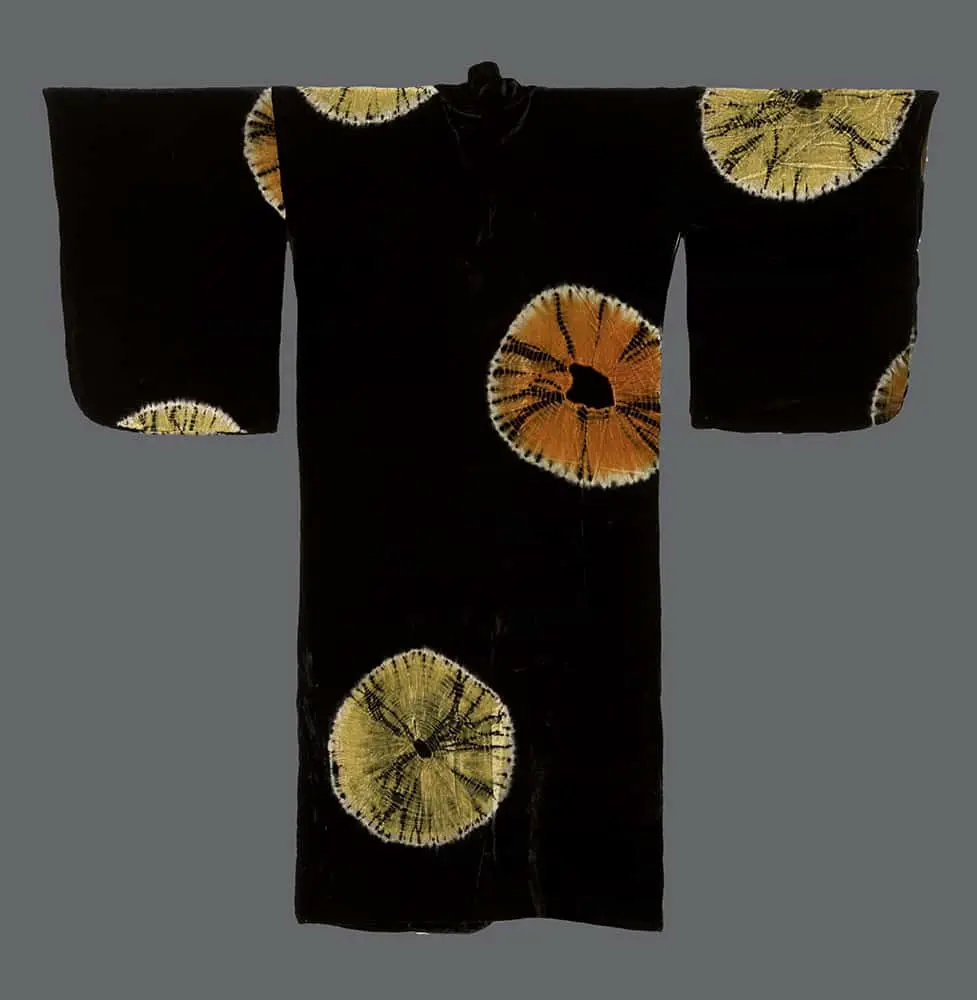
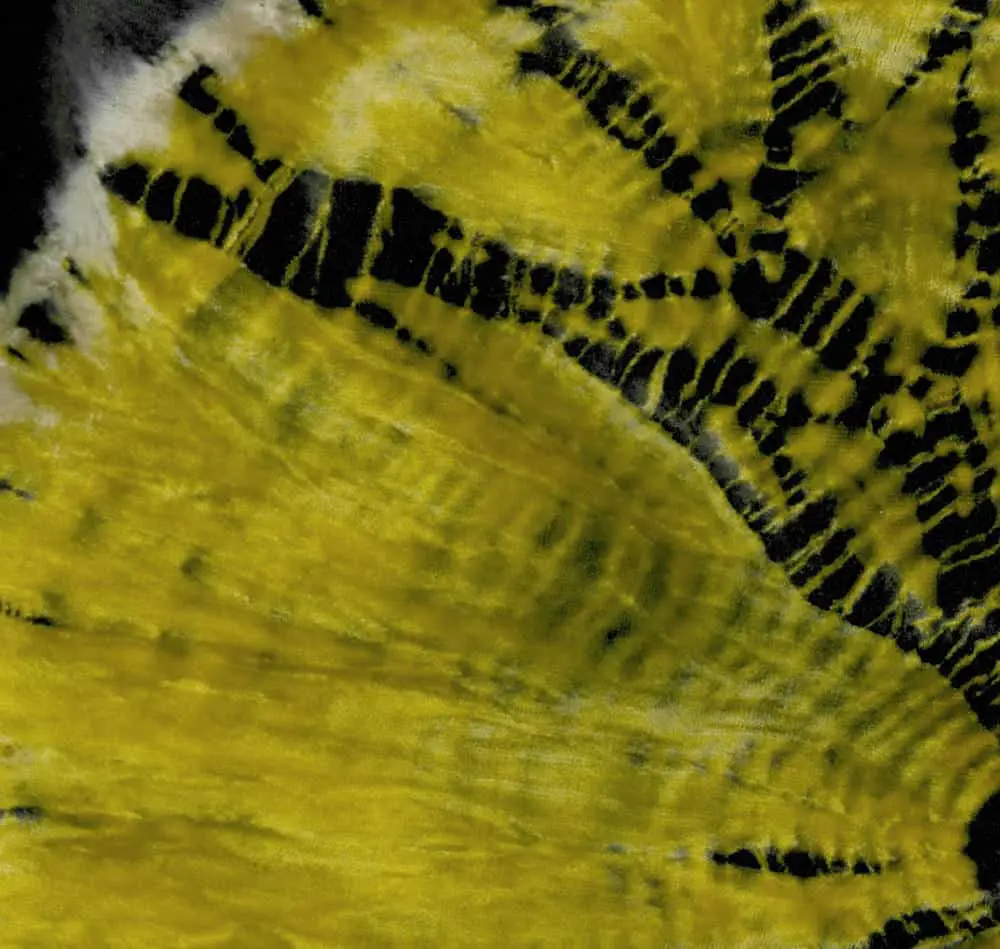
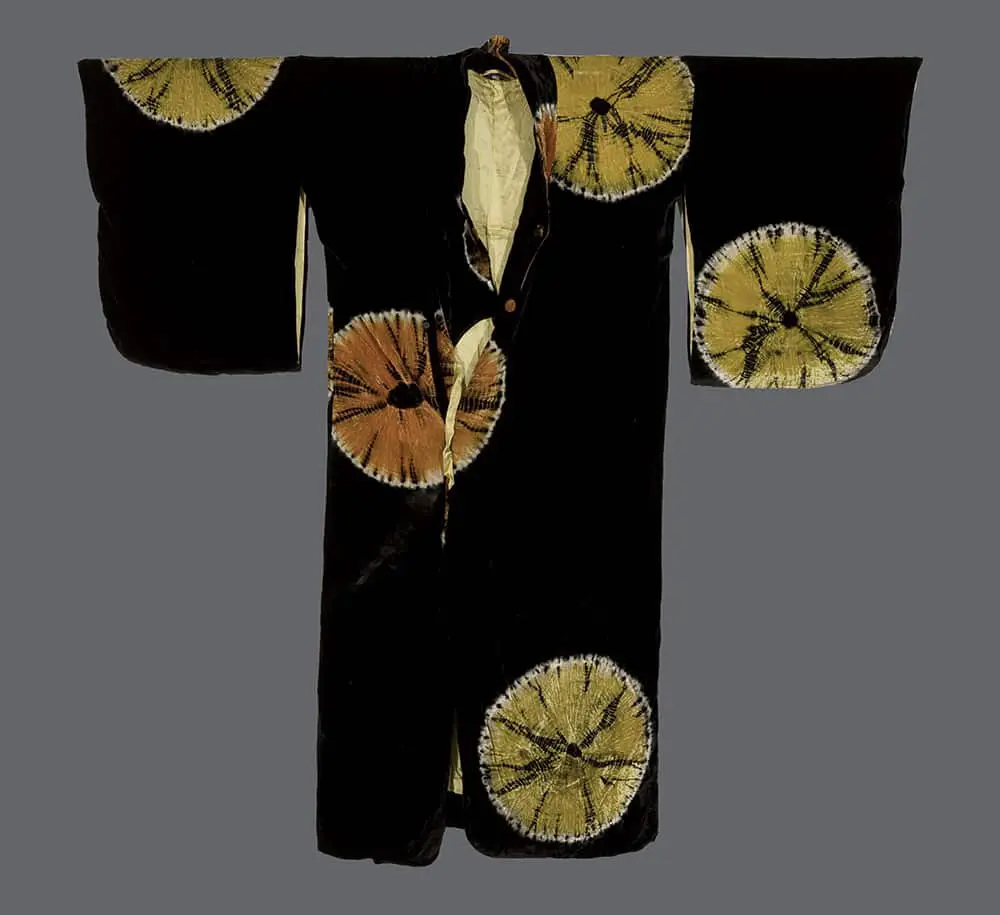

This distinct michiyuki, styled as a Western-tailored haori from the early Showa era (1926–1940), is a luxurious example of the period's experimental "moga" (modern girl) fashion. The garment is crafted from a plush material, likely velvet, which provides a deep, light-absorbing black ground that emphasizes the tactile richness of the fabric.
The composition is defined by large, scattered shibori-dyed roundels in vibrant shades of citron-yellow and burnt orange. These circular motifs feature a rhythmic, radiating texture characteristic of the "spider" (kumo) shibori technique, where the fabric is pleated and bound to create feathered, skeletal lines that mimic natural organic forms. The juxtaposition of the traditional tie-dye technique with the heavy, Western-influenced plush pile reflects the era's unique fusion of Japanese craftsmanship and international avant-garde style.
Its measurements are approximately 51 inches (129.5 cm) from sleeve-end to sleeve-end and 47 inches (119.4 cm) in height.

Payment Options: We primarily accept PayPal for all transactions. Credit and debit cards are not accepted. If you prefer to pay by personal check instead of PayPal, please note this preference in the "Additional comments" field when placing your order.Ordering Process
To receive your PayPal invoice, simply fill out the form.
Shipping Details: We ship all orders to the address associated with your PayPal payment. Please ensure your PayPal shipping address is current and accurate.A phone number is required during checkout, as our shipping carrier may need to contact you regarding delivery questions.Shipping RatesUnited States and Canada: $20International destinations (air mail): $40
