Copyright © 2026 Yorke Antique Textiles
.avif)

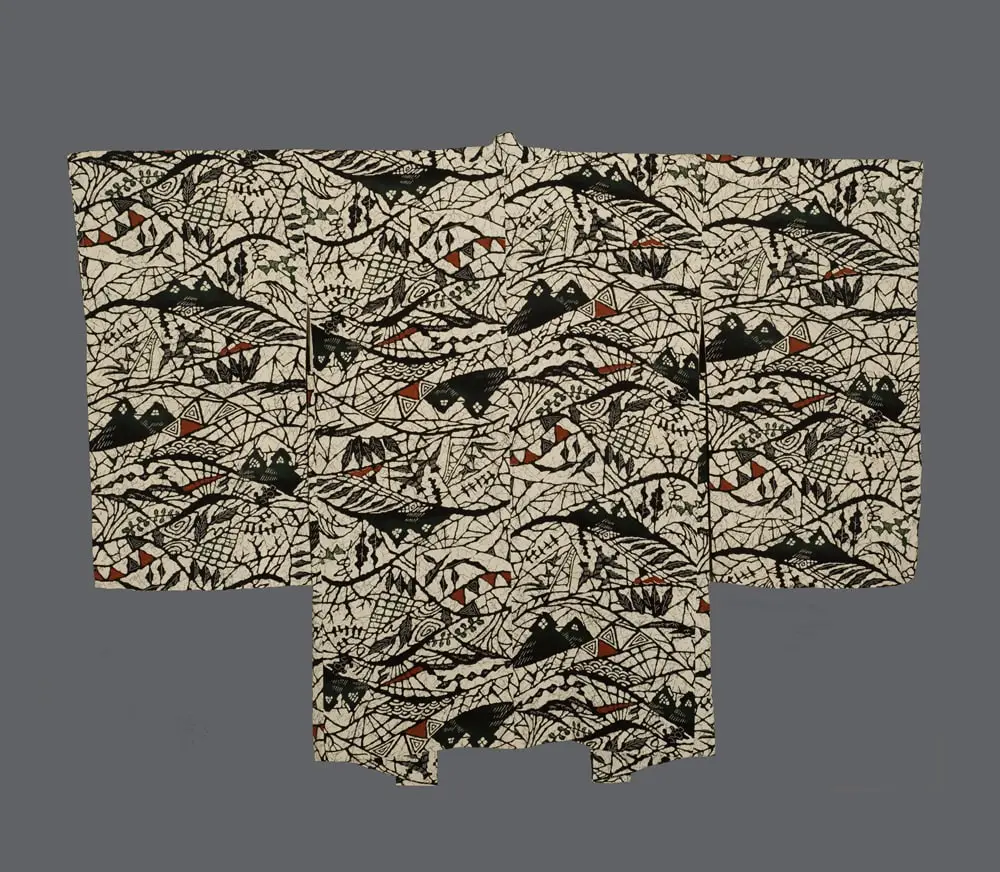
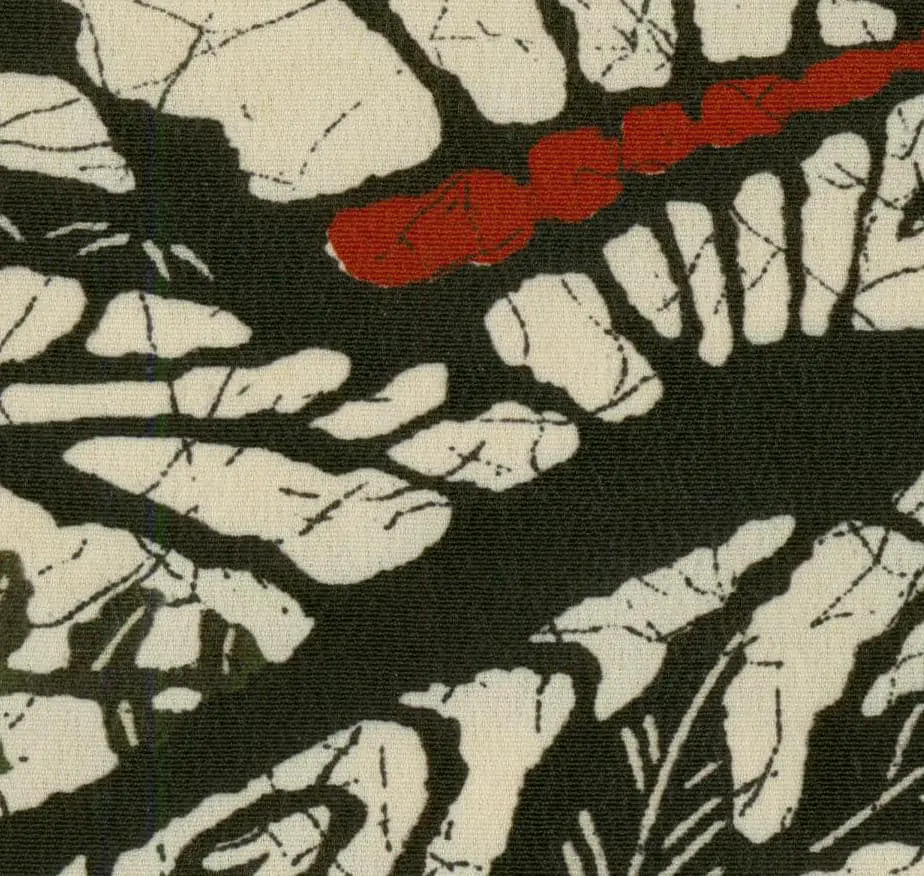

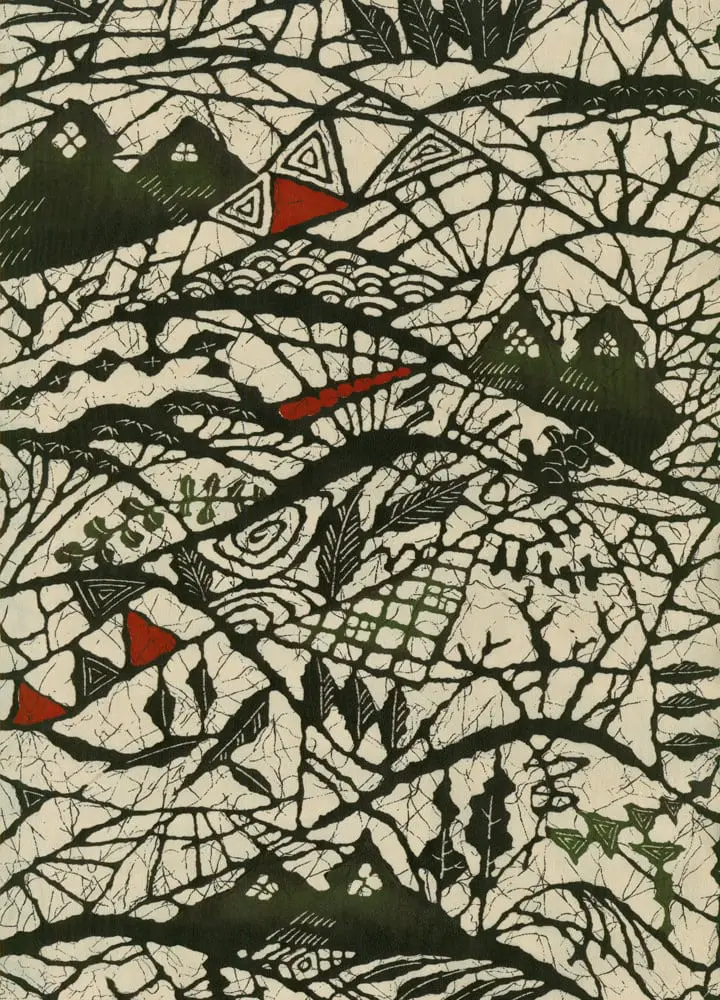
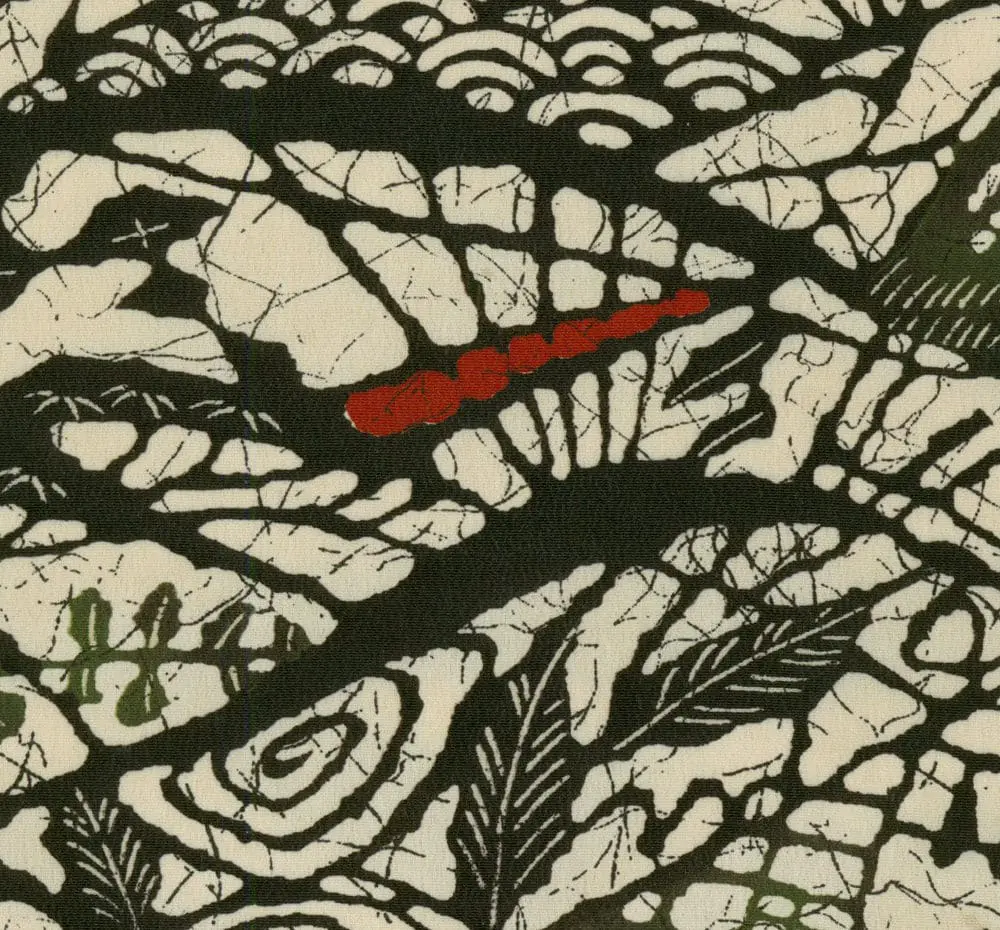
This silk woman's haori is a striking example of mid-century textile innovation, utilizing silkscreening to achieve a sophisticated faux-batik aesthetic. The garment is rendered on a crisp cream silk ground, featuring a dense, all-over landscape pattern that mimics the complex, crackled texture of traditional wax-resist dyeing.
The composition is a rhythmic arrangement of stylized rural motifs, including dark, triangular mountain peaks, thatched-roof cottages, and wind-swept reeds. These elements are presented in a high-contrast palette of charcoal-black and forest-green, with small, strategic accents of terracotta-red that draw the eye across the architectural field. A fine web of "crackle" lines overlays the entire scene, successfully replicating the accidental beauty of batik while maintaining the graphic precision of 20th-century printing. This piece reflects the Showa era's fascination with global folk-art traditions, reimagining them through a modern, high-fashion lens.
Its measurements are 50 inches from sleeve-end to sleeve-end and 35 inches in height (127 x 89 cm).

Payment Options: We primarily accept PayPal for all transactions. Credit and debit cards are not accepted. If you prefer to pay by personal check instead of PayPal, please note this preference in the "Additional comments" field when placing your order.Ordering Process
To receive your PayPal invoice, simply fill out the form.
Shipping Details: We ship all orders to the address associated with your PayPal payment. Please ensure your PayPal shipping address is current and accurate.A phone number is required during checkout, as our shipping carrier may need to contact you regarding delivery questions.Shipping RatesUnited States and Canada: $20International destinations (air mail): $40
