Copyright © 2026 Yorke Antique Textiles
.avif)

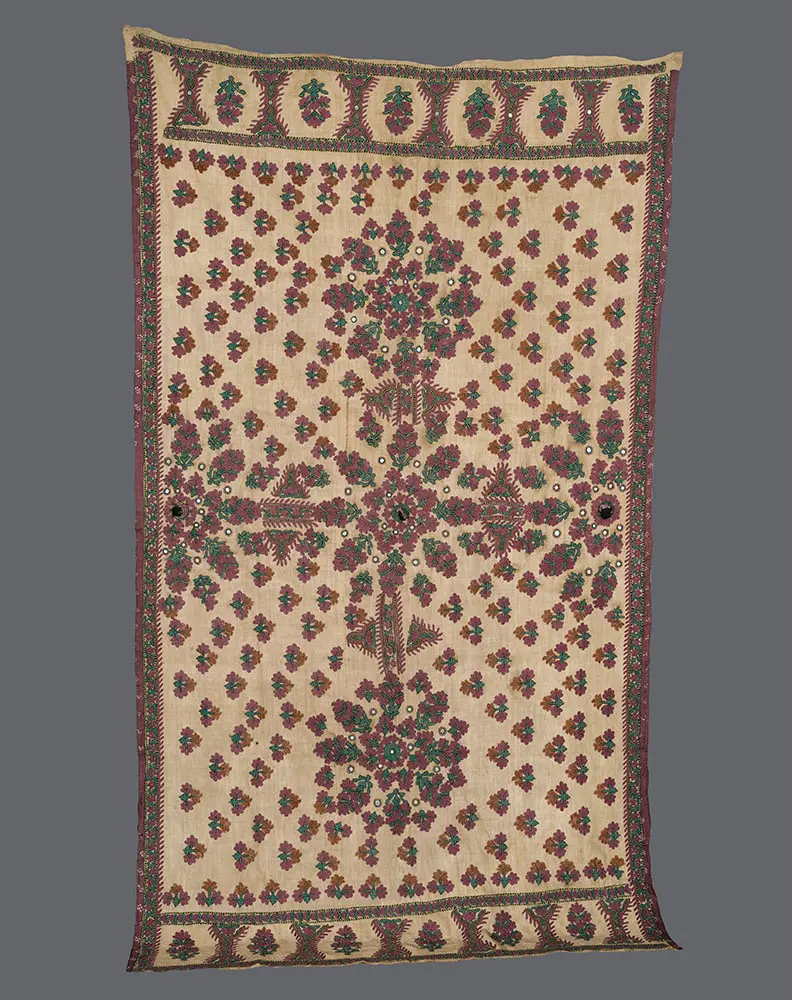
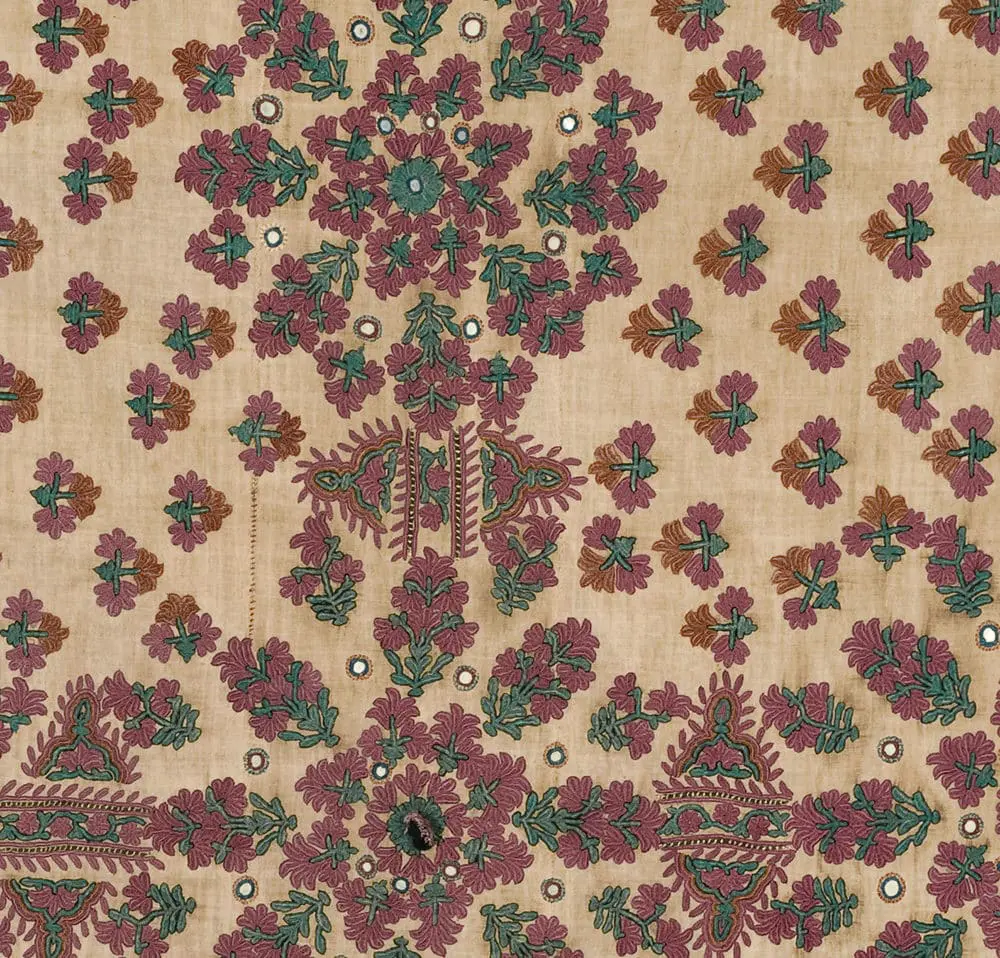
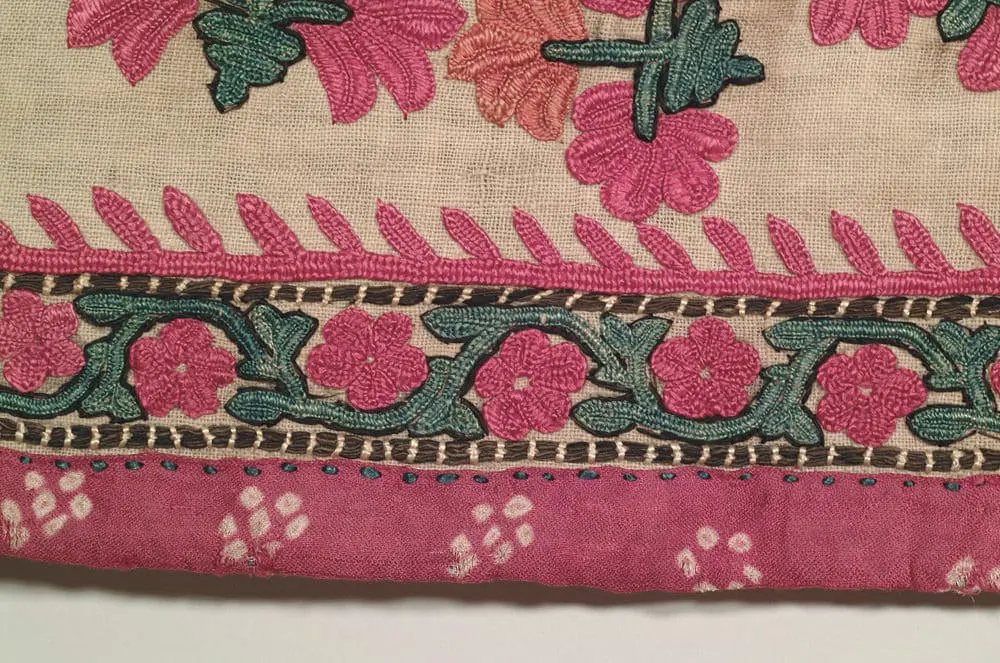
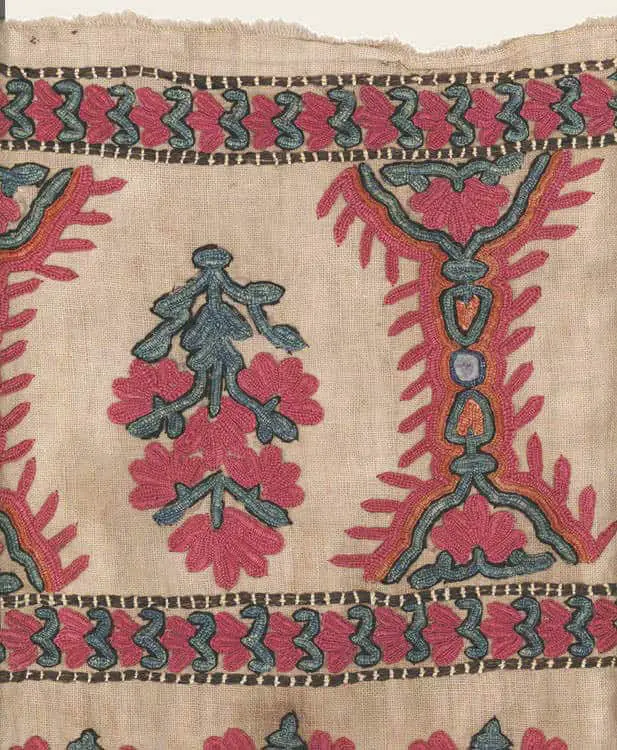
This monumental textile, originating from the Tharparker area of Sindh, Pakistan, between 1850 and 1910, is a brilliant example of the region's celebrated needlework and resist-dyeing traditions. Measuring 52 inches by 88 inches (132 cm x 224 cm), the piece is constructed from three cotton panels seamlessly joined to create a large vertical field. The ground is an unbleached natural cotton, which serves as a neutral stage for the dense, multi-colored silk embroidery.
The composition is dominated by a grand, central tree-of-life motif that spans the height of the textile, flanked by a field of smaller, repeating floral sprays. The embroidery is executed in a vibrant palette of magenta, forest green, and ochre, further embellished with small, reflective mirrors (shisha) stitched into the floral centers to ward off evil spirits. Notably, the narrow vertical borders feature incredibly delicate ikat patterns, while the top and bottom ends remain unhemmed, suggesting its original use as a ceremonial hanging or wrap. The textile remains in very good condition.

Payment Options: We primarily accept PayPal for all transactions. Credit and debit cards are not accepted. If you prefer to pay by personal check instead of PayPal, please note this preference in the "Additional comments" field when placing your order.Ordering Process
To receive your PayPal invoice, simply fill out the form.
Shipping Details: We ship all orders to the address associated with your PayPal payment. Please ensure your PayPal shipping address is current and accurate.A phone number is required during checkout, as our shipping carrier may need to contact you regarding delivery questions.Shipping RatesUnited States and Canada: $20International destinations (air mail): $40
