Copyright © 2026 Yorke Antique Textiles
.avif)

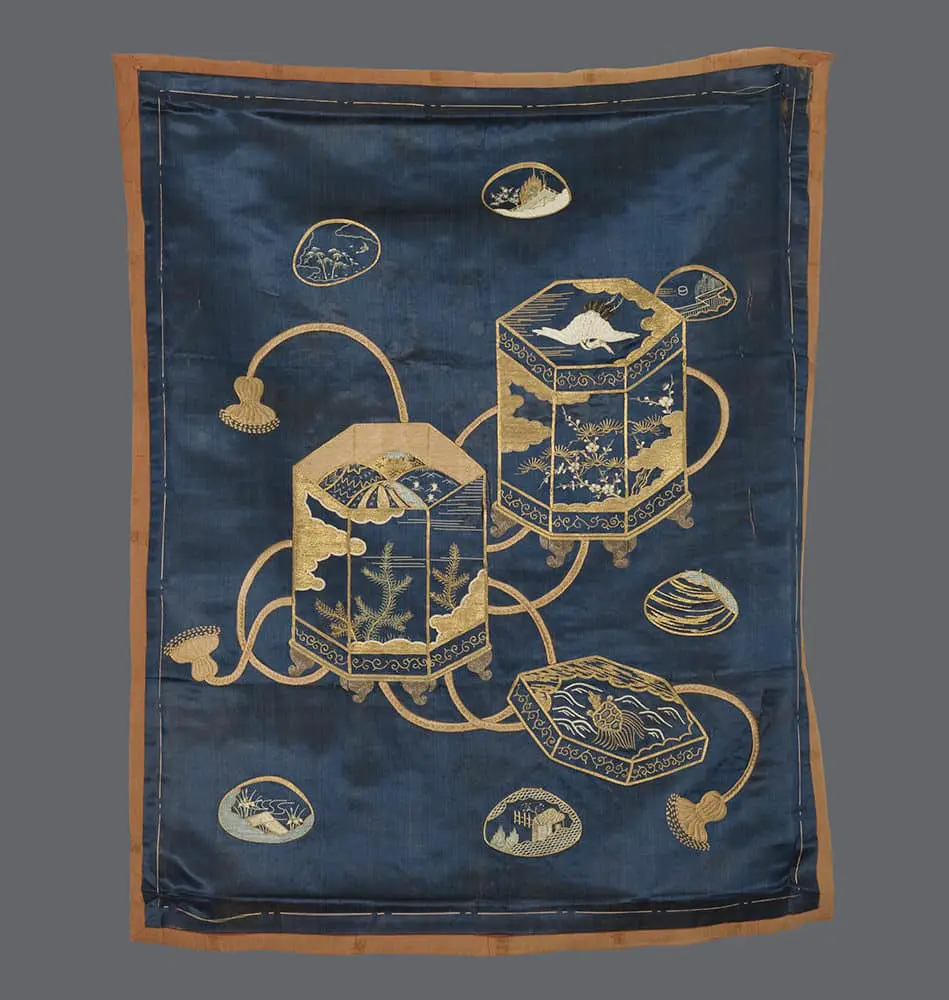
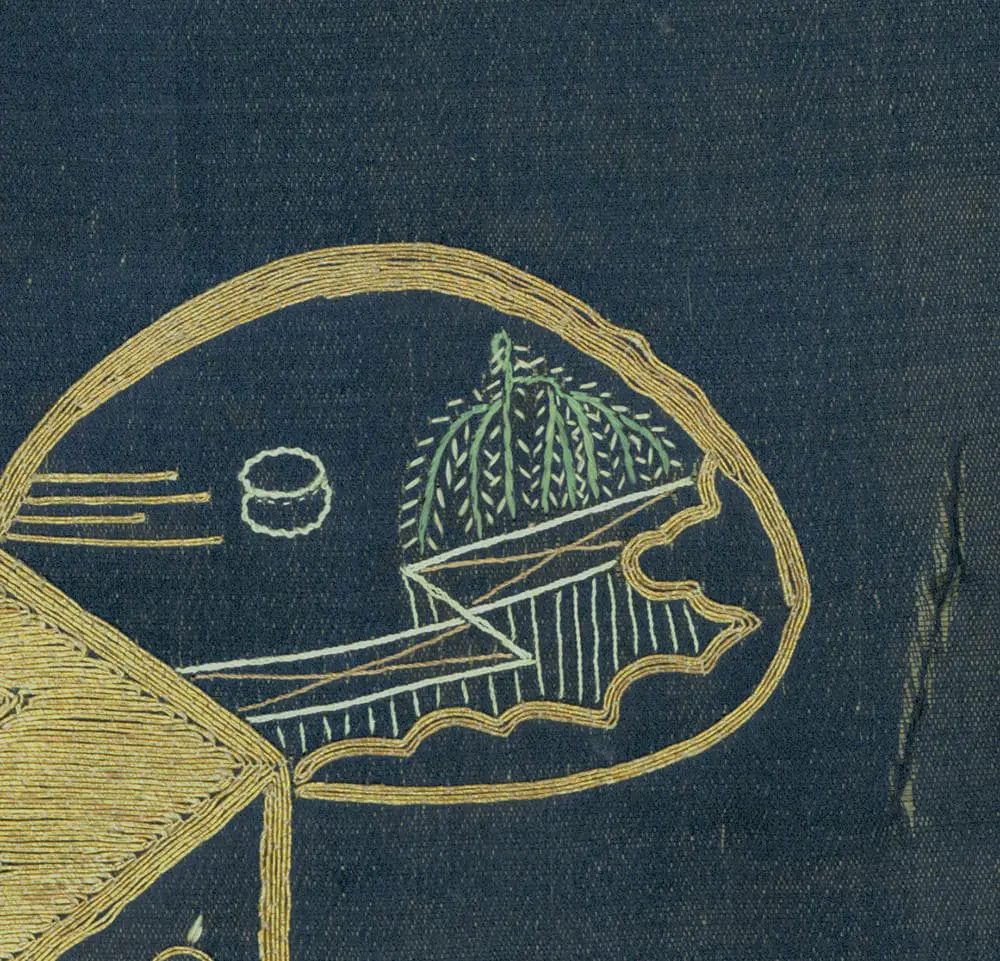
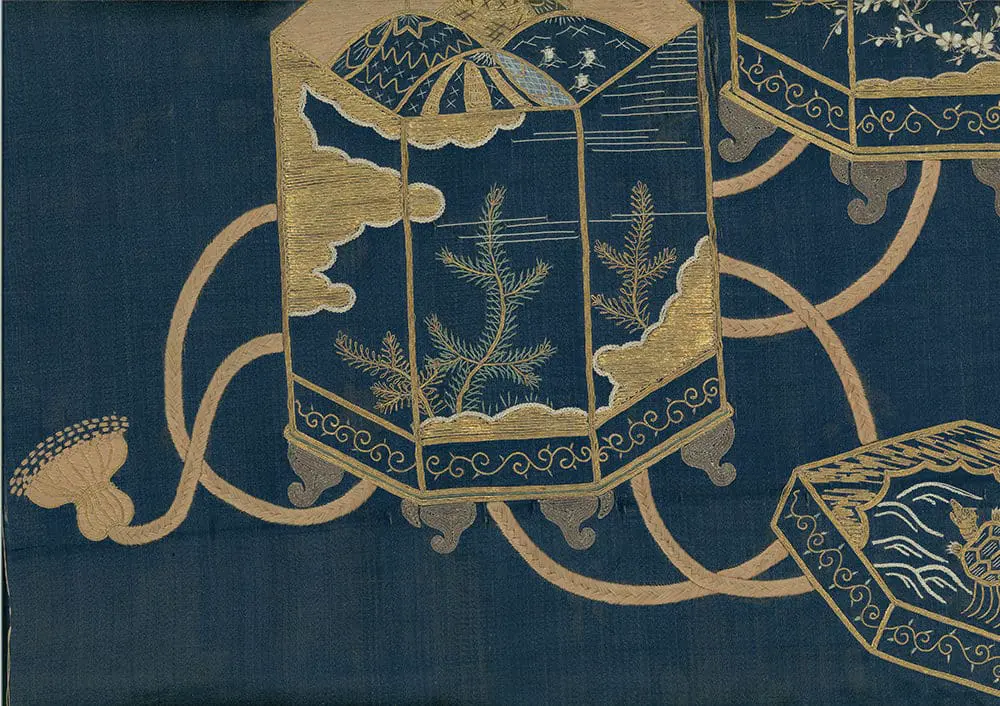
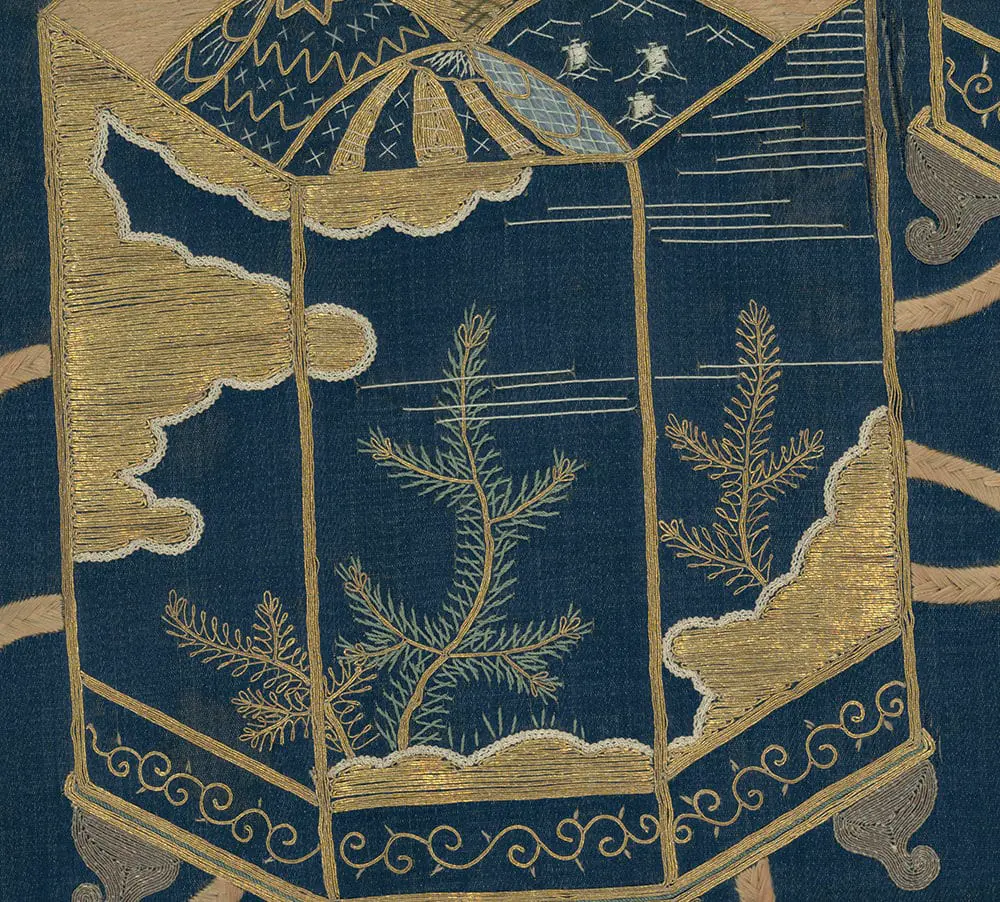
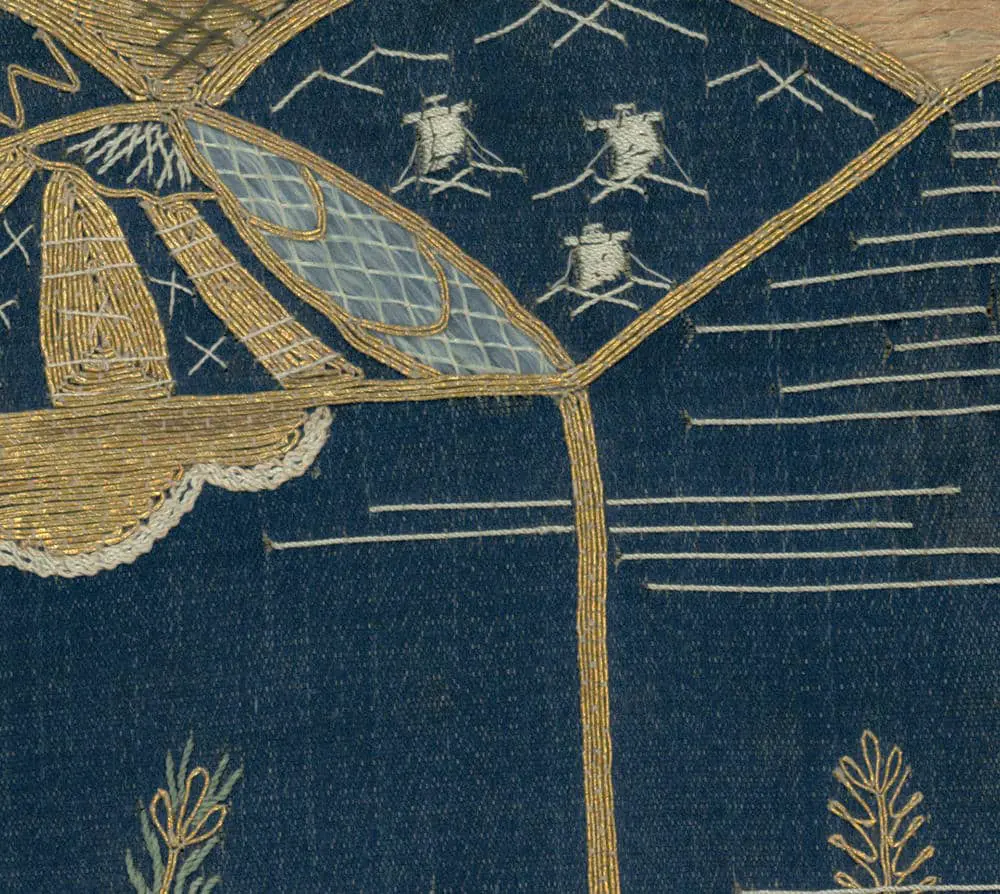
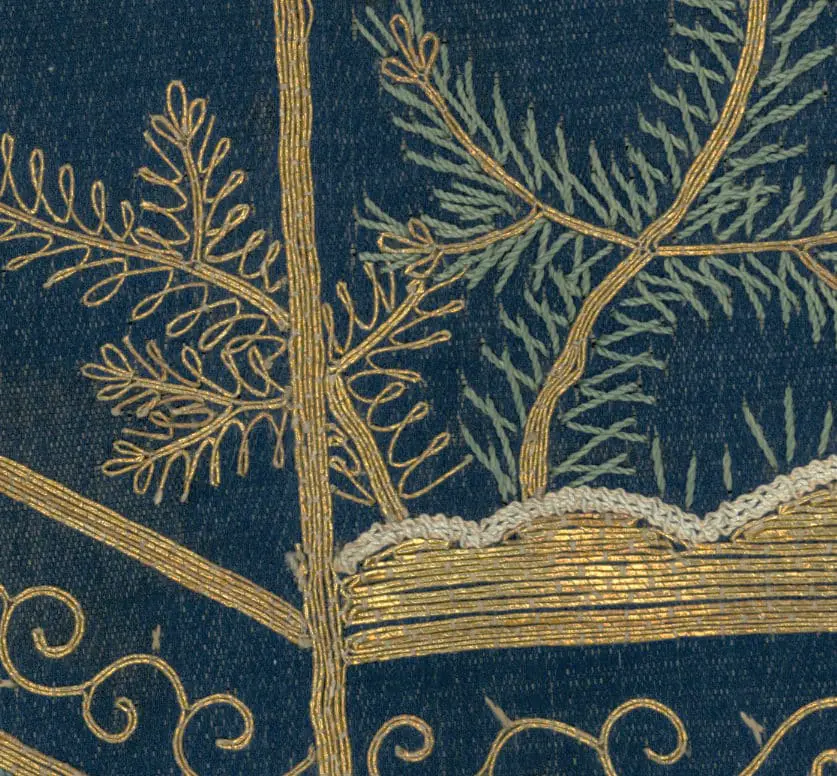
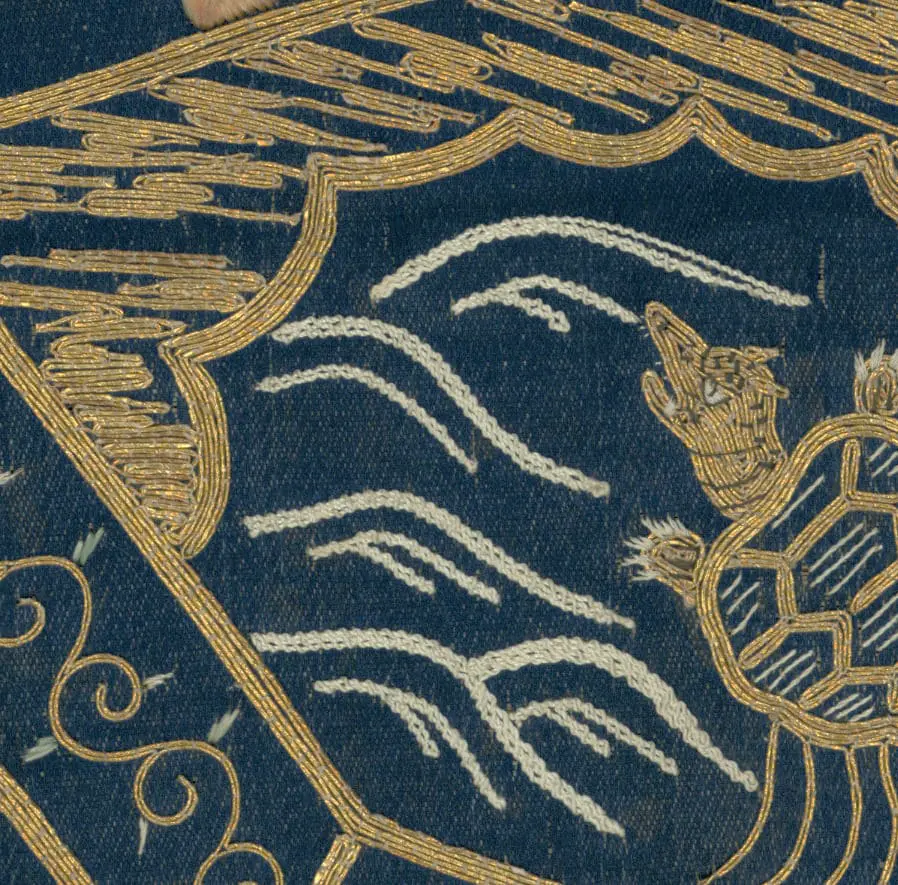
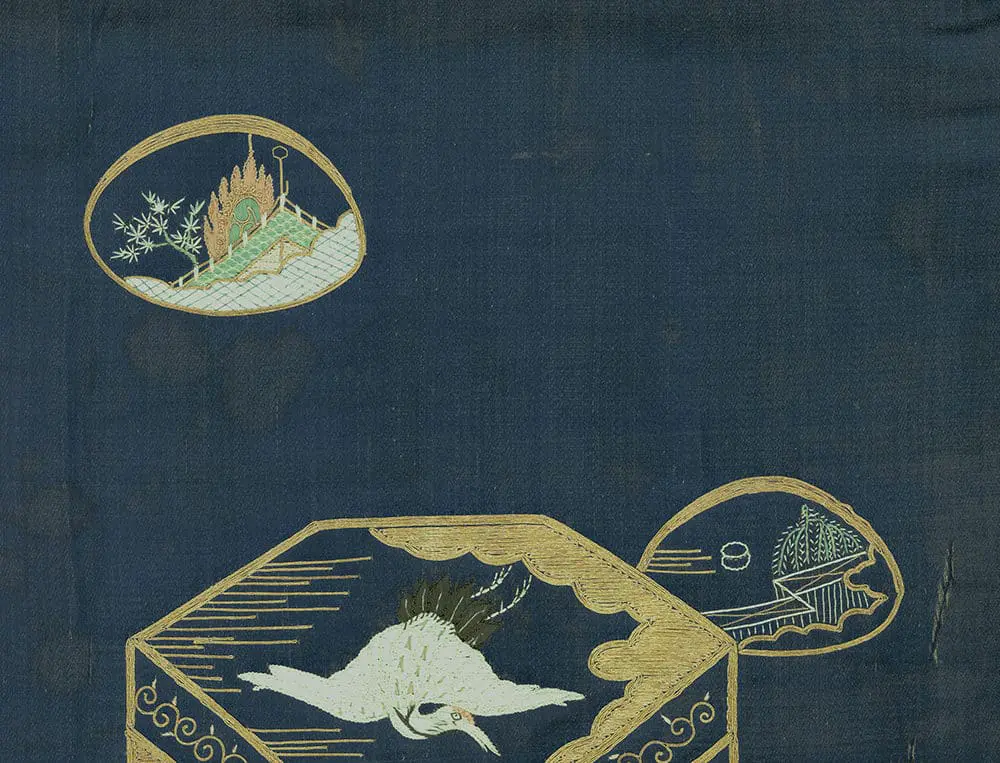
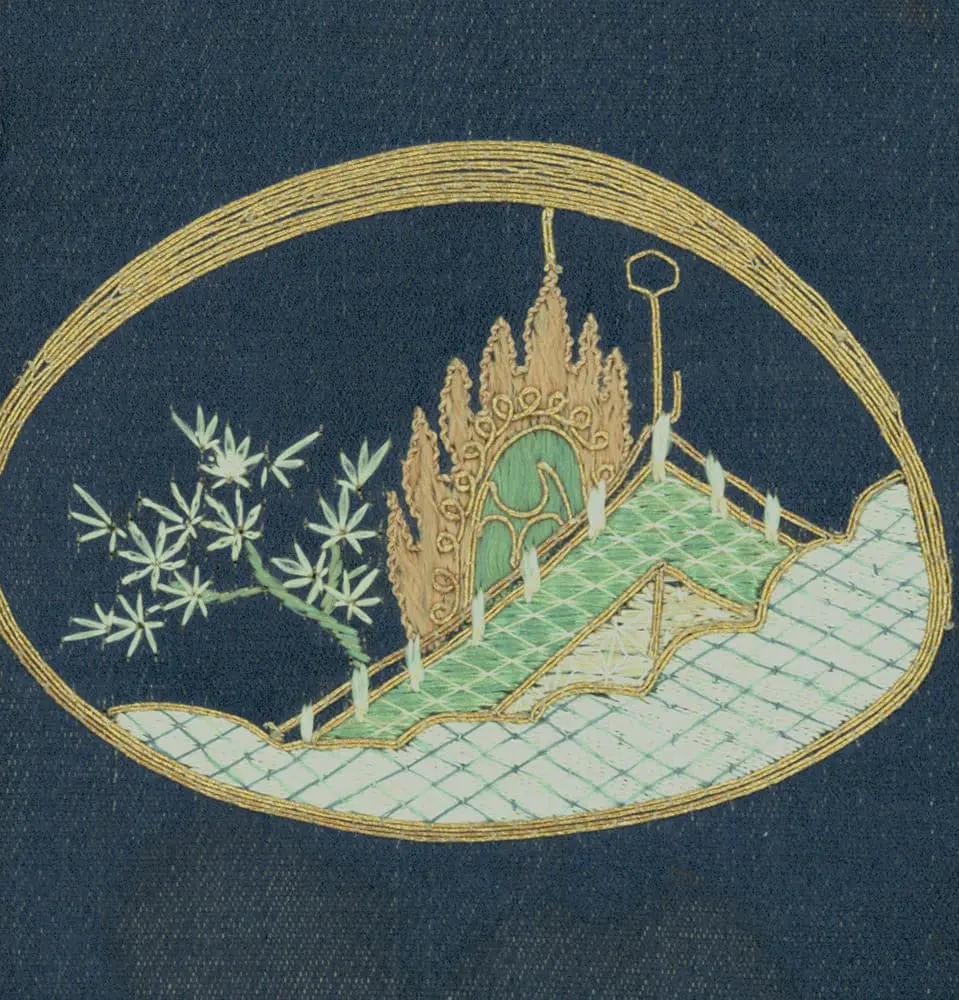
This elegant silk fukusa (gift cover), dating to the Edo period (1800–1840), showcases the refined aesthetic of the Japanese aristocracy. Measuring 27 inches by 33 inches (69 cm x 84 cm), the textile is adorned with sophisticated embroidery depicting kaioke—ornate octagonal containers used for storing clam shells.
These vessels were central to kai-awase, a popular "shell-matching" game among the nobility. Because each clam shell has a unique shape that fits only with its original mate, the game became a poignant symbol of marital fidelity and the search for a perfect life partner. The kaioke depicted here are intricately detailed with gold metallic thread and colored silk, featuring auspicious motifs of pine, plum blossoms, and cranes. While the embroidery itself is remarkably well-preserved, the blue silk background shows signs of its age, including darkened patches and several areas of silk splitting.

Payment Options: We primarily accept PayPal for all transactions. Credit and debit cards are not accepted. If you prefer to pay by personal check instead of PayPal, please note this preference in the "Additional comments" field when placing your order.Ordering Process
To receive your PayPal invoice, simply fill out the form.
Shipping Details: We ship all orders to the address associated with your PayPal payment. Please ensure your PayPal shipping address is current and accurate.A phone number is required during checkout, as our shipping carrier may need to contact you regarding delivery questions.Shipping RatesUnited States and Canada: $20International destinations (air mail): $40
