Copyright © 2026 Yorke Antique Textiles
.avif)

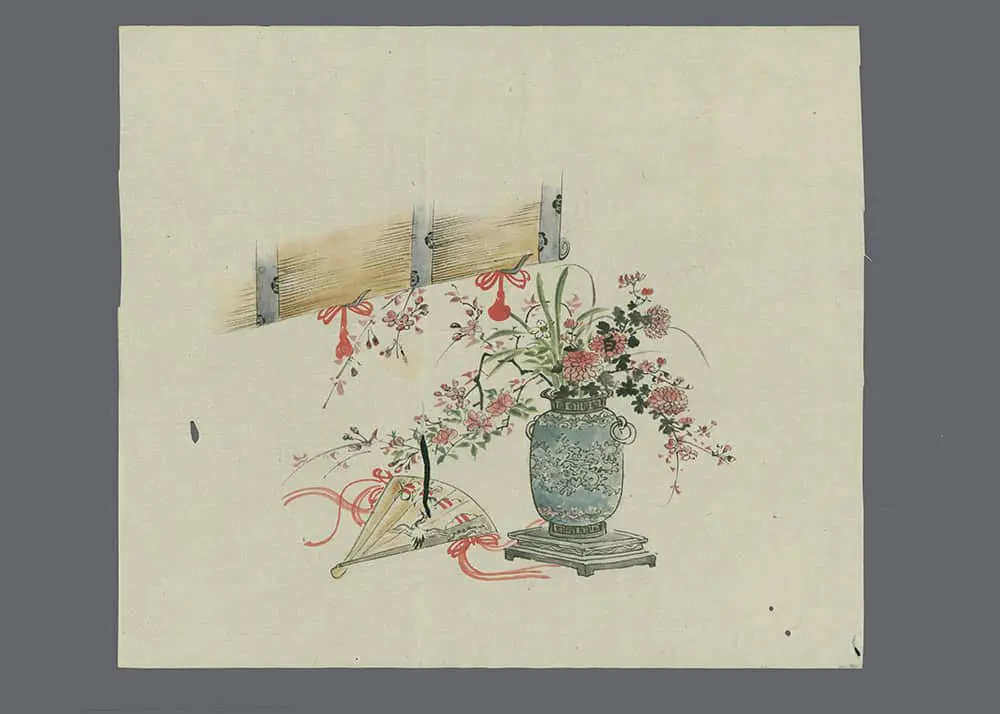
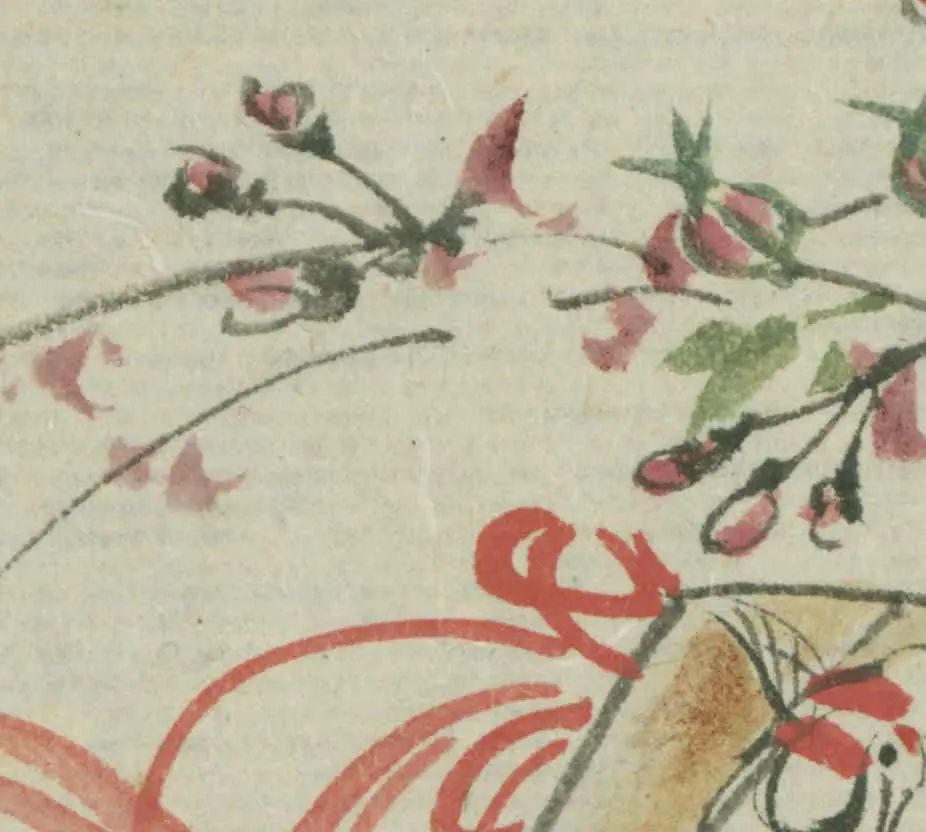
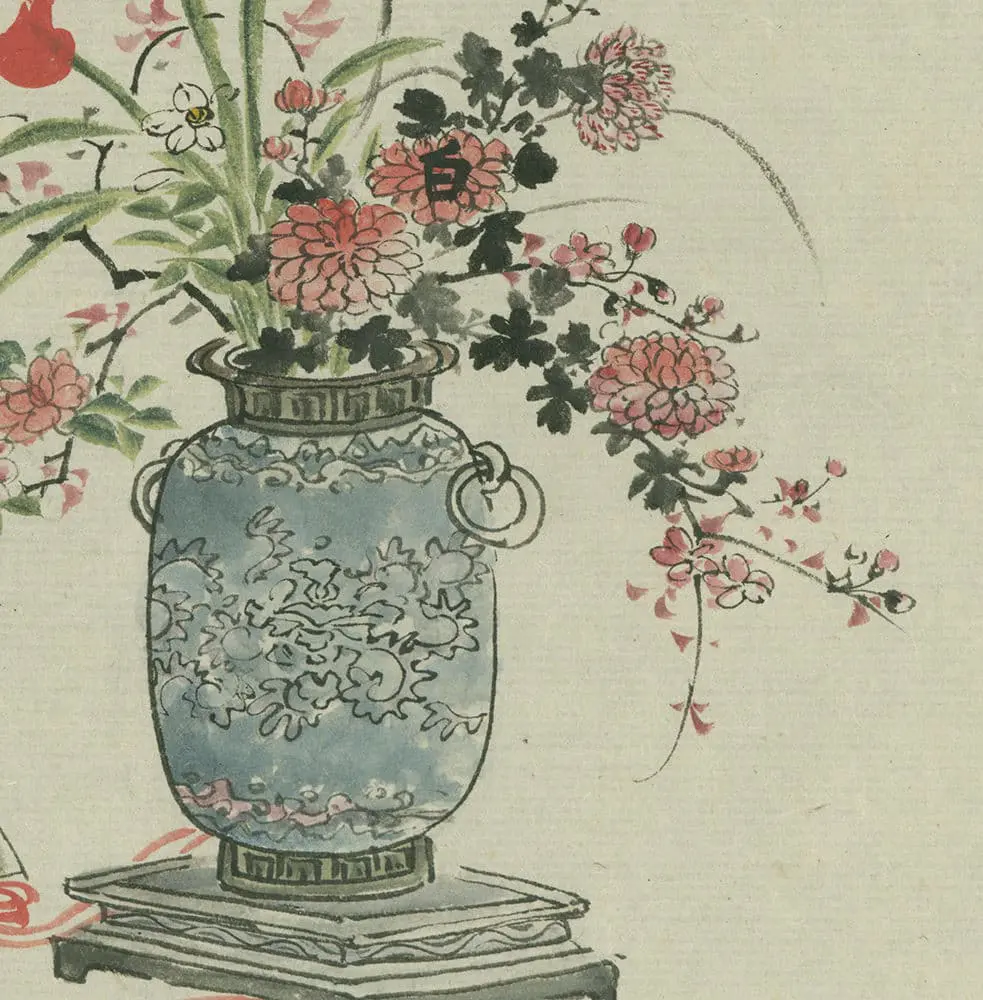
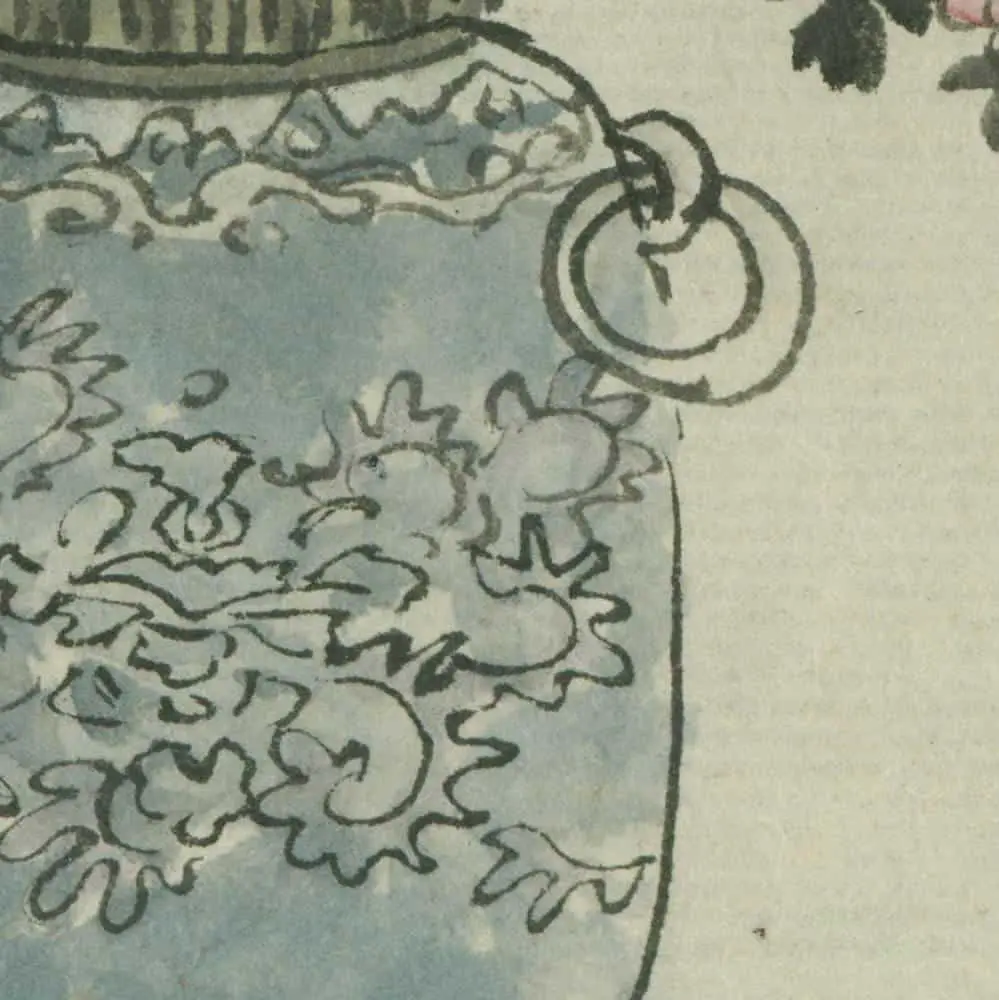
This elegant hand-painted artwork is an original creation from Japan, dating to the second half of the 19th century. Measuring 11 inches by 12 inches (27.94 cm x 30.48 cm), this piece is rendered in delicate watercolor and ink on paper. This artwork is a quintessential example of Meiji-period still-life painting, documenting a formal interior arrangement likely found in a high-ranking household or tea room. While the paper bears a visible bookworm long hole—an authentic sign of its long-term storage in a traditional Japanese archive—the fine pigments and detail remain beautifully intact.
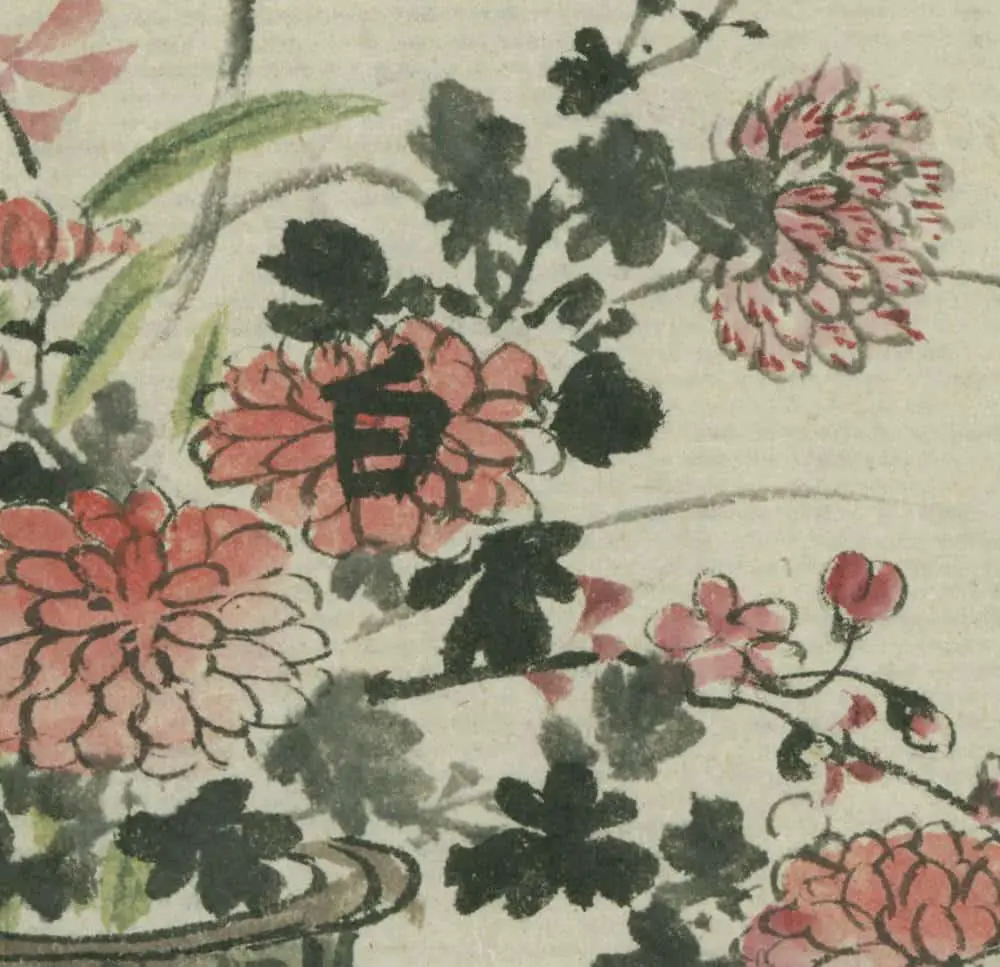
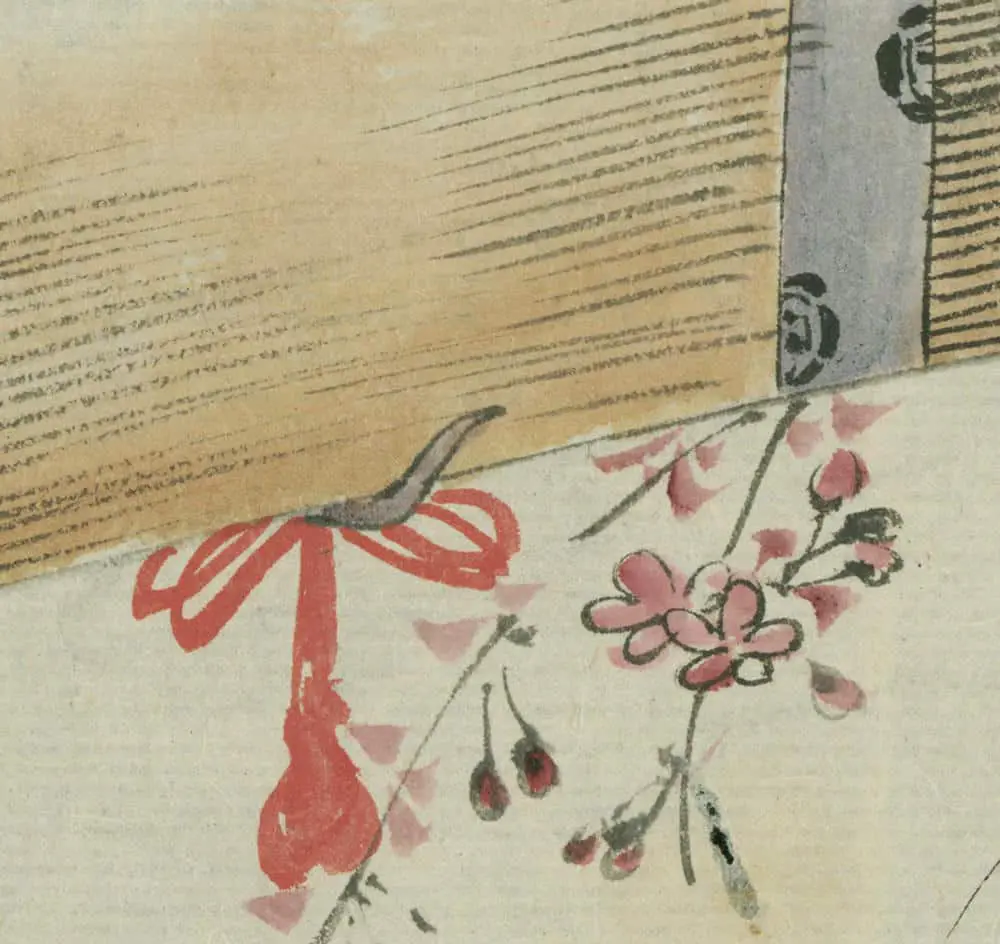
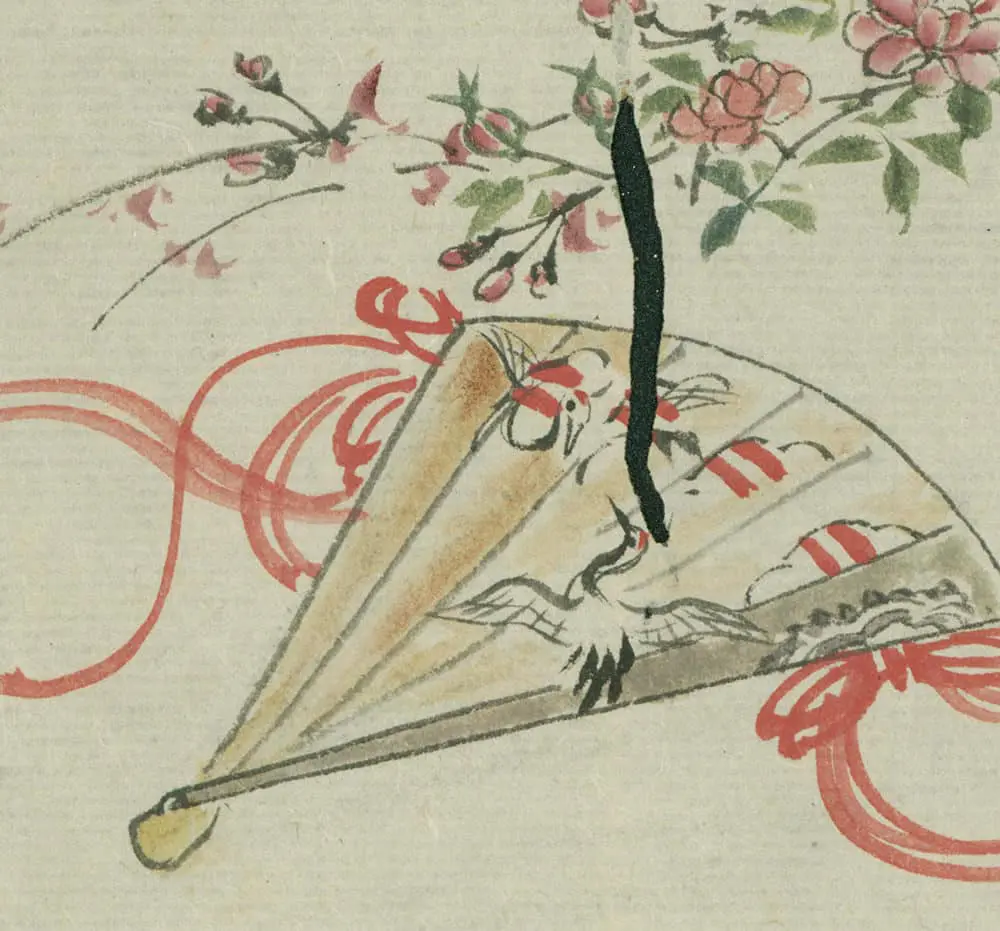
The composition features a sophisticated vase (hanabashi) of celadon-blue glaze, decorated with white floral scrolling and perched upon a dark wooden stand. The vase holds a lush arrangement of pink chrysanthemums and slender grasses. Beside the vase lies an open ceremonial fan (sensu) decorated with a soaring crane, its bright red ribbons curling across the floor. In the background, a bamboo blind (sudare) with decorative metal fittings and red silk tassels is partially visible, suggesting a summer setting. The artist utilized fine, precise ink lines for the architectural elements and fan, contrasted with soft, translucent washes for the petals and ribbons, capturing a moment of refined tranquility.

Payment Options: We primarily accept PayPal for all transactions. Credit and debit cards are not accepted. If you prefer to pay by personal check instead of PayPal, please note this preference in the "Additional comments" field when placing your order.Ordering Process
To receive your PayPal invoice, simply fill out the form.
Shipping Details: We ship all orders to the address associated with your PayPal payment. Please ensure your PayPal shipping address is current and accurate.A phone number is required during checkout, as our shipping carrier may need to contact you regarding delivery questions.Shipping RatesUnited States and Canada: $20International destinations (air mail): $40
