Copyright © 2026 Yorke Antique Textiles
.avif)

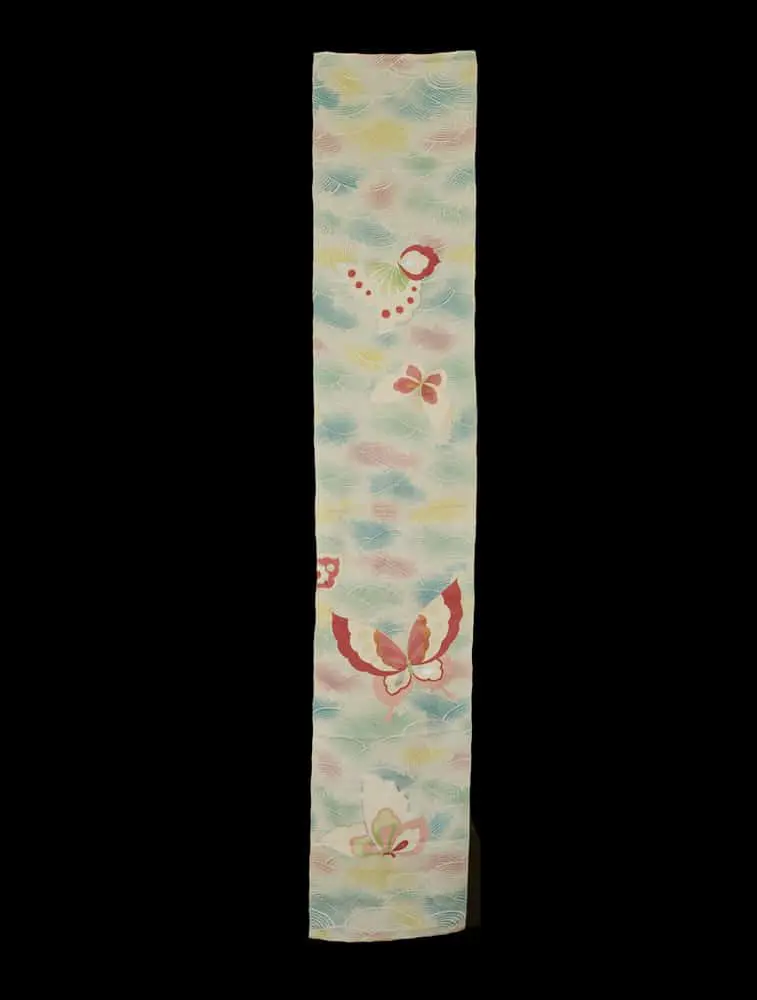
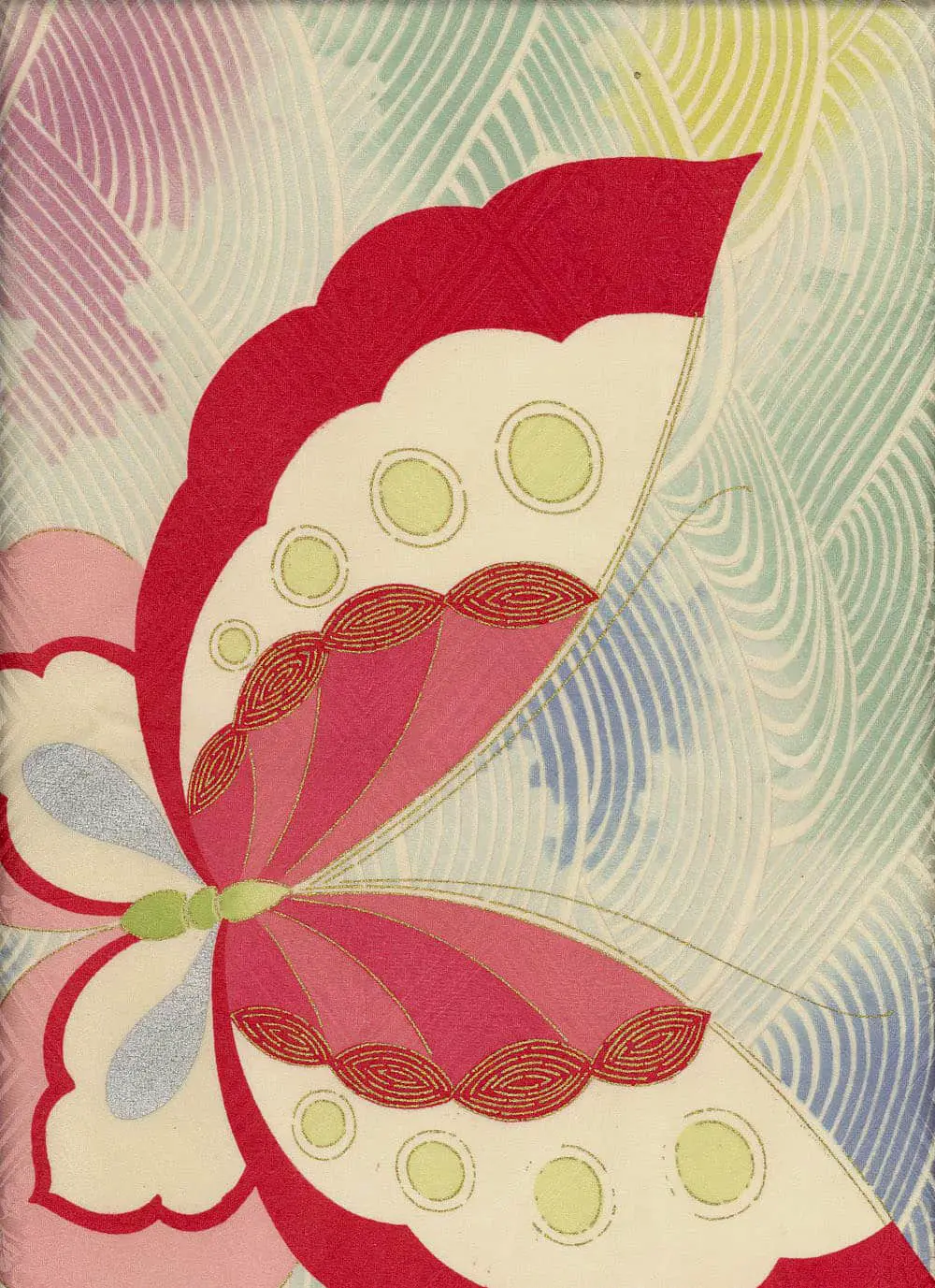
This ethereal textile originates from Japan’s late Showa period (1950–1980) and is a scholarly example of the light, atmospheric aesthetics favored for celebratory seasonal garments. Measuring 14.5 inches by 78 inches (37 cm x 198 cm), the piece represents a complete panel from a disassembled kimono and is preserved in great condition. Crafted from high-quality silk with a slight crispness to its texture, the substrate features a sophisticated all-over woven wave motif, known as seigaiha, which provides a rhythmic, undulating depth to the background. While the primary motifs remain vibrant, the white areas exhibit standard age-related patina and minor spots typical of vintage silk.
The visual narrative is set against a dreamy, pastel-hued field of soft mint green, pale yellow, and blush pink clouds. Adorning this watercolor-like landscape are striking cho (butterfly) motifs rendered in bold shades of crimson, forest green, and ivory. These butterflies are meticulously outlined in abundant metallic silver and gold, lending a brilliant, three-dimensional definition to their wings. The butterfly is a classical symbol of metamorphosis and feminine grace, and its pairing here with a shimmering aquatic background reflects the era's mastery of combining traditional symbolism with a refreshing, mid-century palette.

Payment Options: We primarily accept PayPal for all transactions. Credit and debit cards are not accepted. If you prefer to pay by personal check instead of PayPal, please note this preference in the "Additional comments" field when placing your order.Ordering Process
To receive your PayPal invoice, simply fill out the form.
Shipping Details: We ship all orders to the address associated with your PayPal payment. Please ensure your PayPal shipping address is current and accurate.A phone number is required during checkout, as our shipping carrier may need to contact you regarding delivery questions.Shipping RatesUnited States and Canada: $20International destinations (air mail): $40
