Copyright © 2026 Yorke Antique Textiles
.avif)

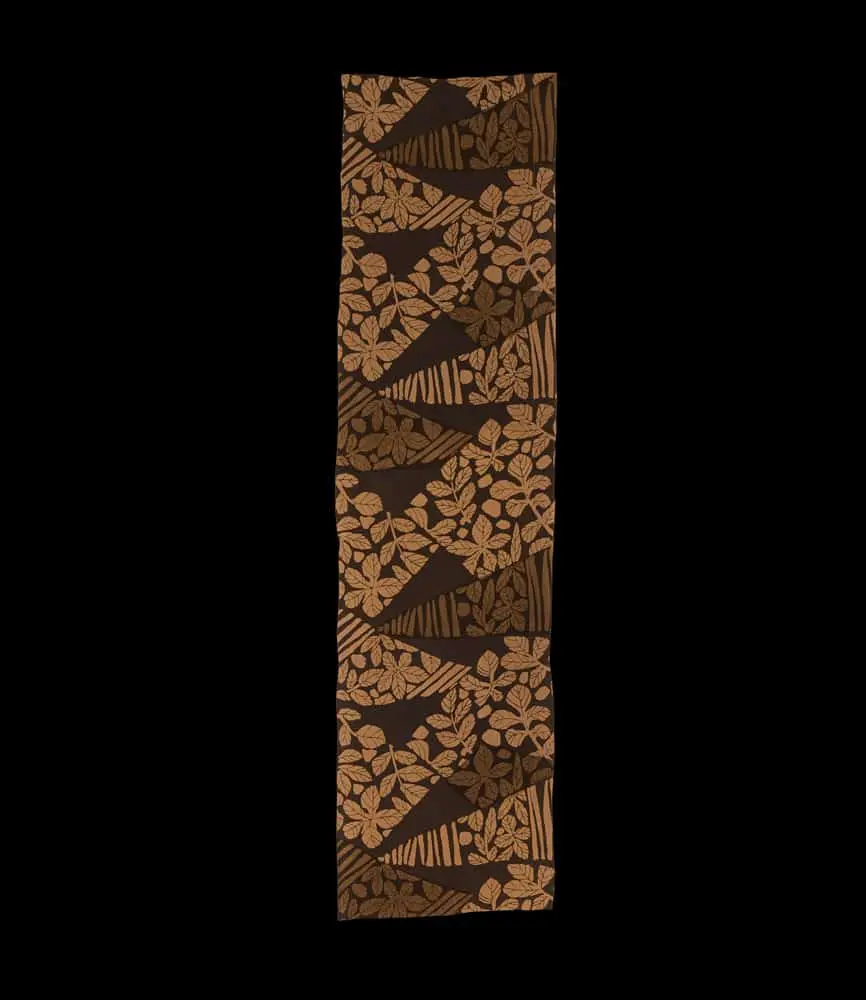
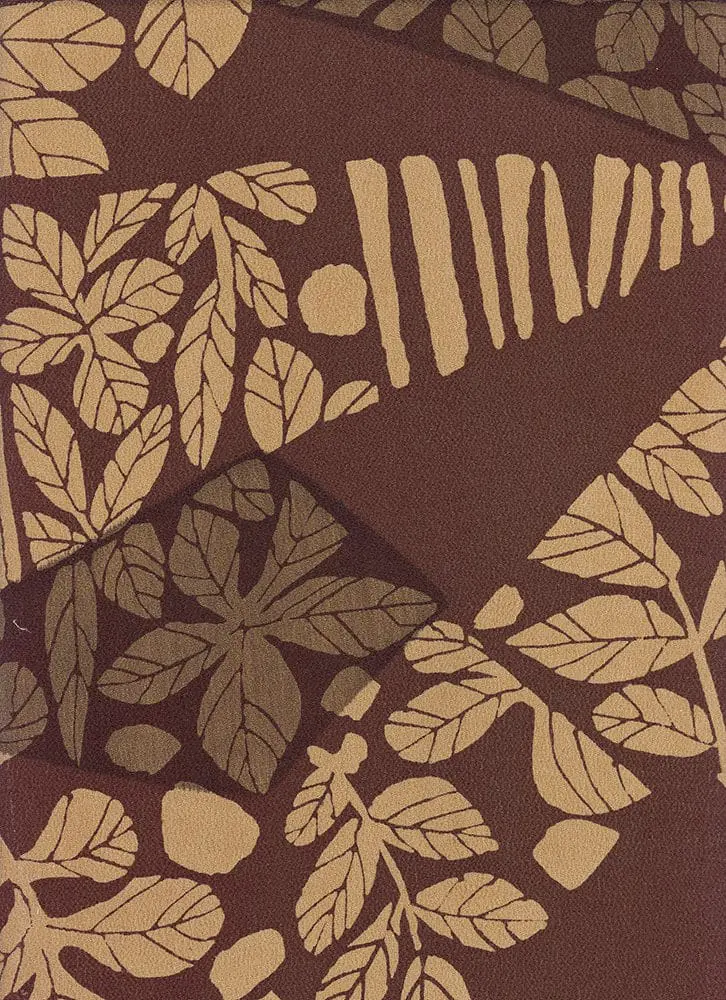
This sophisticated textile originates from Japan’s mid-Showa period (1950–1970) and is a scholarly example of the refined, earth-toned botanical fusions favored for post-war semi-formal attire. Measuring 13 inches by 52 inches (33 cm x 132 cm), the panel is crafted from high-quality chirimen silk, which remains in superb condition. Characteristic of this specific variety, the fabric boasts a subtle pebbly texture and a slightly lighter weight than traditional heavy chirimen, striking a perfect balance that offers an excellent drape.
The visual narrative is defined by an architectural arrangement of striking leaf patterns set against a deep brown ground. The composition utilizes a rhythmic "serrated" or triangular framing technique, where different sections of the foliage are rendered in shifting tones of golden tan and warm chestnut. Within these geometric divisions, the botanical details—including delicate veins and layered clusters of leaves—are rendered with high precision, creating a sophisticated play of light and shadow. This transition from a dark base to a luminous golden foreground reflects the mid-century's mastery of tonal gradation, moving away from bright primary colors toward a more grounded and naturalistic palette.

Payment Options: We primarily accept PayPal for all transactions. Credit and debit cards are not accepted. If you prefer to pay by personal check instead of PayPal, please note this preference in the "Additional comments" field when placing your order.Ordering Process
To receive your PayPal invoice, simply fill out the form.
Shipping Details: We ship all orders to the address associated with your PayPal payment. Please ensure your PayPal shipping address is current and accurate.A phone number is required during checkout, as our shipping carrier may need to contact you regarding delivery questions.Shipping RatesUnited States and Canada: $20International destinations (air mail): $40
