Copyright © 2026 Yorke Antique Textiles
.avif)

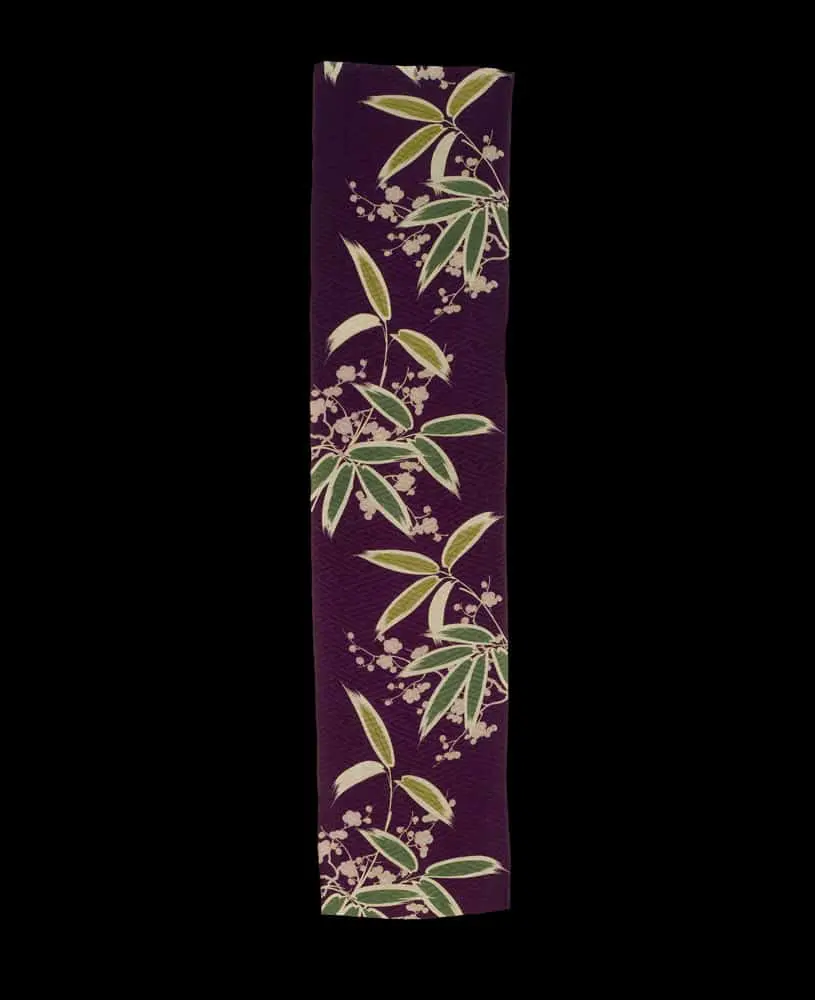
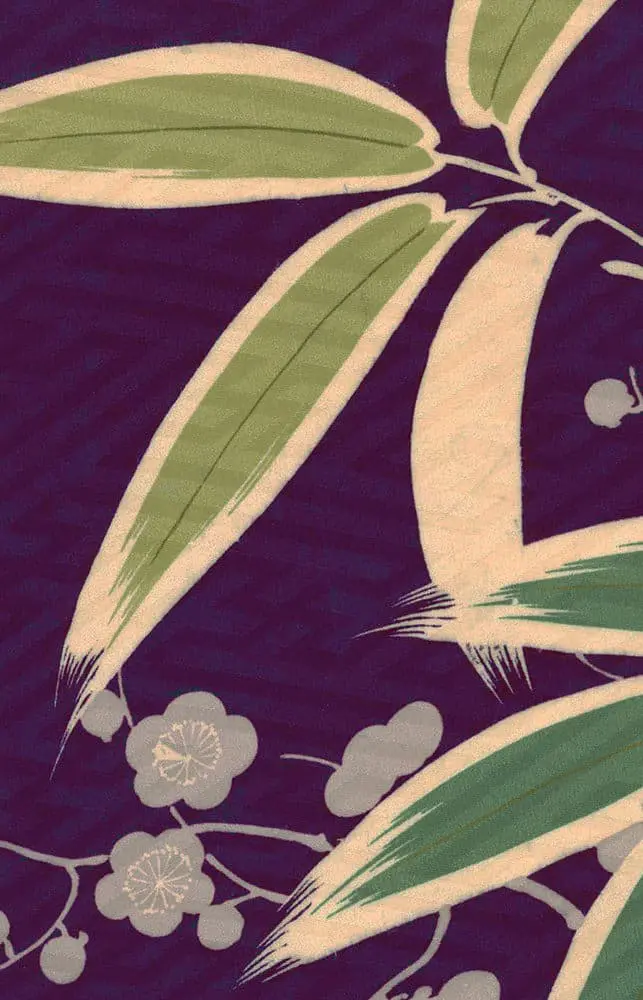
This striking textile originates from Japan’s mid-Showa period (1950–1970) and is a scholarly example of the bold, high-contrast botanical imagery used in post-war formal garments. Measuring 13 inches by 56 inches (34 cm x 142 cm), the panel remains in superb condition. The substrate is a specialized rinzu (silk damask) featuring a distinct basketweave pattern, dyed in a deep, regal purple. This particular silk is noted for being lighter in weight than typical rinzu, yet it maintains a remarkably soft texture and an excellent drape.
The visual narrative is a vertical, rhythmic celebration of the "Three Friends of Winter" motif, focusing here on take (bamboo) and ume (plum) blossoms. The bamboo leaves are rendered in a vibrant, slightly greenish-golden yellow and cactus green, creating a luminous effect against the dark purple field. Delicate clusters of plum blossoms in a dusty grey-lavender provide a soft, tonal counterpoint to the sharp, architectural lines of the bamboo. The use of high-chroma greens and yellows against a deep violet ground reflects the mid-century's penchant for revitalizing classical symbols with a fresh, energetic color theory.

Payment Options: We primarily accept PayPal for all transactions. Credit and debit cards are not accepted. If you prefer to pay by personal check instead of PayPal, please note this preference in the "Additional comments" field when placing your order.Ordering Process
To receive your PayPal invoice, simply fill out the form.
Shipping Details: We ship all orders to the address associated with your PayPal payment. Please ensure your PayPal shipping address is current and accurate.A phone number is required during checkout, as our shipping carrier may need to contact you regarding delivery questions.Shipping RatesUnited States and Canada: $20International destinations (air mail): $40
