Copyright © 2026 Yorke Antique Textiles
.avif)

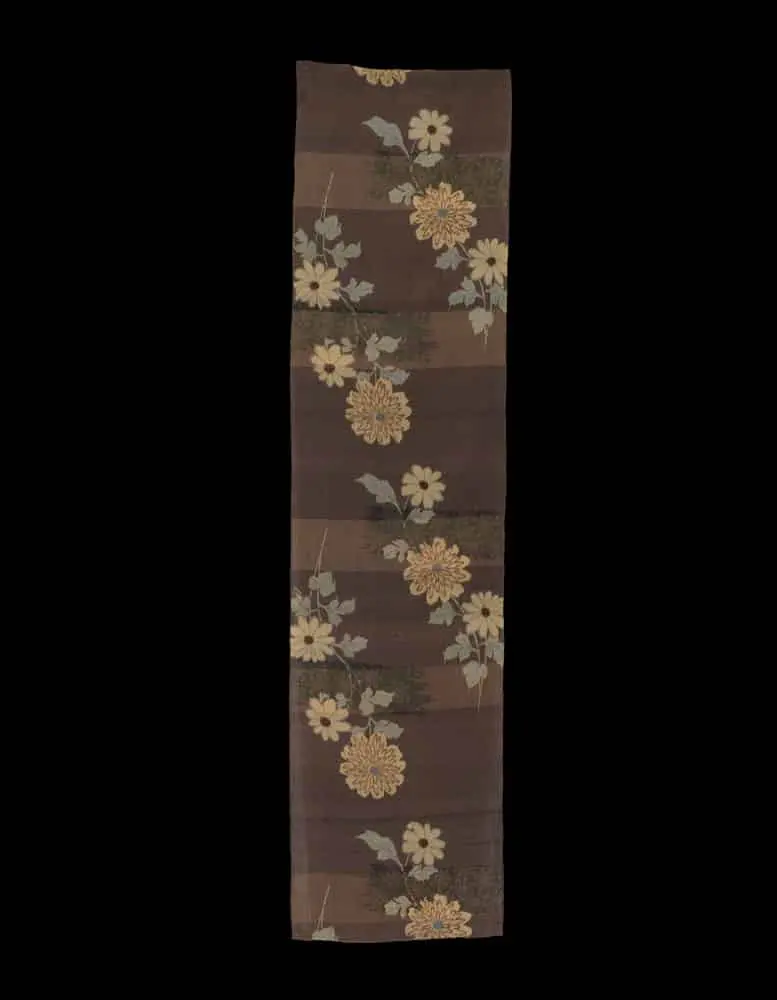
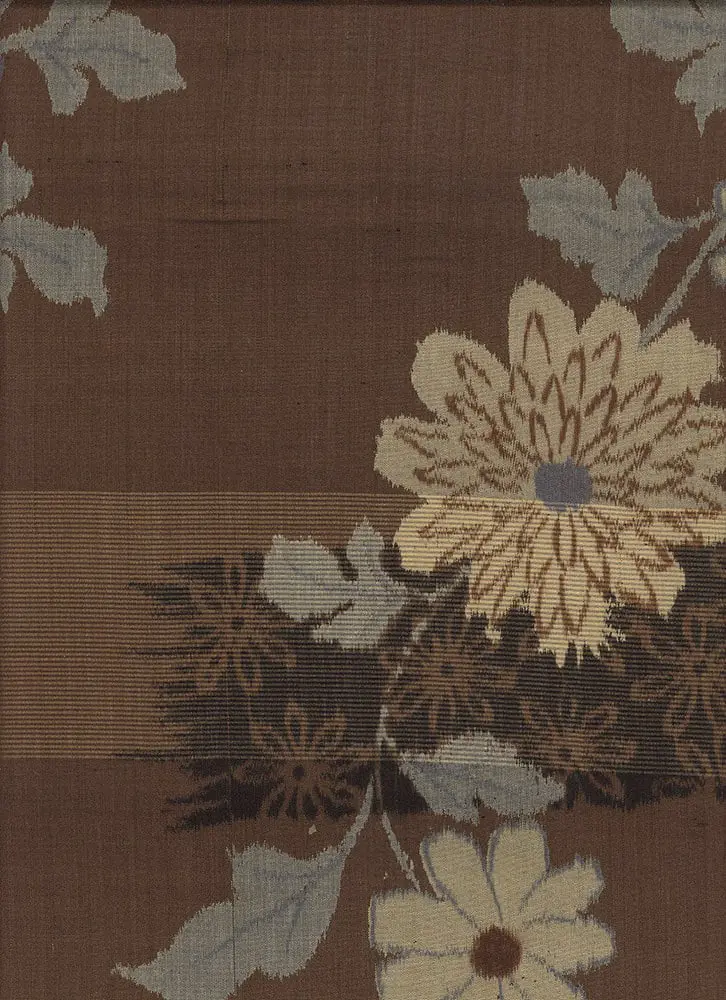
This striking textile originates from Japan’s early Showa period (1925–1935) and is a scholarly example of the bold, graphic transitions occurring in pre-war textile centers. Measuring 14 inches by 57 inches (36 cm x 145 cm), the panel is crafted from a high-quality meisen silk, which remains in excellent condition and retains a vibrant, high-impact aesthetic. As is typical for the meisen variety, the fabric is thinner, slightly crisp, and delicate, yet it offers a pleasing drape and a smooth surface that beautifully carries the intricate woven pattern.
The visual narrative is set against a deep chocolate brown ground, which is layered with horizontal bands of subtle black texture to create an architectural sense of depth. It features a vertical, rhythmic arrangement of kiku (chrysanthemum) flowers rendered in a pale golden ivory. These blossoms are complemented by light steel grey-blue leaves and stems, providing a cool-toned contrast to the warm background. The design is executed with the signature blurred edges of the kasuri (ikat) technique, reflecting the early 20th-century fascination with merging traditional seasonal motifs like the kiku—a symbol of longevity—with modern, earth-toned color palettes.

Payment Options: We primarily accept PayPal for all transactions. Credit and debit cards are not accepted. If you prefer to pay by personal check instead of PayPal, please note this preference in the "Additional comments" field when placing your order.Ordering Process
To receive your PayPal invoice, simply fill out the form.
Shipping Details: We ship all orders to the address associated with your PayPal payment. Please ensure your PayPal shipping address is current and accurate.A phone number is required during checkout, as our shipping carrier may need to contact you regarding delivery questions.Shipping RatesUnited States and Canada: $20International destinations (air mail): $40
