Copyright © 2026 Yorke Antique Textiles
.avif)

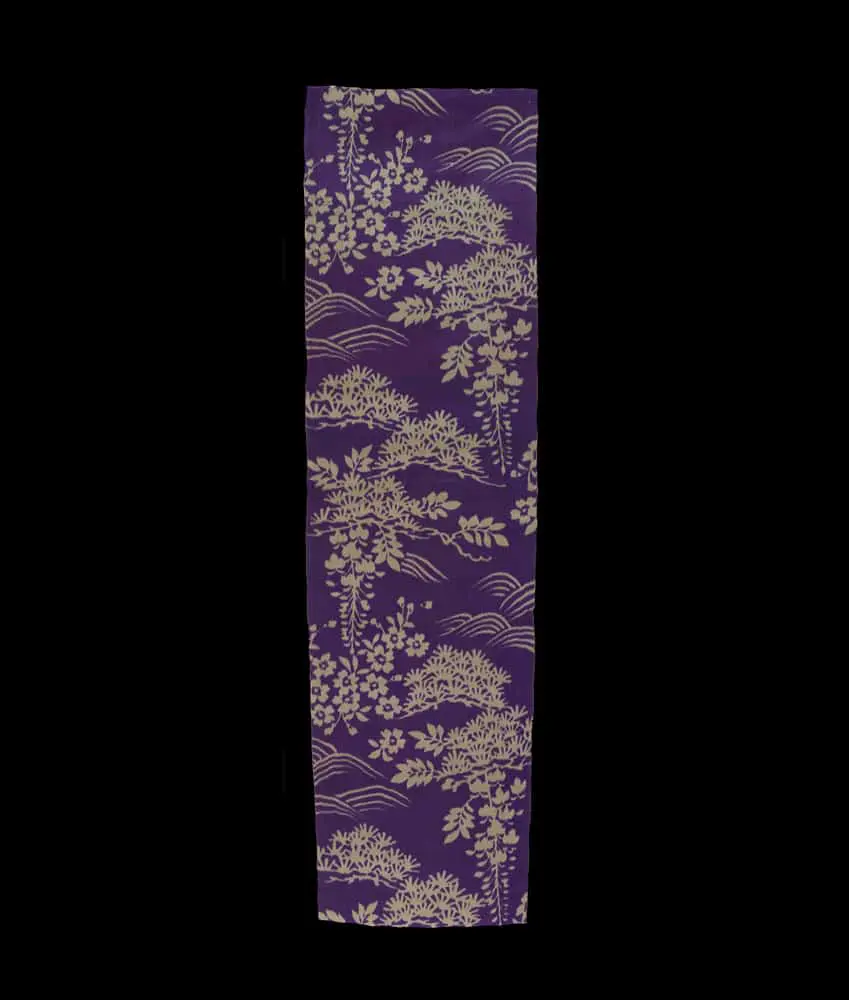

This striking textile originates from Japan’s mid-Showa period (1950–1970) and is a scholarly example of the bold, high-contrast graphic motifs that defined post-war textile innovation. The panel is crafted from high-quality meisen silk in a deep, vivid shade of purple, a color traditionally associated with nobility and refined taste in Japanese culture. Characteristic of the meisen variety, the fabric is a thinner silk with a slight crispness that offers a delightful drape and a smooth, lustrous surface.
The visual narrative is defined by a series of striking matsu (pine) motifs rendered in a luminous silver-grey. The design is executed using the kasuri (ikat) technique, which imparts the signature feathered edges to the pine needles and branches, giving the organic forms a vibrating, modern energy. Interspersed with the pine are delicate floral clusters and stylized wave patterns, creating a complex landscape that flows vertically across the field. As an evergreen, the pine is a potent symbol of longevity and steadfastness; its presentation here in silver-grey against a royal purple substrate reflects the era's mastery of blending ancient auspicious symbols with bold, mid-century color palettes.

Payment Options: We primarily accept PayPal for all transactions. Credit and debit cards are not accepted. If you prefer to pay by personal check instead of PayPal, please note this preference in the "Additional comments" field when placing your order.Ordering Process
To receive your PayPal invoice, simply fill out the form.
Shipping Details: We ship all orders to the address associated with your PayPal payment. Please ensure your PayPal shipping address is current and accurate.A phone number is required during checkout, as our shipping carrier may need to contact you regarding delivery questions.Shipping RatesUnited States and Canada: $20International destinations (air mail): $40
