Copyright © 2026 Yorke Antique Textiles
.avif)

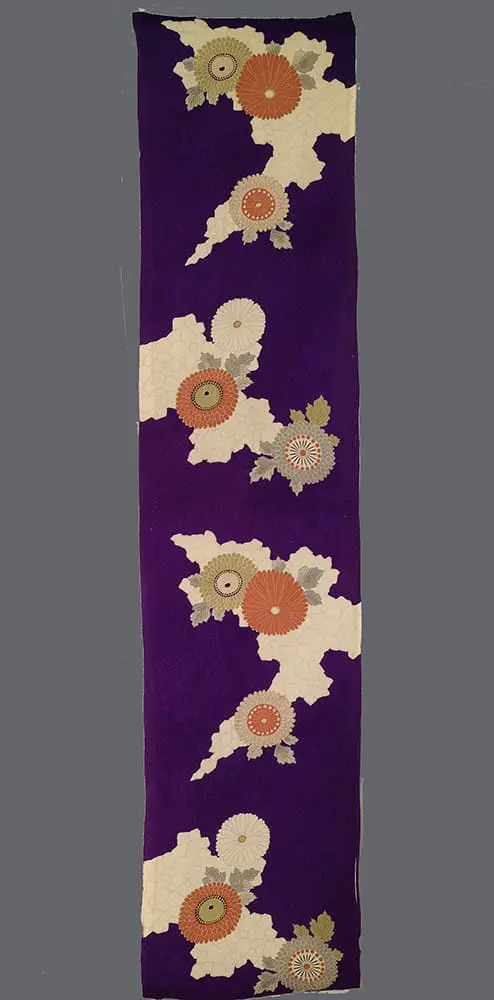
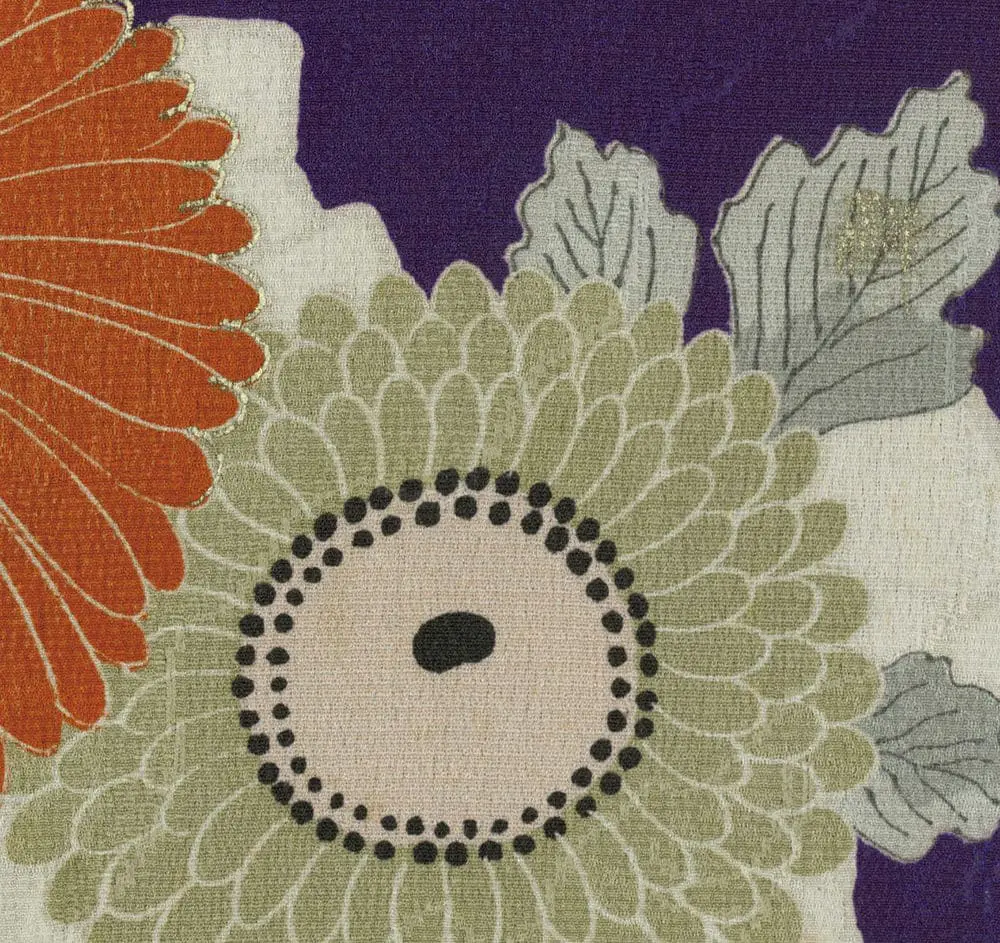
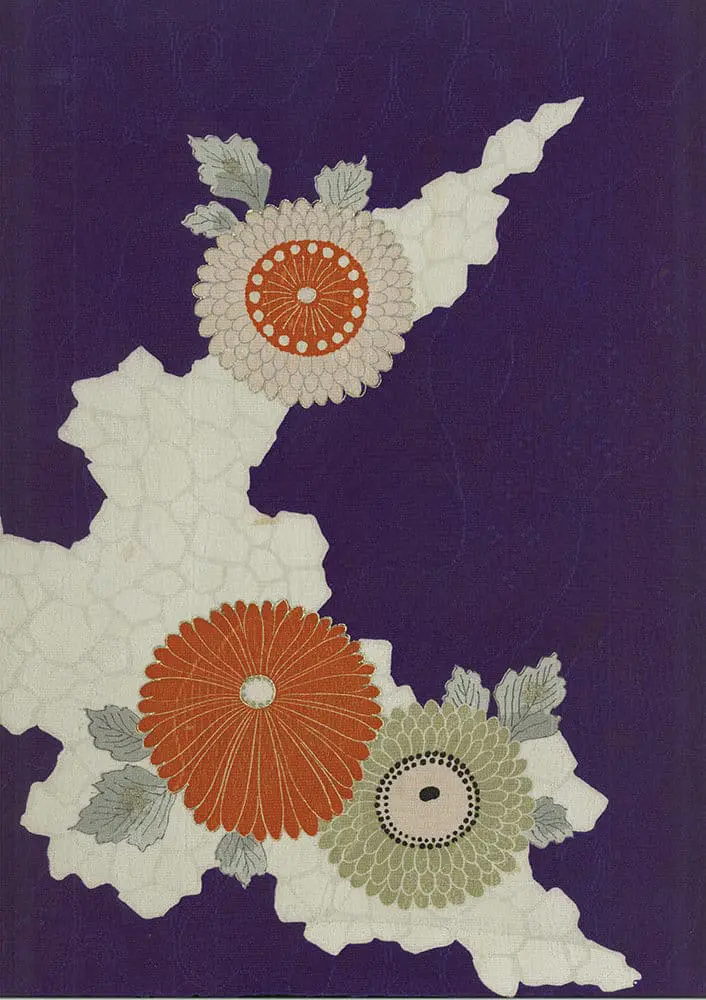
This exceptional textile originates from Japan’s mid-Showa period (1950–1970) and is a scholarly example of the innovative hybrid weaving techniques developed in post-war textile centers. Measuring 14 inches by 62 inches (36 cm x 158 cm), the panel features a unique structural composition that blends the lustrous, figured background of rinzu (silk damask) with the distinctive pebbly texture of crepe. The piece remains in superb condition, showcasing a complex material integrity that allows for an excellent drape and a rich, tactile surface.
The visual narrative is defined by a bold arrangement of kiku (chrysanthemum) patterns rendered in a sophisticated palette of deep red, soft pink, mustard yellow, and cool grey. These floral motifs are set against a vivid purple-blue substrate, interspersed with expansive white open areas. These white sections are particularly noteworthy for their fascinating mosaic tile-like weave, which adds a secondary layer of geometric complexity to the organic floral trail. The artistry is further elevated by abundant metallic gold outlines and accents that define the petals and centers of the blossoms, reflecting the era's preference for combining traditional auspicious symbols with luxurious, high-impact textures.

Payment Options: We primarily accept PayPal for all transactions. Credit and debit cards are not accepted. If you prefer to pay by personal check instead of PayPal, please note this preference in the "Additional comments" field when placing your order.Ordering Process
To receive your PayPal invoice, simply fill out the form.
Shipping Details: We ship all orders to the address associated with your PayPal payment. Please ensure your PayPal shipping address is current and accurate.A phone number is required during checkout, as our shipping carrier may need to contact you regarding delivery questions.Shipping RatesUnited States and Canada: $20International destinations (air mail): $40
