Copyright © 2026 Yorke Antique Textiles
.avif)

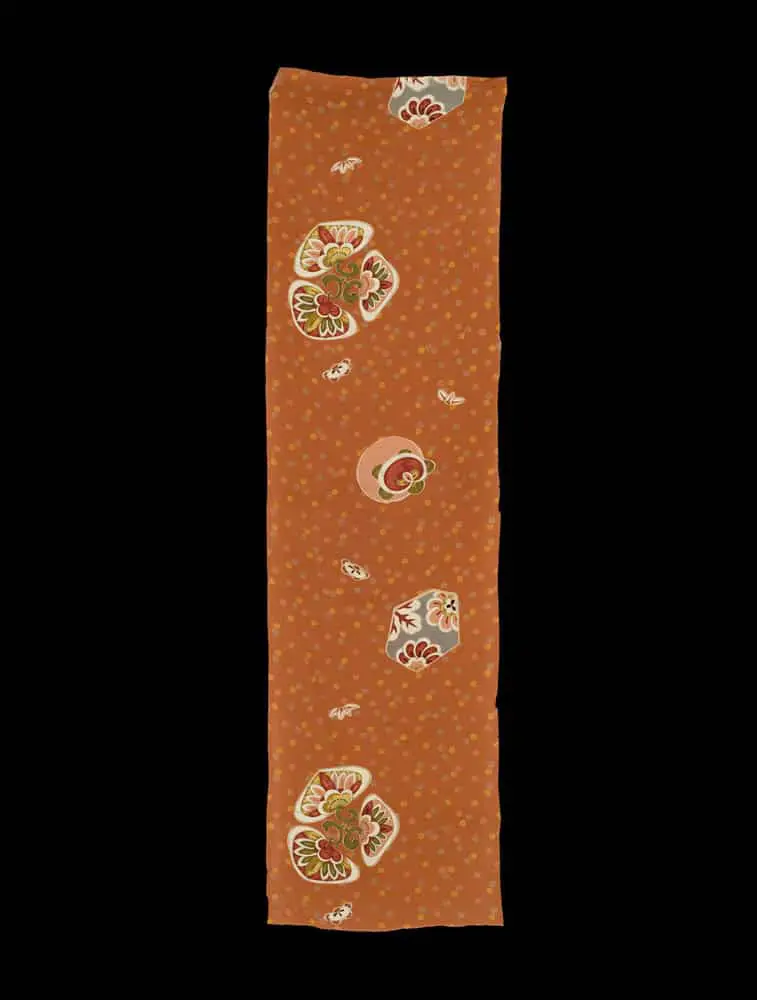
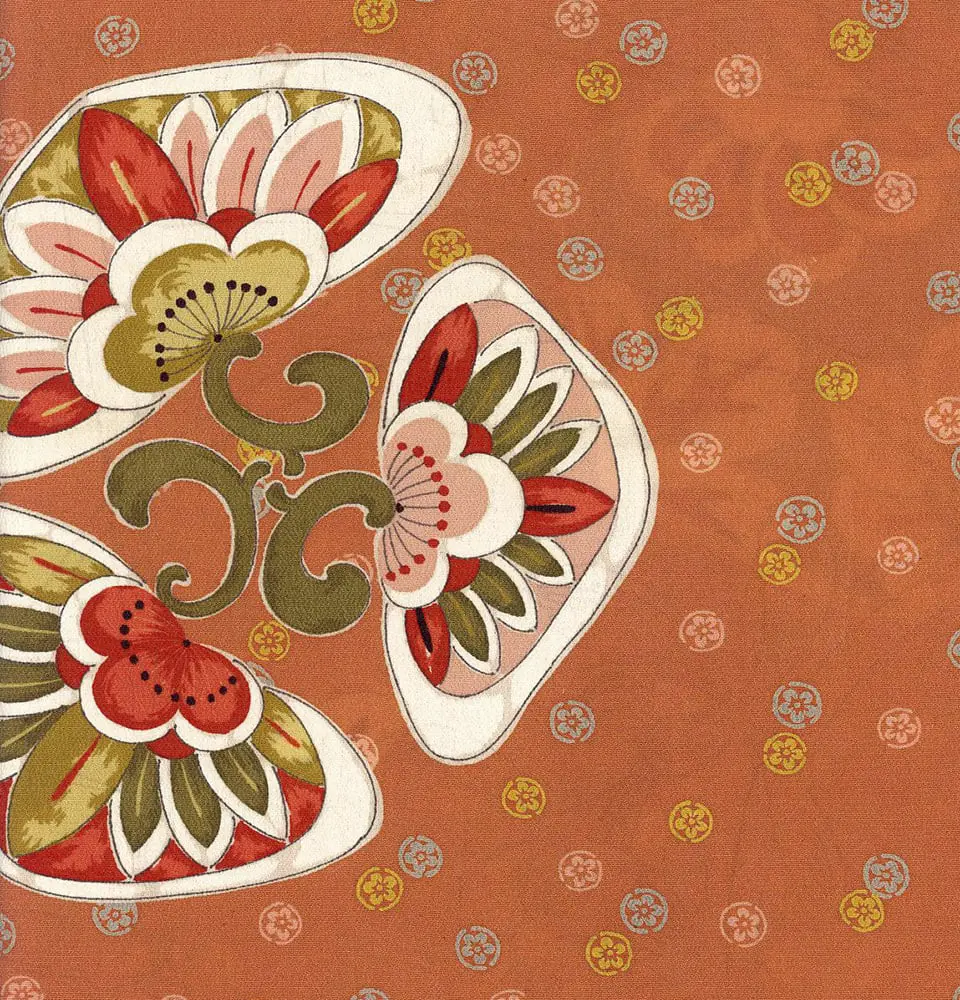
This fascinating textile originates from Japan’s mid-Showa period (1950–1970) and serves as a scholarly example of traditional "recycling" and re-dyeing practices. Measuring 13.5 inches by 59 inches (34 cm x 150 cm), the panel is crafted from an almost crepe-like orange silk that offers a lovely textural grain. Historically, when new silk was prohibitively expensive, existing kimonos were often unstitched and re-dyed to create a fresh look; this specific fabric bears the shadowy outlines of a new pattern on its reverse side, with some faint lines visible through the white areas of the design. Despite this unique historical characteristic, the piece remains in very good condition.
The visual narrative is set against a vibrant orange ground adorned with multi-colored floral motifs, including stylized blossoms and fan-shaped floral arrangements. These patterns are rendered in a diverse palette of deep red, forest green, and mustard yellow, accented with ivory. The ground fabric is further enriched by a subtle, all-over pattern of small dots or "pixels" in a slightly lighter orange tone, creating a sense of depth and vibration across the surface. This combination of traditional floral symbols with the visible evidence of the dyer's process reflects a period of resourcefulness where the beauty of the silk was preserved and reinvented through multiple life cycles.

Payment Options: We primarily accept PayPal for all transactions. Credit and debit cards are not accepted. If you prefer to pay by personal check instead of PayPal, please note this preference in the "Additional comments" field when placing your order.Ordering Process
To receive your PayPal invoice, simply fill out the form.
Shipping Details: We ship all orders to the address associated with your PayPal payment. Please ensure your PayPal shipping address is current and accurate.A phone number is required during checkout, as our shipping carrier may need to contact you regarding delivery questions.Shipping RatesUnited States and Canada: $20International destinations (air mail): $40
