Copyright © 2026 Yorke Antique Textiles
.avif)


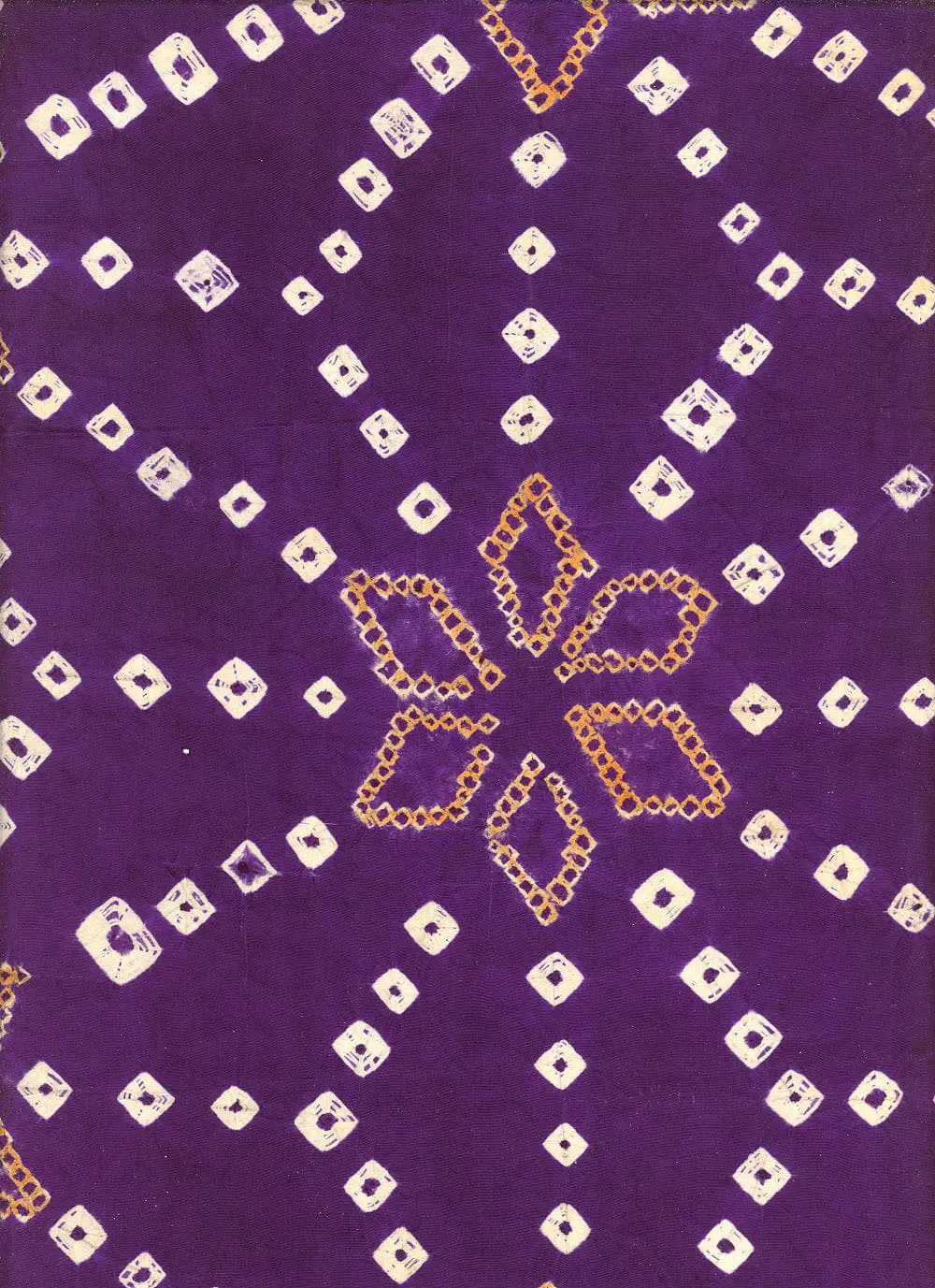
This exquisite textile originates from Japan’s early Showa period (1930–1940) and is a scholarly example of the geometric precision achieved through pre-war tie-dyeing techniques. Measuring 14.5 inches by 44 inches (37 cm x 112 cm), the panel is crafted from a high-quality silk that is noticeably lighter in weight than contemporary or late vintage varieties, a characteristic often found in older shibori pieces. The silk remains in very good condition, retaining a striking luminosity and an excellent drape that speaks to its premium origin.
The visual narrative is set against a deep, regal purple ground, providing a sophisticated substrate for a repeating asa-no-ha (hemp leaf) pattern. This rhythmic, star-like geometric design is rendered in crisp white and a warm melon-pink shade. The pattern is executed using the intensive shibori process, where individual points of fabric are hand-bound to resist the dye, resulting in a three-dimensional, textured surface. In Japanese culture, the asa-no-ha motif traditionally symbolizes vigor and resilient growth; its presentation here in high-contrast tones reflects the refined yet bold aesthetic favored in the decade leading up to 1940.

Payment Options: We primarily accept PayPal for all transactions. Credit and debit cards are not accepted. If you prefer to pay by personal check instead of PayPal, please note this preference in the "Additional comments" field when placing your order.Ordering Process
To receive your PayPal invoice, simply fill out the form.
Shipping Details: We ship all orders to the address associated with your PayPal payment. Please ensure your PayPal shipping address is current and accurate.A phone number is required during checkout, as our shipping carrier may need to contact you regarding delivery questions.Shipping RatesUnited States and Canada: $20International destinations (air mail): $40
