Copyright © 2026 Yorke Antique Textiles
.avif)

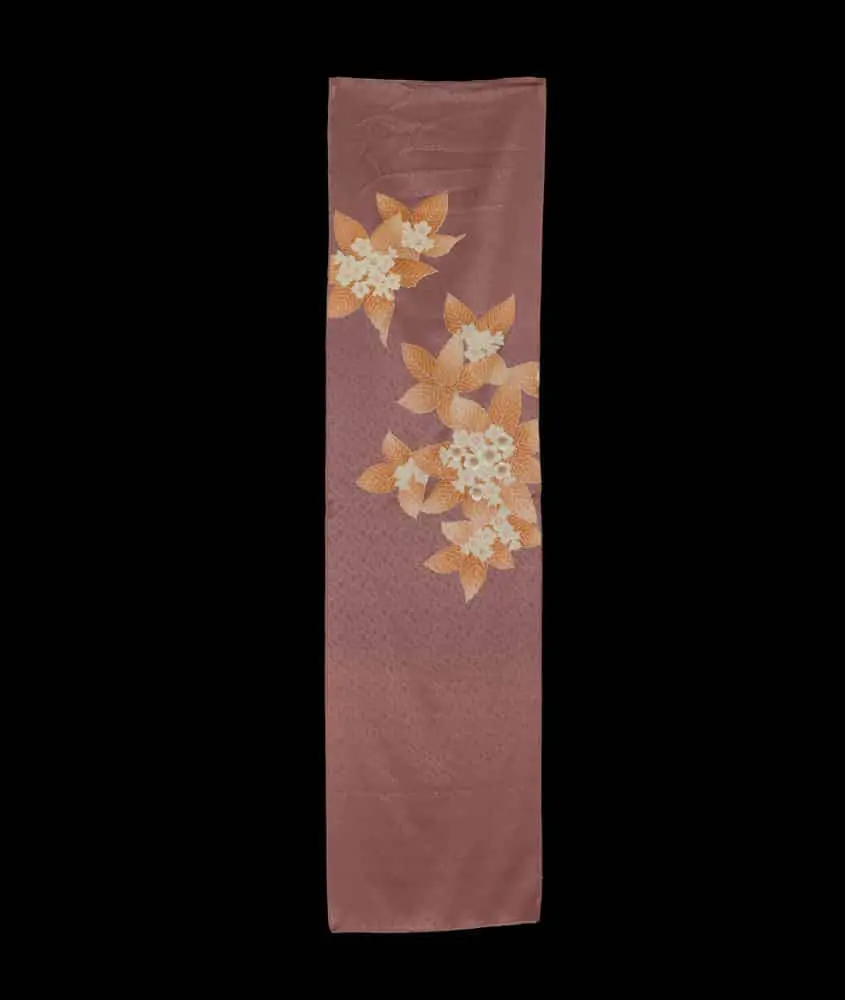
This exquisite textile originates from Japan’s late Showa period (1950–1980) and is a scholarly example of the refined, multi-layered embellishment techniques used in formal high-status garments. Measuring as a complete panel from a meticulously disassembled kimono with threads carefully picked out, the piece is crafted from a premium silk in a sophisticated dusky rose or mauve-taupe hue. The fabric features a subtle, all-over woven damask pattern that provides a rhythmic structural depth to the substrate and offers a graceful, fluid drape.
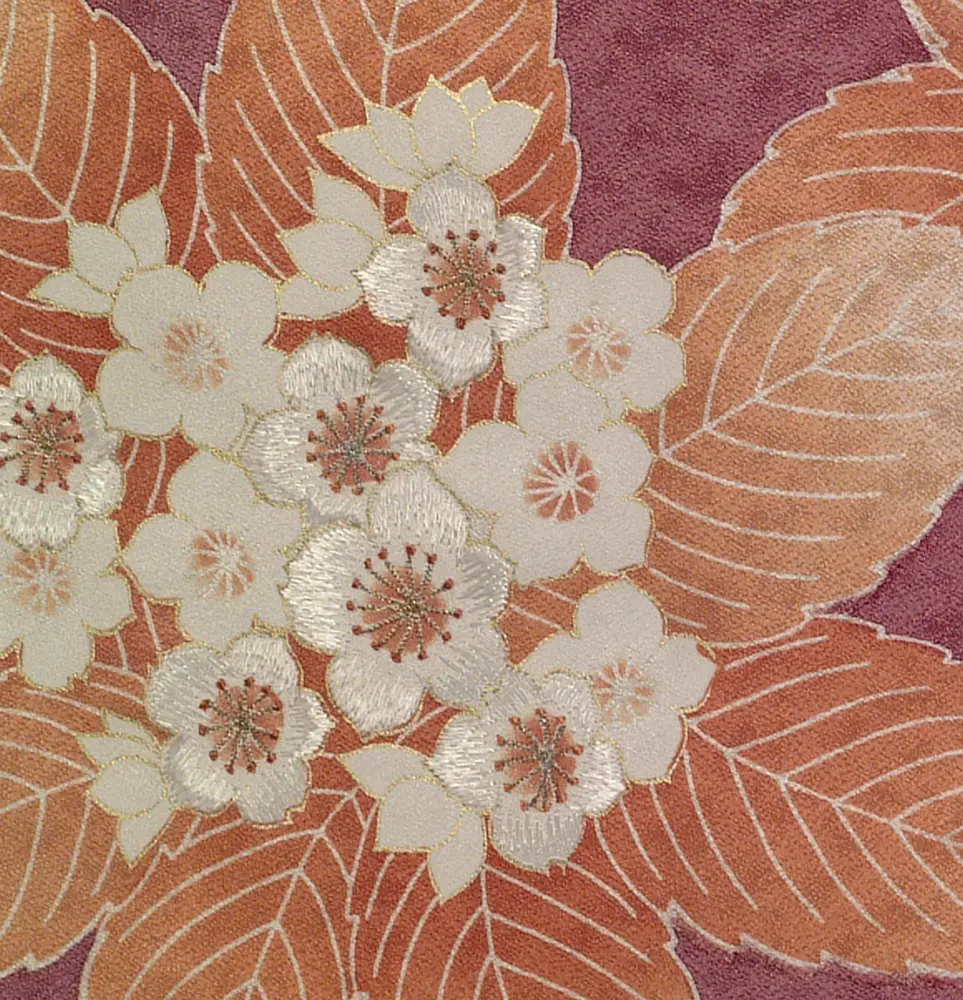
The visual narrative is defined by a cluster of ajisai (hydrangea) blossoms that appear to cascade down the panel. The floral motifs are executed in a warm palette of golden-apricot and creamy white, creating a soft but luminous contrast against the dusky rose ground. The artistry is elevated by significant hand embroidery that provides a three-dimensional texture to the petals, further enhanced by delicate gold foil outlining. This technique, known as kinkoma or gold thread couching, reflects the era's mastery of combining painterly silk-dyeing with opulent metallic structural details to create a work of art that changes in character as it moves.

Payment Options: We primarily accept PayPal for all transactions. Credit and debit cards are not accepted. If you prefer to pay by personal check instead of PayPal, please note this preference in the "Additional comments" field when placing your order.Ordering Process
To receive your PayPal invoice, simply fill out the form.
Shipping Details: We ship all orders to the address associated with your PayPal payment. Please ensure your PayPal shipping address is current and accurate.A phone number is required during checkout, as our shipping carrier may need to contact you regarding delivery questions.Shipping RatesUnited States and Canada: $20International destinations (air mail): $40
