Copyright © 2026 Yorke Antique Textiles
.avif)

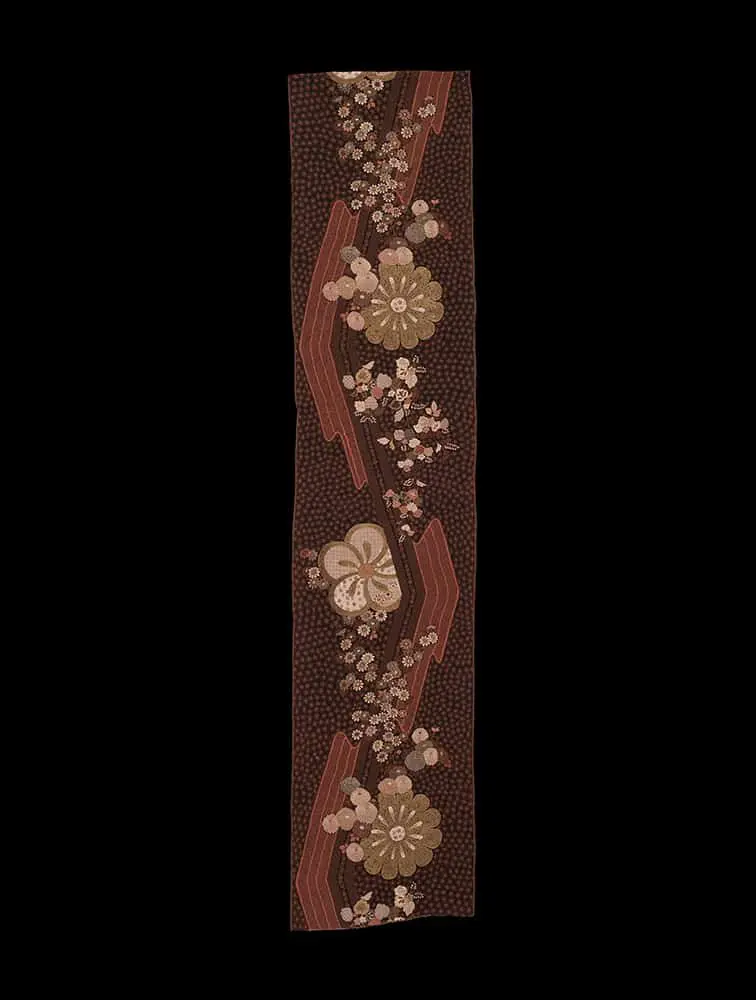
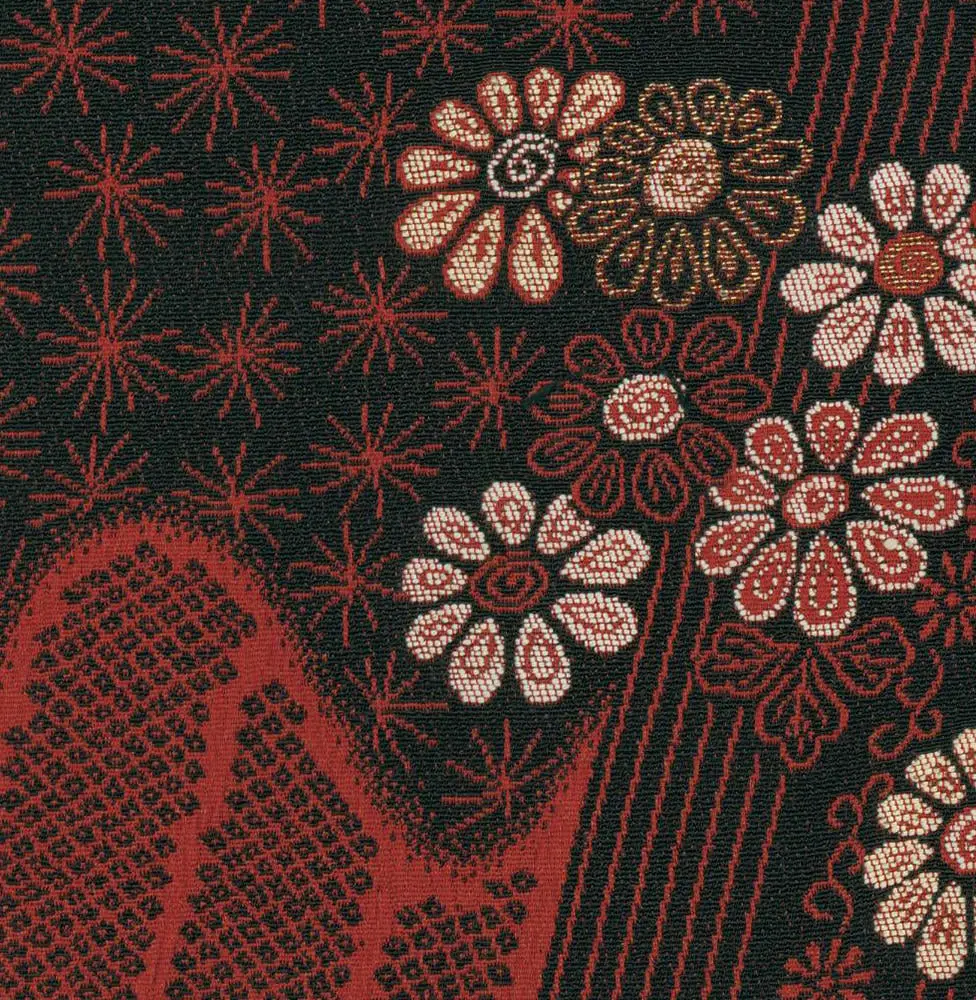
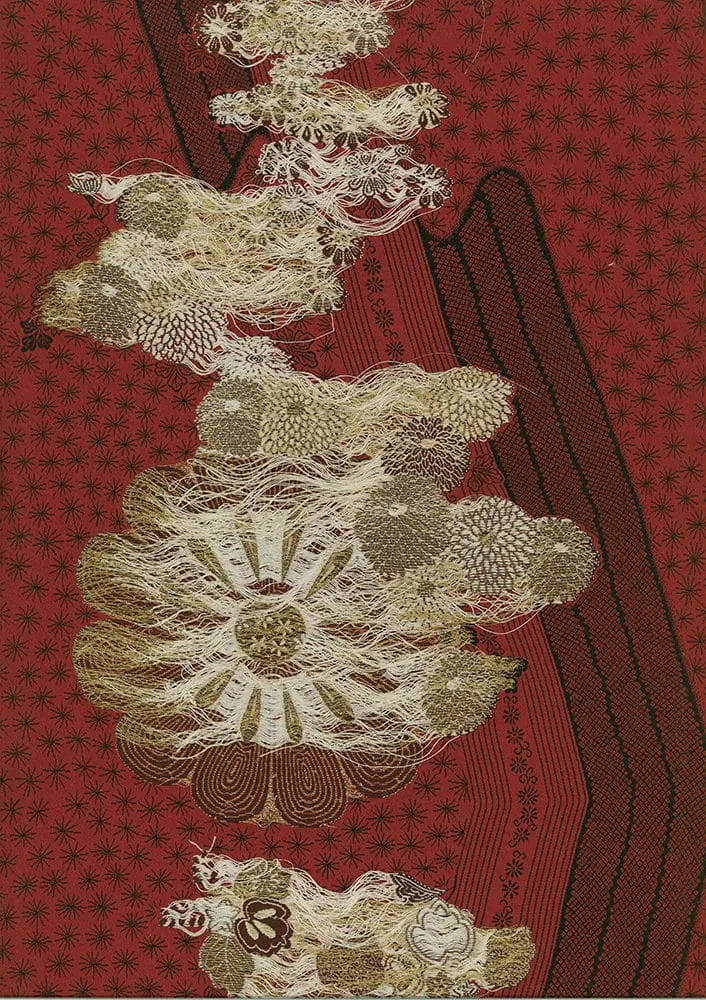
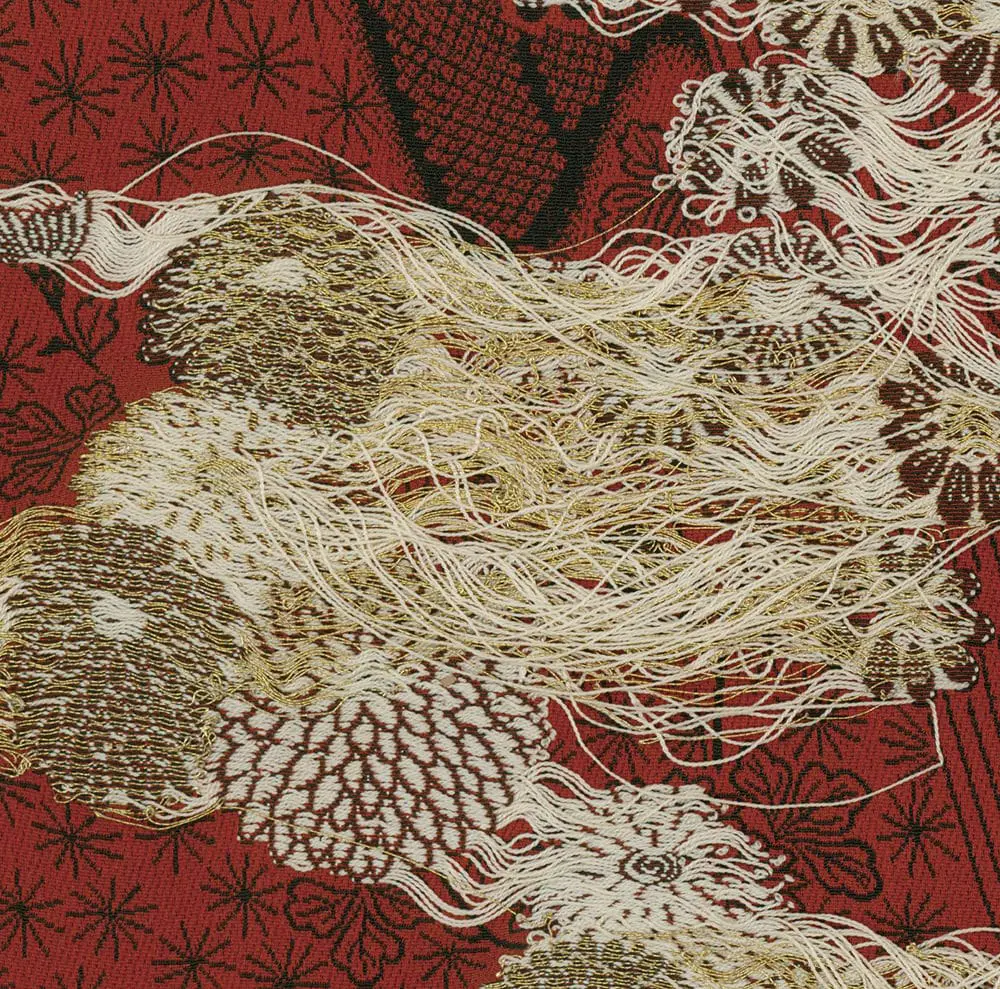

This prestigious textile originates from Japan’s late Showa period (1960–1980) and is a scholarly example of the high-density decorative weaving techniques perfected during the economic boom. Measuring 13.75 inches by 63 inches (35 cm x 163 cm), the panel is crafted from premium omeshi silk, which remains in excellent condition. While omeshi fabrics typically possess a heavier, more structured feel than standard rinzu due to the use of high-twist yarns, this specific piece surprises with a softer hand despite its dense ornamentation, offering a graceful and substantial drape.
The visual narrative is set against a deep black base, which serves as a dramatic canvas for a series of classic auspicious motifs including ume (plum), kiku (chrysanthemum), and paulownia. These botanical elements are rendered in a traditional palette of true red, crisp white, and gold, accented by abundant gold metallic weave that provides a luminous, three-dimensional texture. The composition is anchored by a vertical, jagged "lightning" or geometric path that guides the eye through the floral sprays, a design choice that reflects the late 20th-century preference for merging classical nature symbols with bold, architectural framing.

Payment Options: We primarily accept PayPal for all transactions. Credit and debit cards are not accepted. If you prefer to pay by personal check instead of PayPal, please note this preference in the "Additional comments" field when placing your order.Ordering Process
To receive your PayPal invoice, simply fill out the form.
Shipping Details: We ship all orders to the address associated with your PayPal payment. Please ensure your PayPal shipping address is current and accurate.A phone number is required during checkout, as our shipping carrier may need to contact you regarding delivery questions.Shipping RatesUnited States and Canada: $20International destinations (air mail): $40
