Copyright © 2026 Yorke Antique Textiles
.avif)

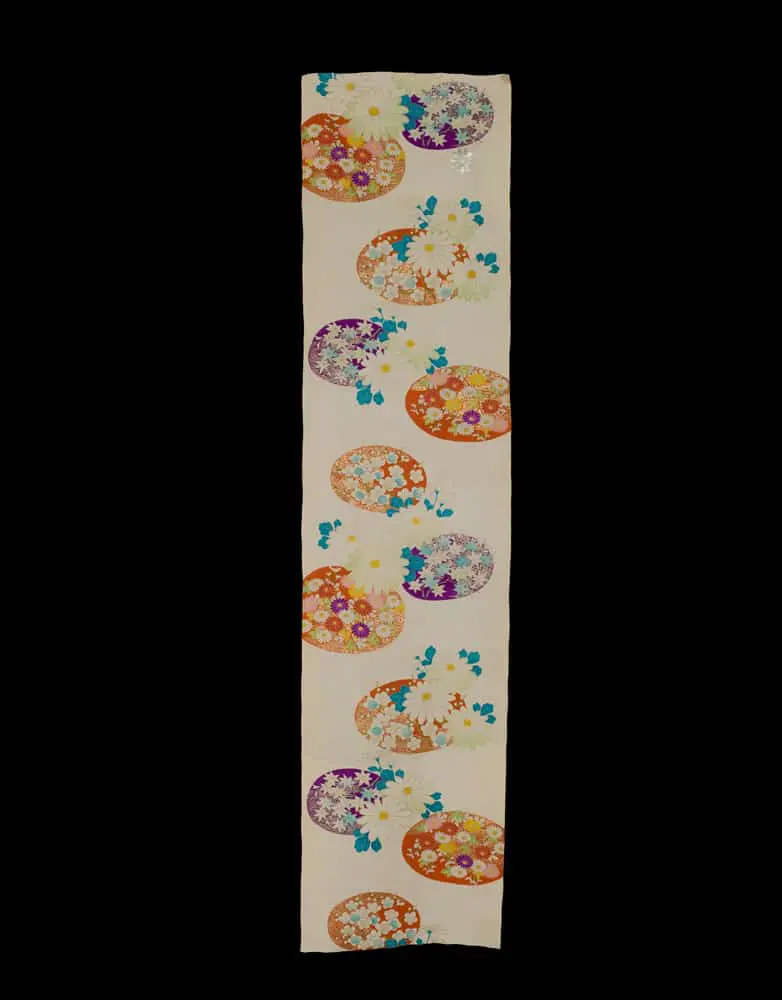
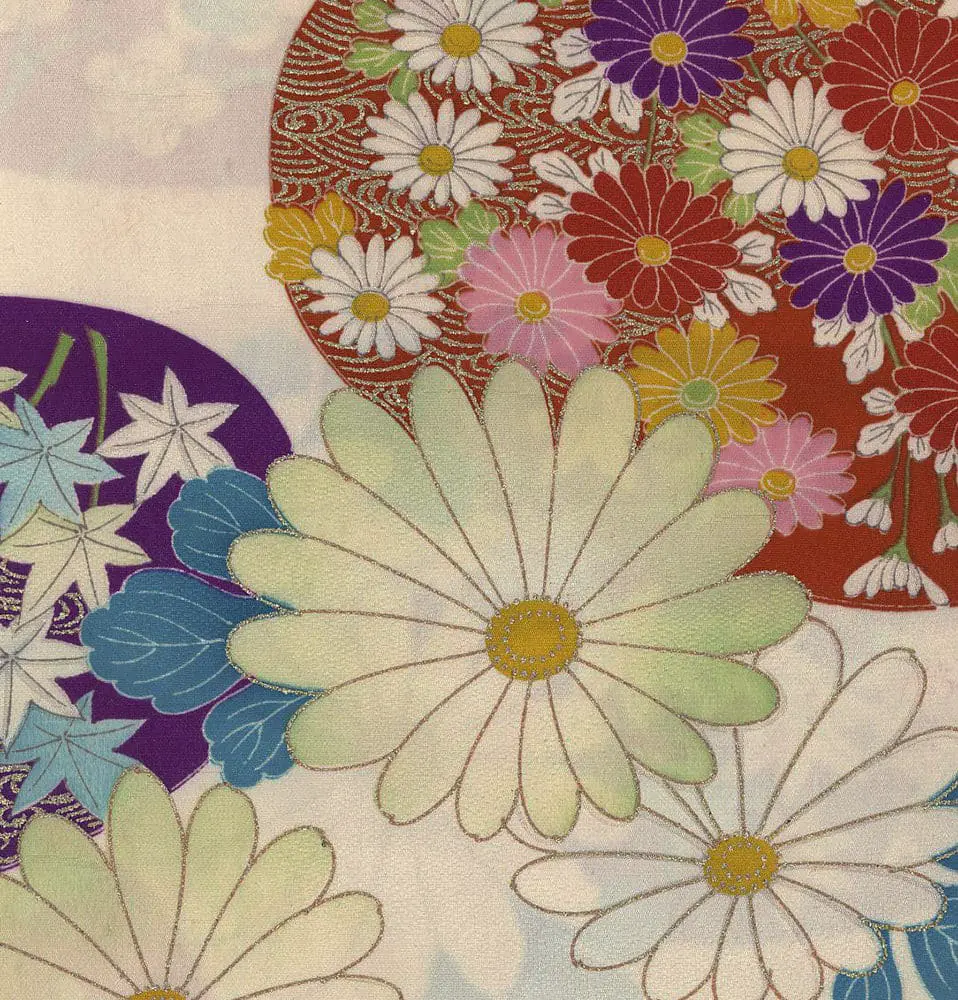
This enchanting textile originates from Japan’s late Showa period (1960–1980) and is a scholarly example of the vibrant, miniaturized botanical aesthetics used in high-status children's ceremonial attire. Measuring 14.5 inches by 61 inches (37 cm x 155 cm), the panel was originally part of a child's kimono and is crafted from a light, airy base silk that offers a beautiful, fluid drape. The piece remains in great condition, though it exhibits a gentle, authentic patina along the edges that has resulted in a slight yellowing of the original ivory base.
The visual narrative is set against a clean ivory ground and features a rhythmic arrangement of floating oval frames. Within these medallions, traditional motifs such as kiku (chrysanthemum), ume (plum), and maple are rendered in a vibrant palette of orange, purple, and turquoise. These floral clusters are complemented by a flowing river motif that weaves between the frames, symbolizing the passage of time and the continuity of life. The design is elevated by abundant gold metallic outlining, a signature of yuzen dyeing that adds a brilliant, high-contrast definition to each blossom and leaf, reflecting the era's mastery of celebratory and playful decorative arts.

Payment Options: We primarily accept PayPal for all transactions. Credit and debit cards are not accepted. If you prefer to pay by personal check instead of PayPal, please note this preference in the "Additional comments" field when placing your order.Ordering Process
To receive your PayPal invoice, simply fill out the form.
Shipping Details: We ship all orders to the address associated with your PayPal payment. Please ensure your PayPal shipping address is current and accurate.A phone number is required during checkout, as our shipping carrier may need to contact you regarding delivery questions.Shipping RatesUnited States and Canada: $20International destinations (air mail): $40
