Copyright © 2026 Yorke Antique Textiles
.avif)

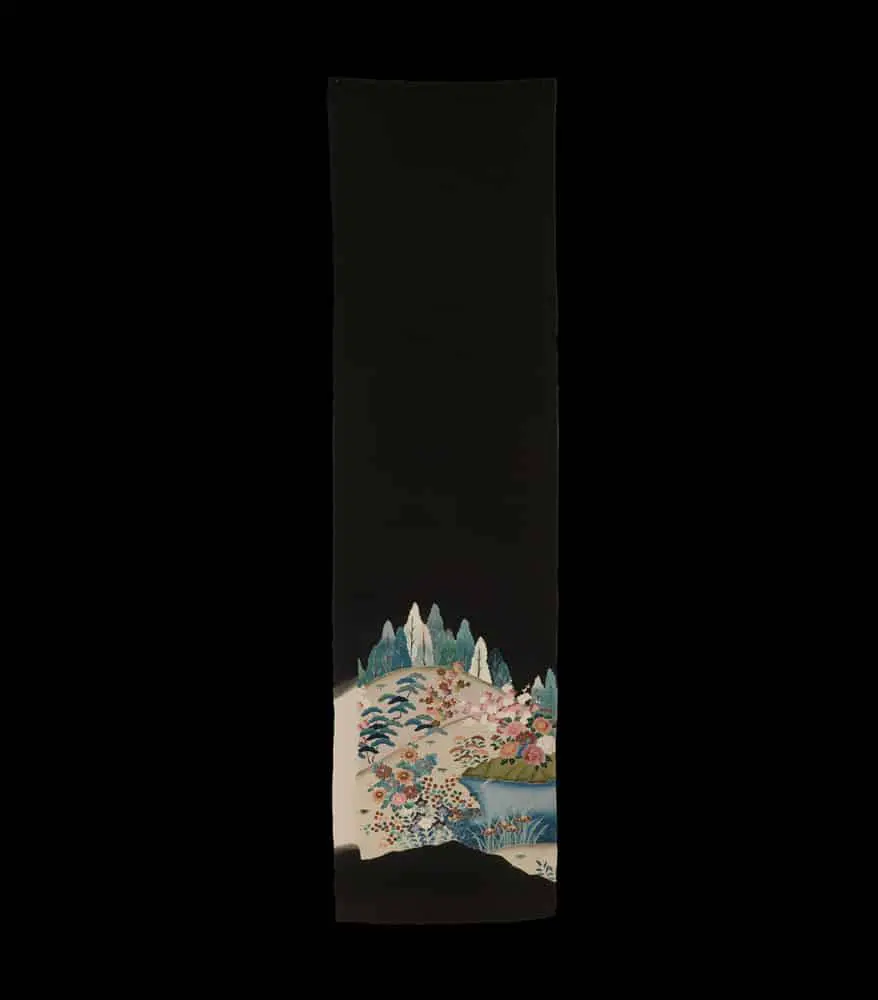
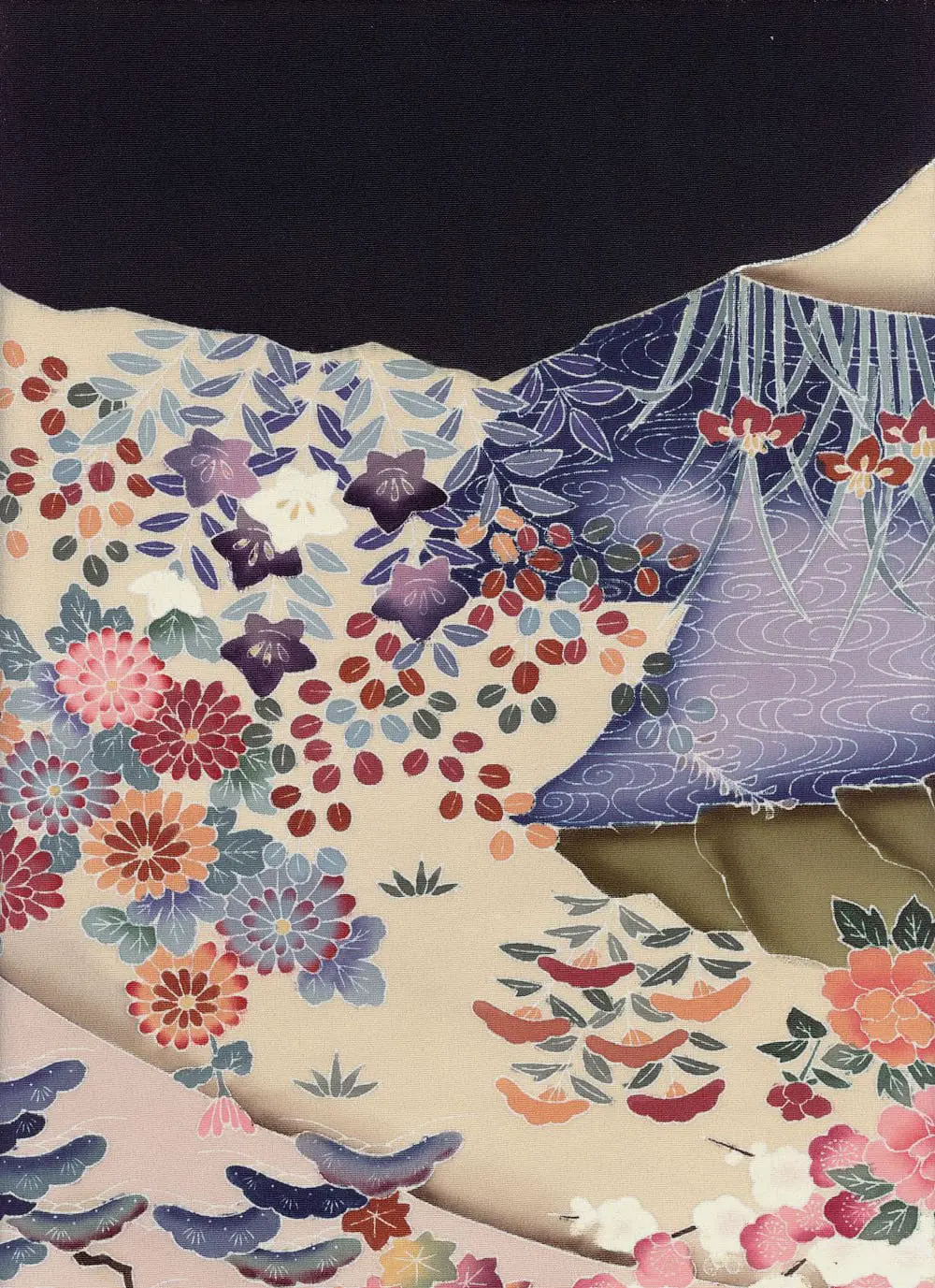
This prestigious textile originates from Japan’s late Showa period (1950–1980) and serves as a scholarly example of the high-status tomesode (formal married woman's kimono) artistry. Measuring 14.5 inches by 71 inches (37 cm x 180 cm), the panel is crafted from premium black chirimen (silk crepe), a fabric renowned for its distinctively pebbly texture and substantial, luxurious weight. The silk exhibits a lovely handfeel and a beautiful, heavy drape, having been preserved in excellent condition.
The visual narrative is concentrated at the base of the panel, showcasing the exceptional skill of a highly capable yuzen artist. It features an intricate landscape composition where a vibrant garden of peonies and blossoms meets a serene blue pond. Rising behind this floral scene is a stylized forest of blue and seafoam green trees against a pale, misty background. This "kuro-tomesode" style—where the design is restricted to the hemline against a stark black field—represents the height of formal elegance in Japanese dress, utilizing the vast open space to emphasize the meticulous detail and saturated colors of the hand-painted scenery.

Payment Options: We primarily accept PayPal for all transactions. Credit and debit cards are not accepted. If you prefer to pay by personal check instead of PayPal, please note this preference in the "Additional comments" field when placing your order.Ordering Process
To receive your PayPal invoice, simply fill out the form.
Shipping Details: We ship all orders to the address associated with your PayPal payment. Please ensure your PayPal shipping address is current and accurate.A phone number is required during checkout, as our shipping carrier may need to contact you regarding delivery questions.Shipping RatesUnited States and Canada: $20International destinations (air mail): $40
