Copyright © 2026 Yorke Antique Textiles
.avif)

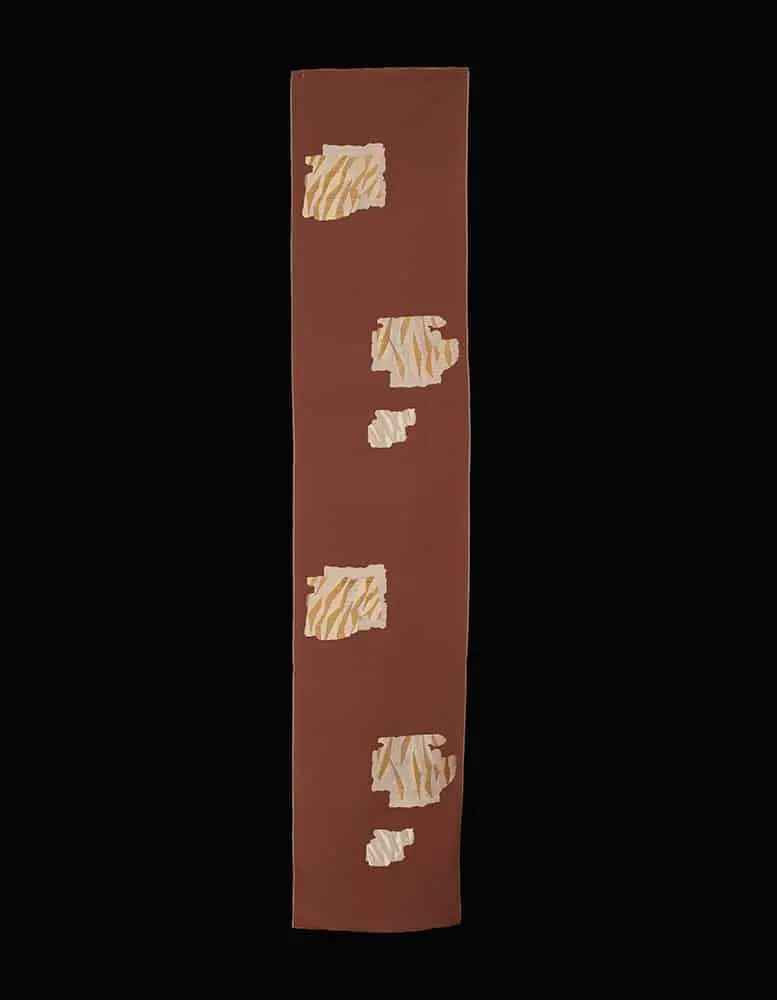
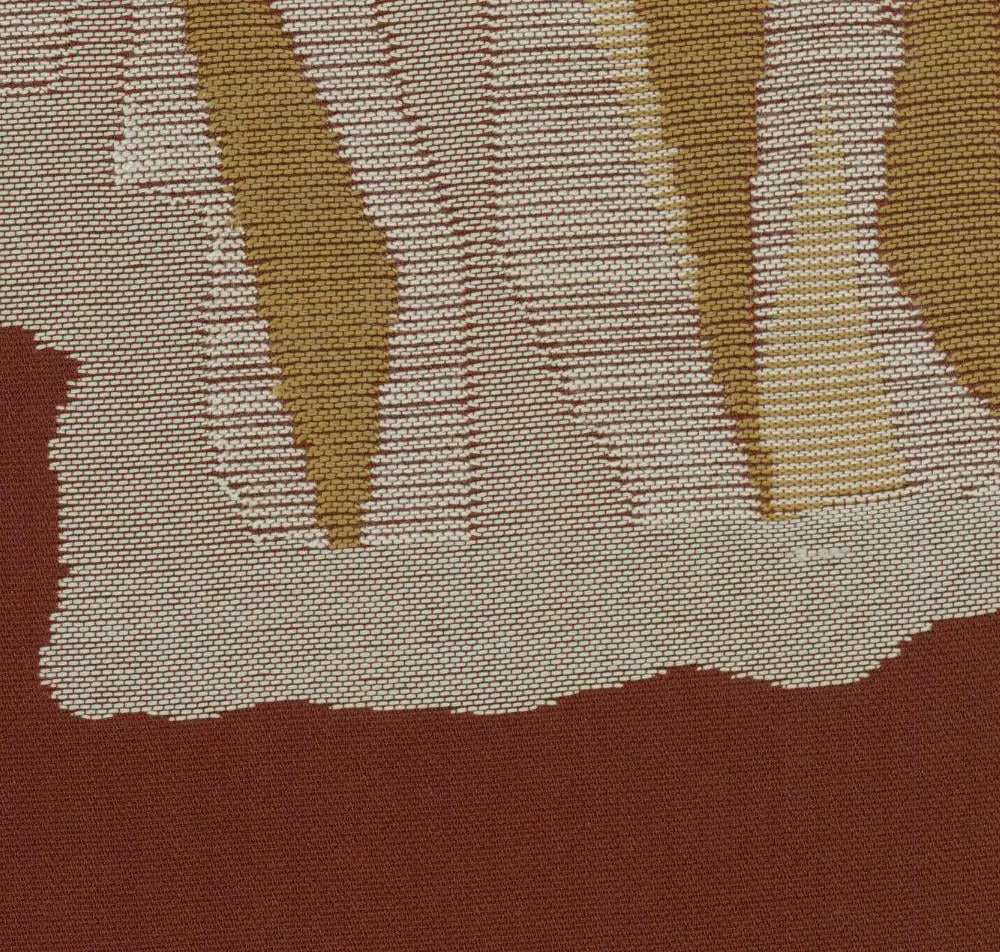
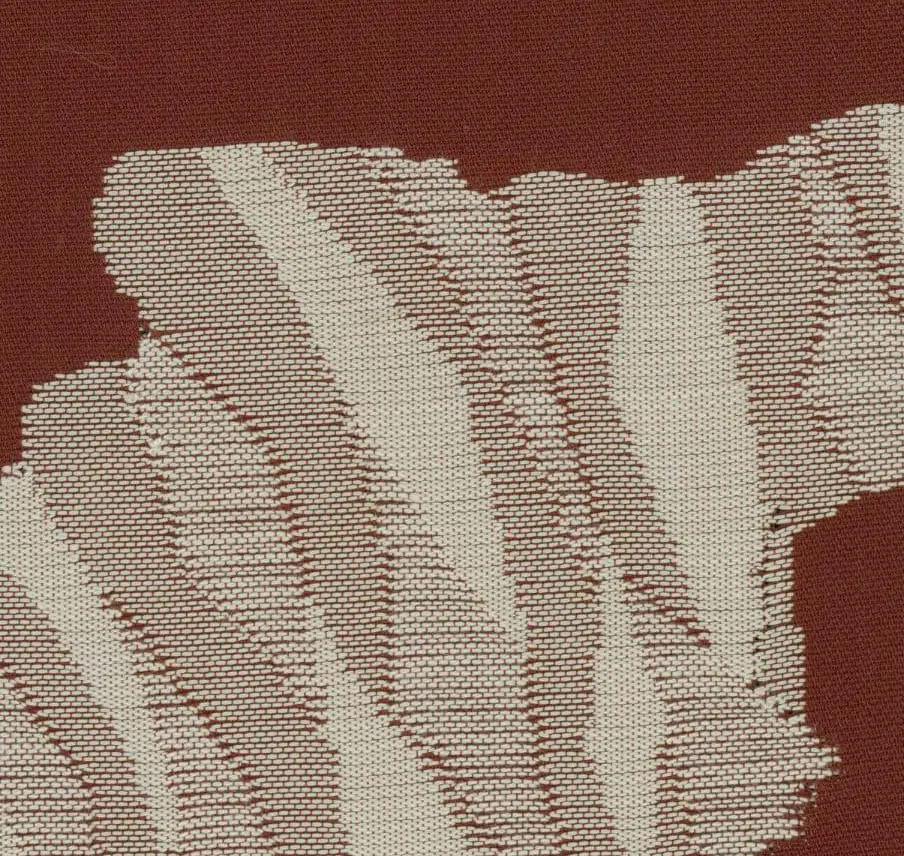
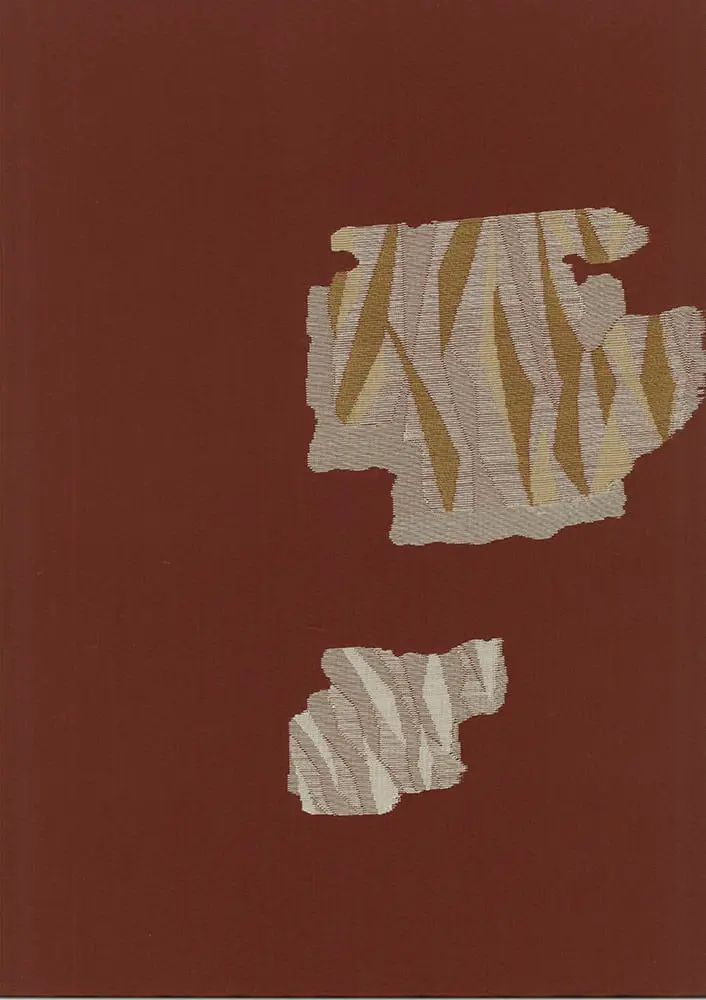

This sophisticated textile originates from Japan’s early-to-mid Showa period (1940–1950) and is a scholarly example of the high-quality structural weaving techniques used in formal pre-war and immediate post-war attire. Measuring 14 inches by 63 inches (36 cm x 160 cm), the piece represents a complete panel from a disassembled kimono, preserved in excellent condition with its assembly threads carefully removed. Crafted from omeshi silk—a prestigious, pre-dyed architectural weave—the fabric possesses a characteristically substantial, slightly heavier feel compared to standard crepes, yet it maintains an excellent, stately drape.
The visual narrative is set against a deep brick red ground, which serves as a saturated substrate for a series of woven card motifs. These rectangular, paper-like forms are rendered with shimmering metallic gold and silver threads, interspersed with crisp white elements to provide a three-dimensional effect. The card imagery, likely referencing shikishi (poetry boards) or karuta (playing cards), is arranged in a rhythmic, staggered composition that creates a sense of intellectual depth. The use of metallic hikihaku (flat gold foil) techniques within the weave reflects the era's mastery of integrating precious metals directly into the fabric's structure to create enduring luster.

Payment Options: We primarily accept PayPal for all transactions. Credit and debit cards are not accepted. If you prefer to pay by personal check instead of PayPal, please note this preference in the "Additional comments" field when placing your order.Ordering Process
To receive your PayPal invoice, simply fill out the form.
Shipping Details: We ship all orders to the address associated with your PayPal payment. Please ensure your PayPal shipping address is current and accurate.A phone number is required during checkout, as our shipping carrier may need to contact you regarding delivery questions.Shipping RatesUnited States and Canada: $20International destinations (air mail): $40
