Copyright © 2026 Yorke Antique Textiles
.avif)

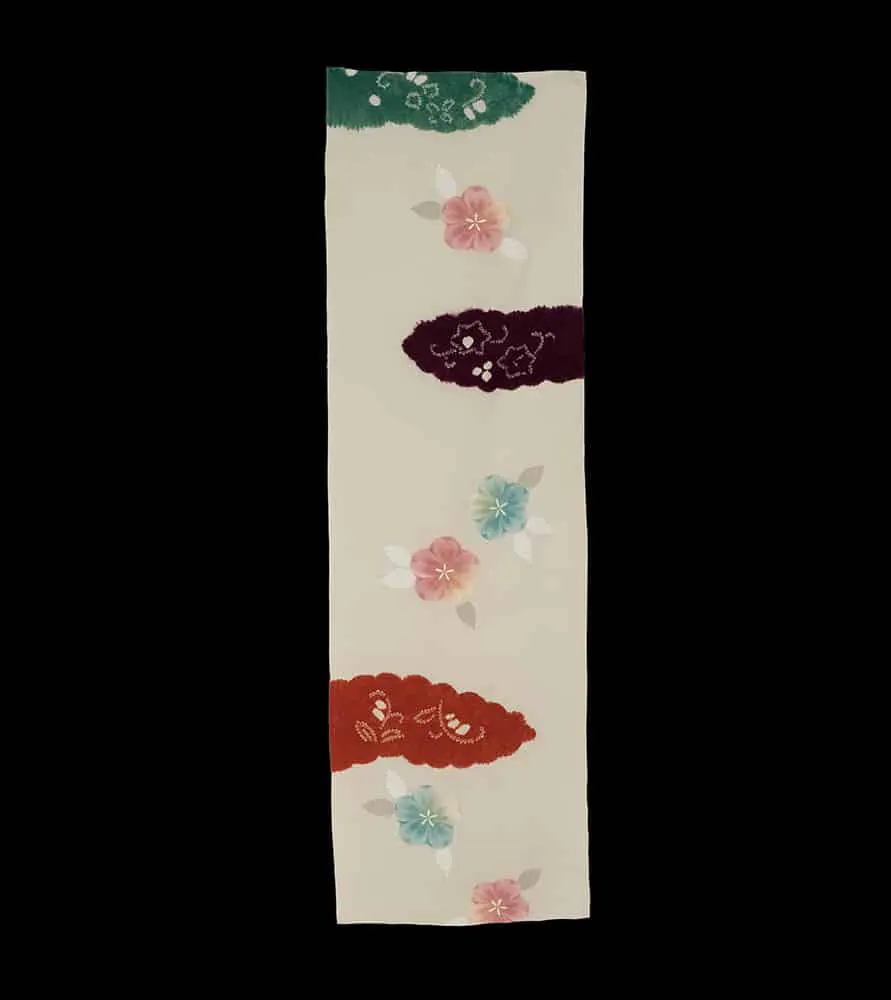

This elegant textile originates from Japan’s mid-Showa period (1950–1970) and is a scholarly example of the harmonious blending of traditional resist-dyeing with painterly, modern surface decoration. Measuring 15 inches by 48 inches (38 cm x 122 cm), the panel is crafted from a premium rinzu (silk damask) that provides a lustrous, soft foundation and a fabulous drape. The piece is preserved in excellent condition, showcasing the refined craftsmanship of post-war formal silk production.
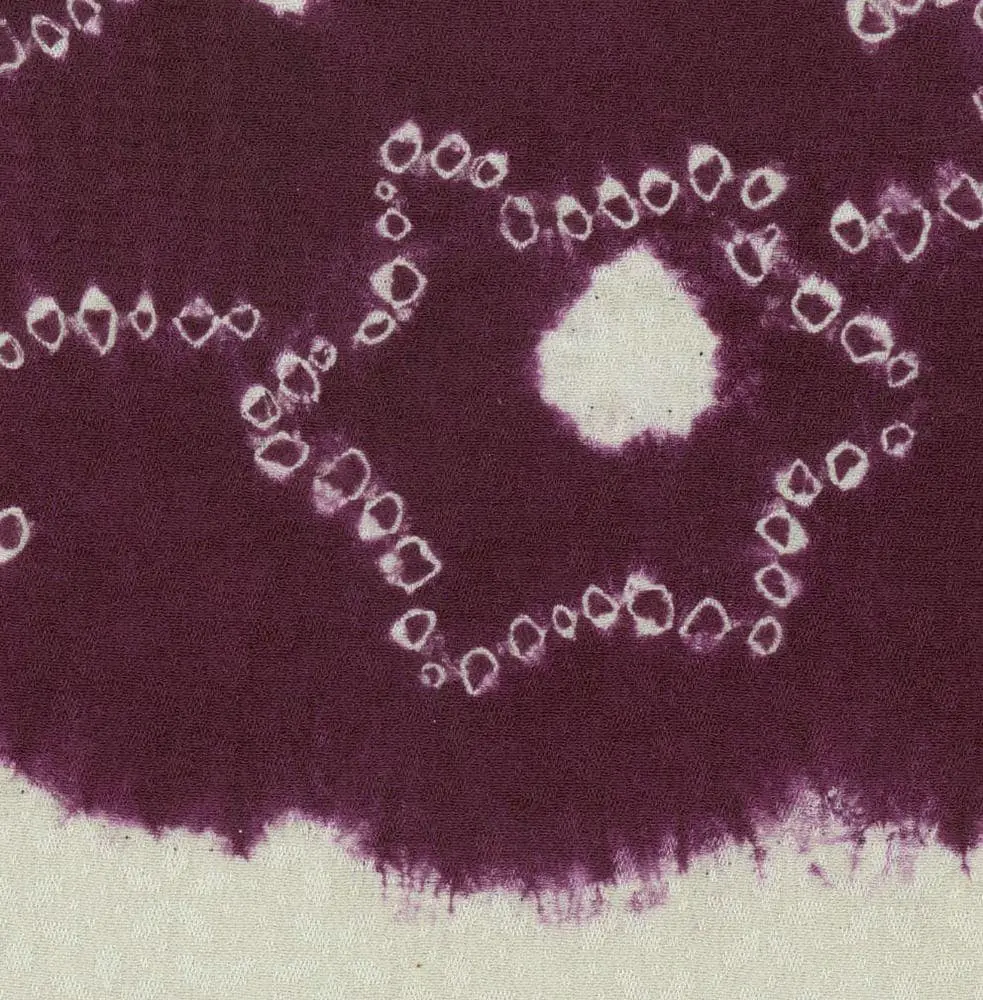
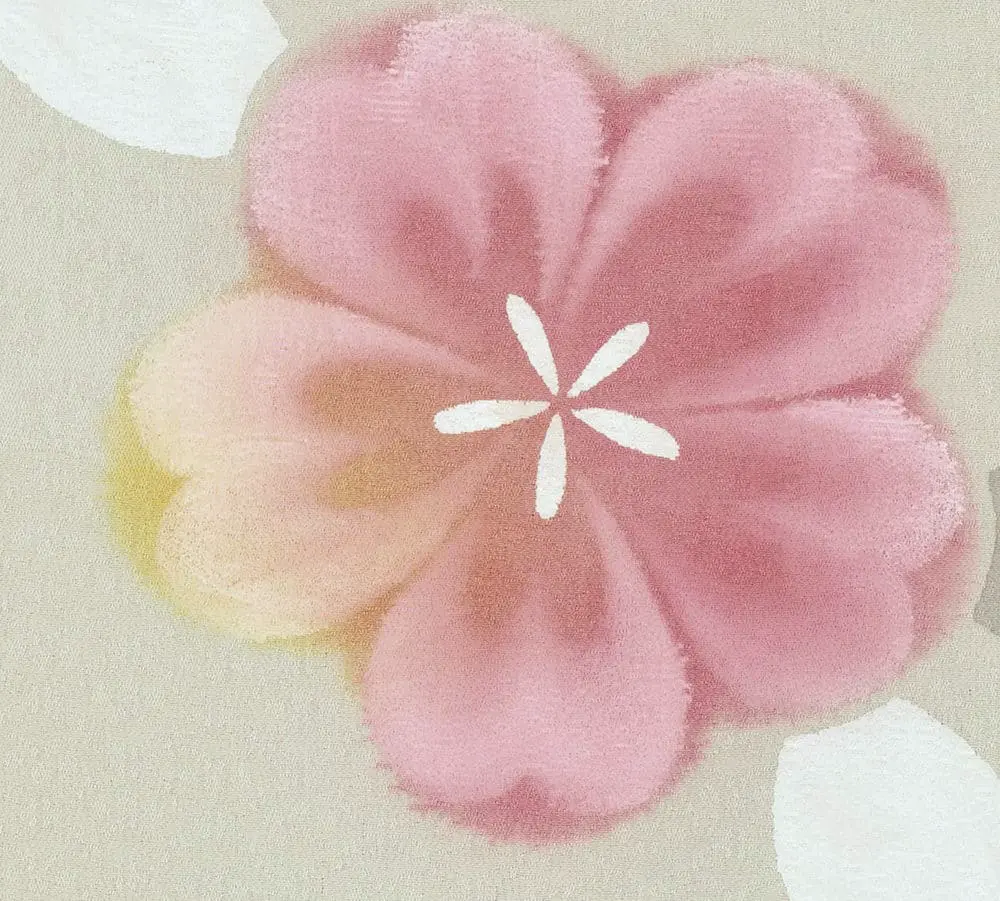
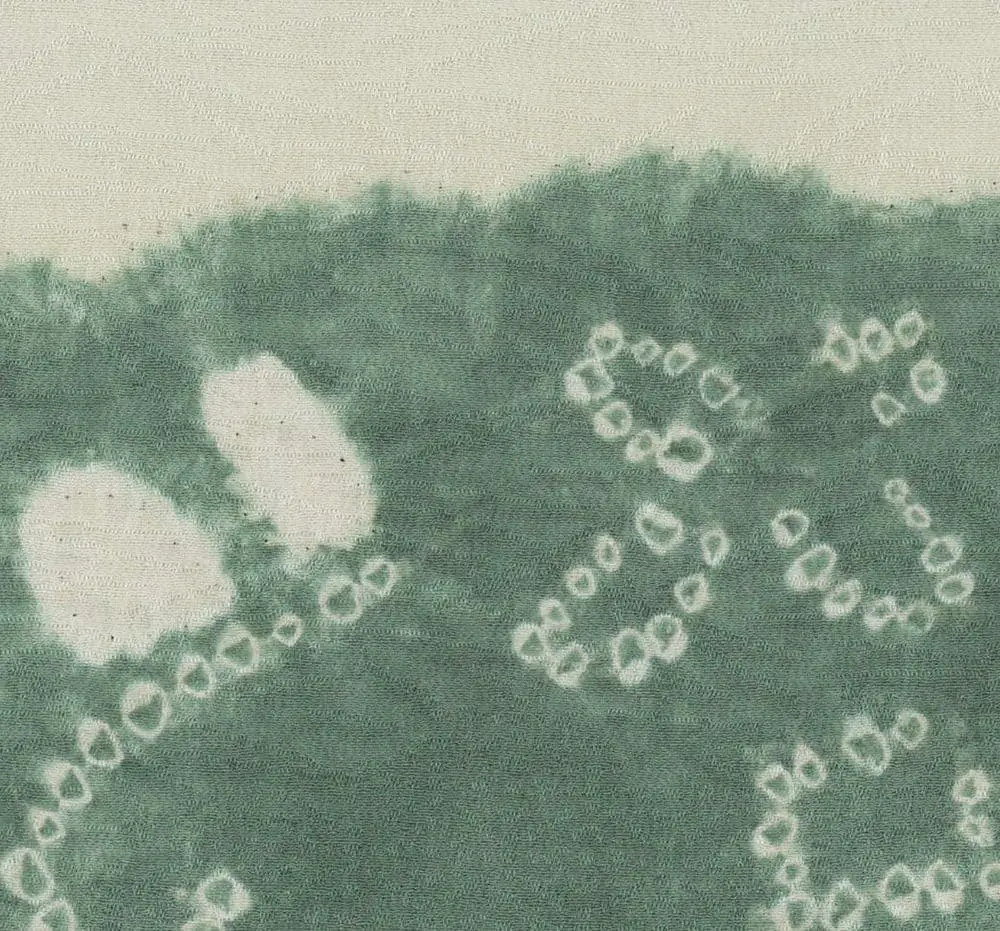
The visual narrative features a sophisticated interplay of textures and techniques on a tasteful ivory field. Large, bold shibori color patches in deep forest green, plum purple, and rust red are strategically placed across the panel, each containing delicate white resist-dyed botanical silhouettes. Interspersed among these structured patches are sweet ume (plum) blossoms rendered in dreamy, watercolor-style hues of soft pink and turquoise blue. This combination of the tactile, granular shibori texture with the fluid, translucent quality of watercolor painting reflects the mid-century's penchant for creating light-filled, ethereal floral compositions.

Payment Options: We primarily accept PayPal for all transactions. Credit and debit cards are not accepted. If you prefer to pay by personal check instead of PayPal, please note this preference in the "Additional comments" field when placing your order.Ordering Process
To receive your PayPal invoice, simply fill out the form.
Shipping Details: We ship all orders to the address associated with your PayPal payment. Please ensure your PayPal shipping address is current and accurate.A phone number is required during checkout, as our shipping carrier may need to contact you regarding delivery questions.Shipping RatesUnited States and Canada: $20International destinations (air mail): $40
