Copyright © 2026 Yorke Antique Textiles
.avif)

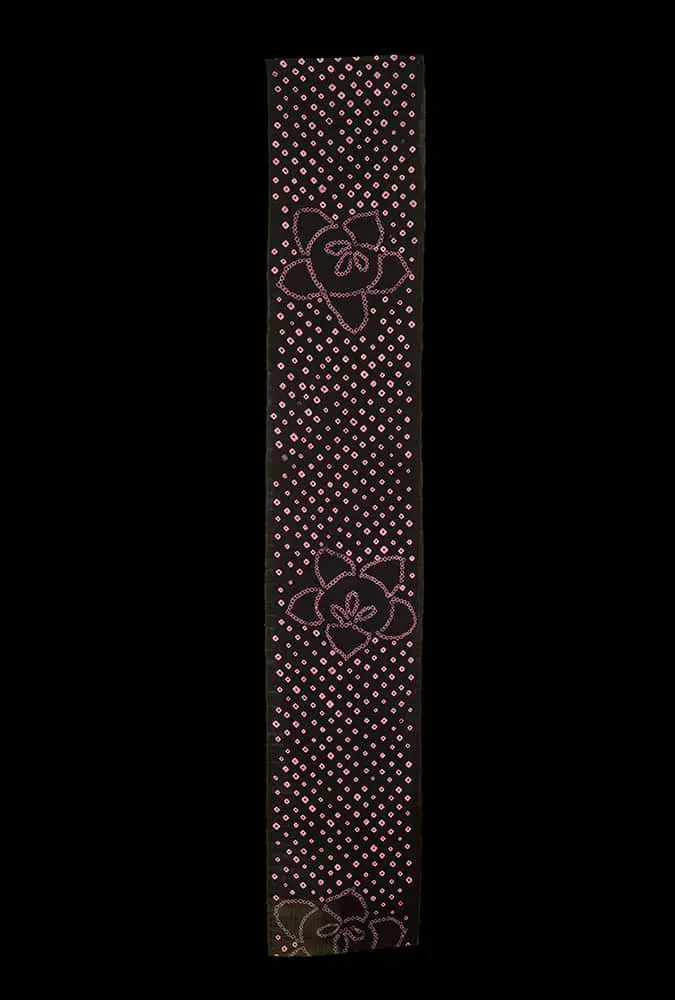
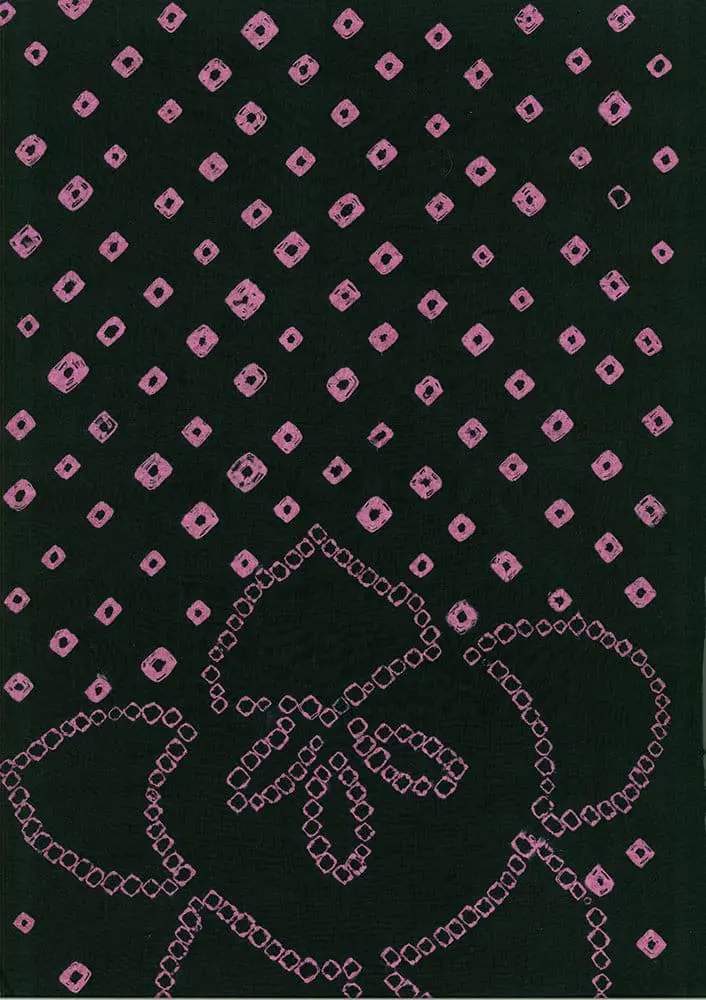
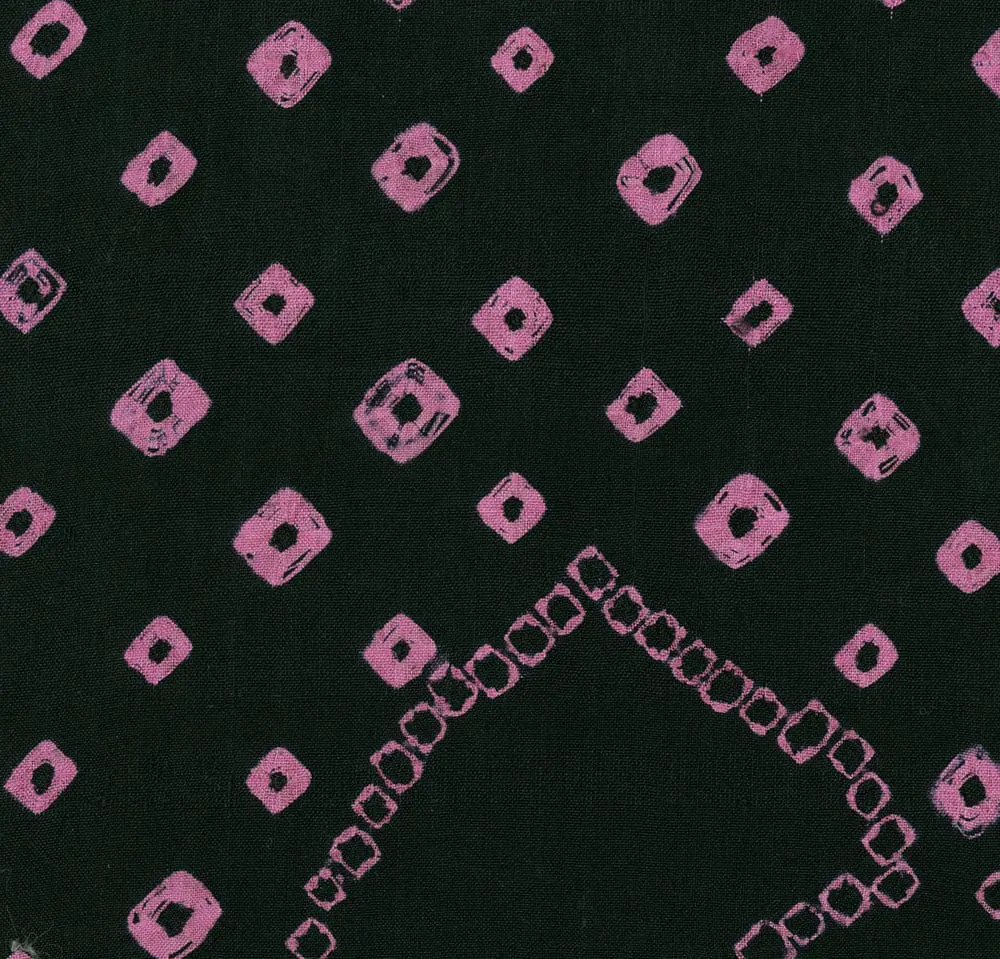
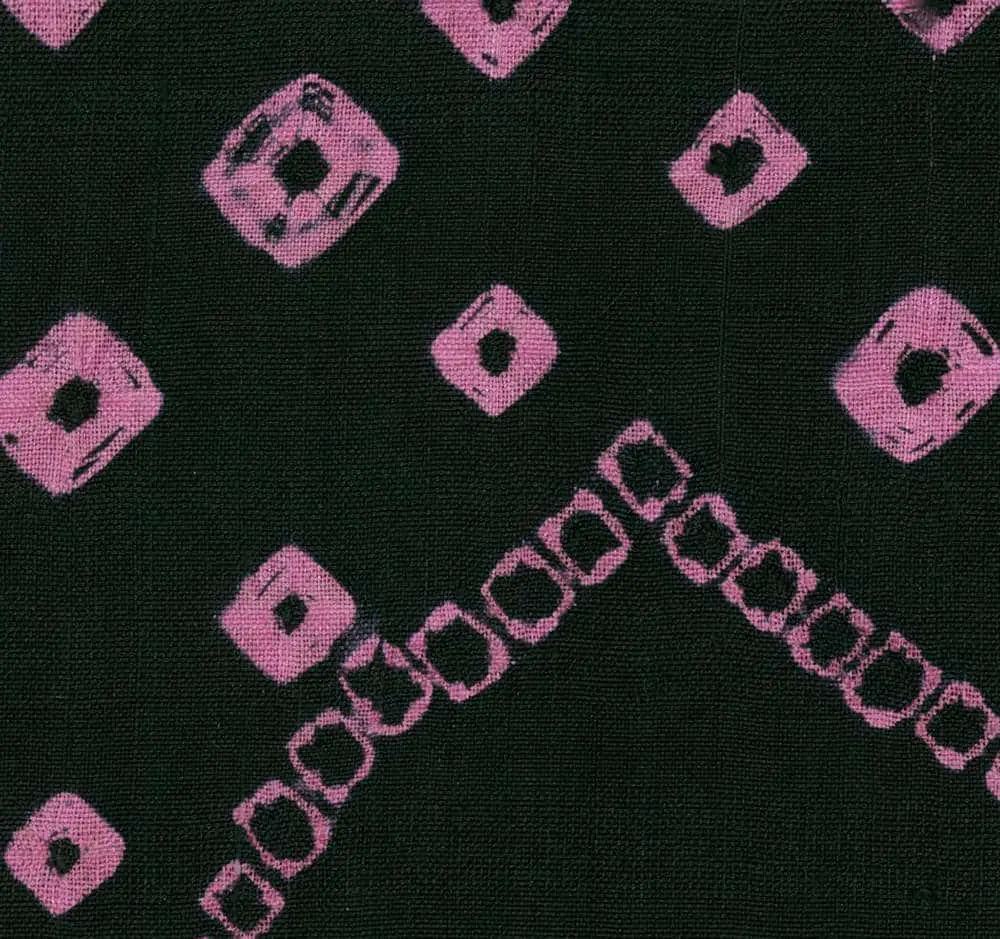
This extraordinary textile originates from Japan’s late Showa period (1950–1980) and represents a full, meticulously disassembled panel from a vintage kimono. Measuring 13.75 inches by 78 inches (35 cm x 198 cm), the fabric is crafted from tsumugi silk, a variety renowned for its "dry" handfeel and rustic charm. This specific quality is achieved by using irregular threads spun from hatched cocoons—similar to tussah silk—resulting in a slightly more open weave and a textured surface characterized by natural slubs. The piece remains in excellent condition, with all disassembly threads carefully removed to preserve the integrity of the weave.
The visual narrative features a striking black ground adorned with traditional shibori (tie-dye) artistry. The design is dominated by tachibana (wild citrus) motifs rendered in vibrant pink, a symbol in Japanese culture for longevity and eternal youth. These floral-like citrus blossoms are surrounded by a dense field of kanoko (fawn-spot) shibori dots, which create a rhythmic, textured geometric overlay. The contrast between the deep black dye and the precise pink resist-work exemplifies the high level of technical skill found in mid-to-late 20th-century artisan textiles.

Payment Options: We primarily accept PayPal for all transactions. Credit and debit cards are not accepted. If you prefer to pay by personal check instead of PayPal, please note this preference in the "Additional comments" field when placing your order.Ordering Process
To receive your PayPal invoice, simply fill out the form.
Shipping Details: We ship all orders to the address associated with your PayPal payment. Please ensure your PayPal shipping address is current and accurate.A phone number is required during checkout, as our shipping carrier may need to contact you regarding delivery questions.Shipping RatesUnited States and Canada: $20International destinations (air mail): $40
