Copyright © 2026 Yorke Antique Textiles
.avif)

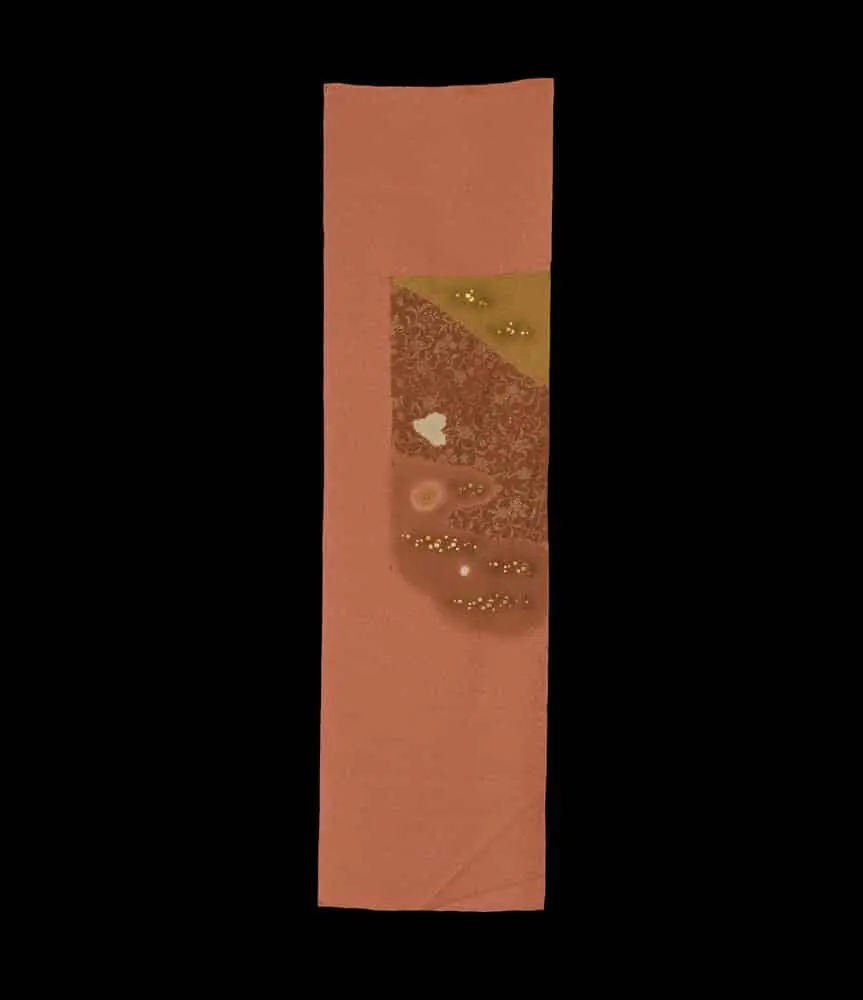
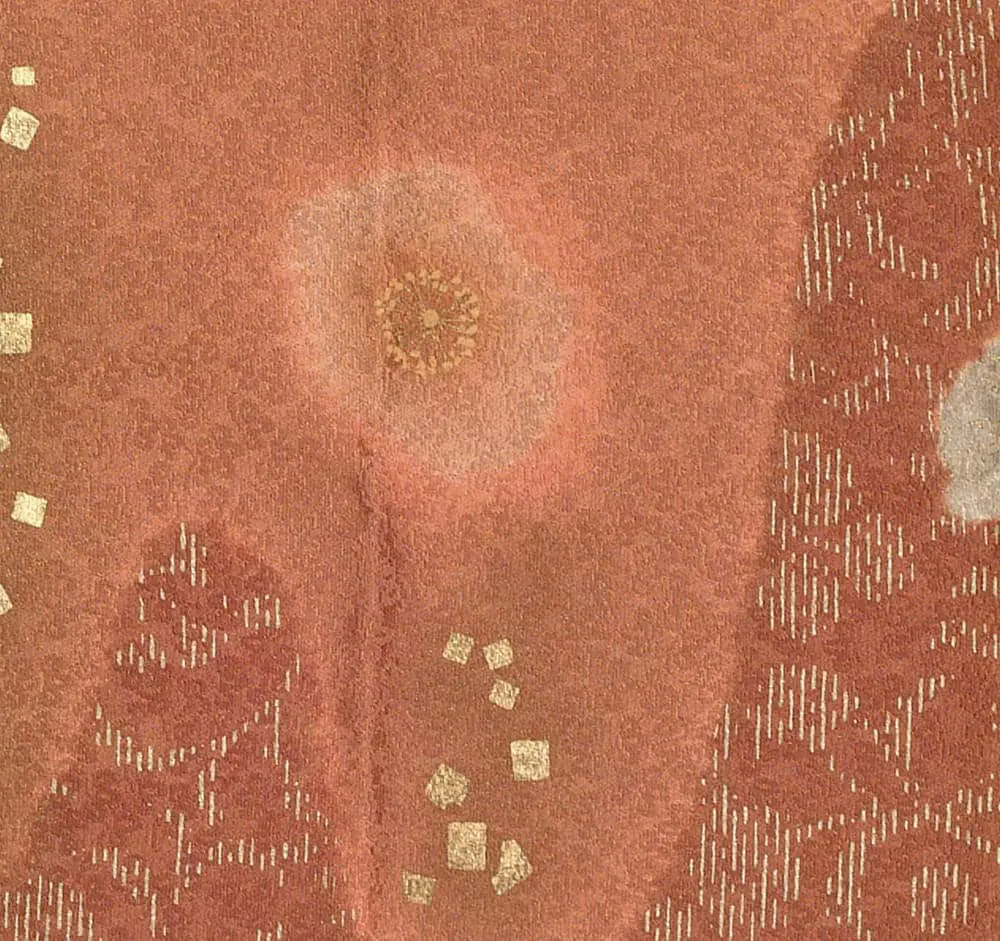
This radiant textile originates from Japan’s late Showa period (1950–1980) and serves as a fascinating scholarly example of the intersection between industrial production and traditional luxury. Measuring 14.75 inches by 53 inches (37 cm x 135 cm), the piece represents a complete panel from a disassembled kimono and is preserved in excellent condition. Crafted from a high-quality silk with a shimmery rusty orange hue, the fabric offers a wonderfully graceful drape and a luminous surface that catches the light with every movement.
The visual narrative is defined by a central abstract floral motif that utilizes heavy gold metallic highlights to achieve a dense, brocade-like appearance. This gilded area features intricate scrolling patterns and botanical silhouettes in shades of bronze and muted gold. A unique and authentic feature of this specific panel is the presence of intentional black markings along the edges of the primary motif. These are historical measuring lines, likely placed by the original kimono makers or the fabric manufacturer to guide the precise alignment of the pattern during the garment's construction—a rare physical record of the tailoring process.

Payment Options: We primarily accept PayPal for all transactions. Credit and debit cards are not accepted. If you prefer to pay by personal check instead of PayPal, please note this preference in the "Additional comments" field when placing your order.Ordering Process
To receive your PayPal invoice, simply fill out the form.
Shipping Details: We ship all orders to the address associated with your PayPal payment. Please ensure your PayPal shipping address is current and accurate.A phone number is required during checkout, as our shipping carrier may need to contact you regarding delivery questions.Shipping RatesUnited States and Canada: $20International destinations (air mail): $40
