Copyright © 2026 Yorke Antique Textiles
.avif)

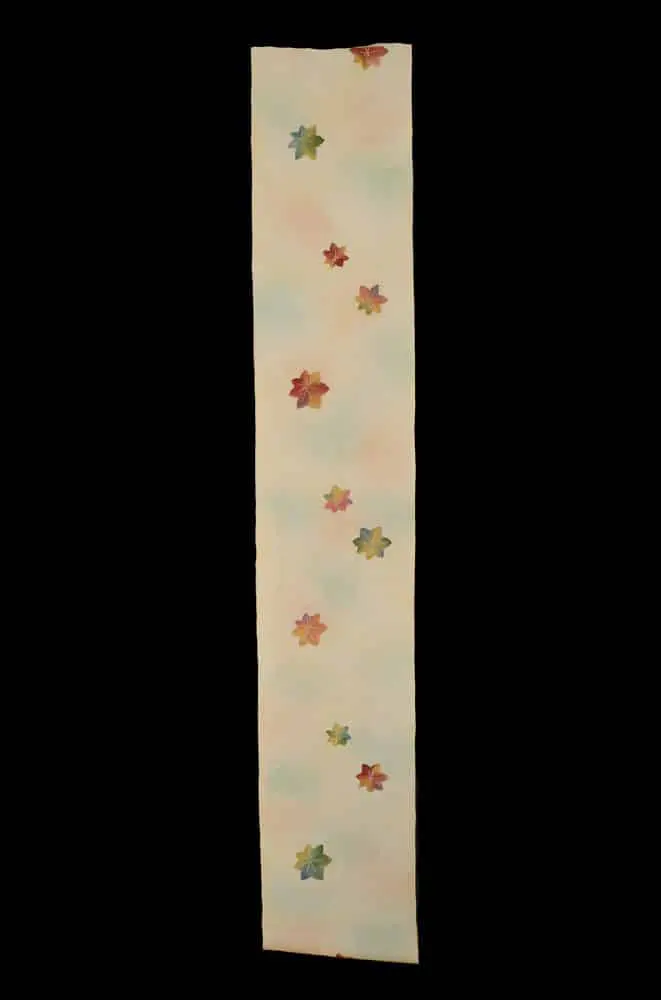
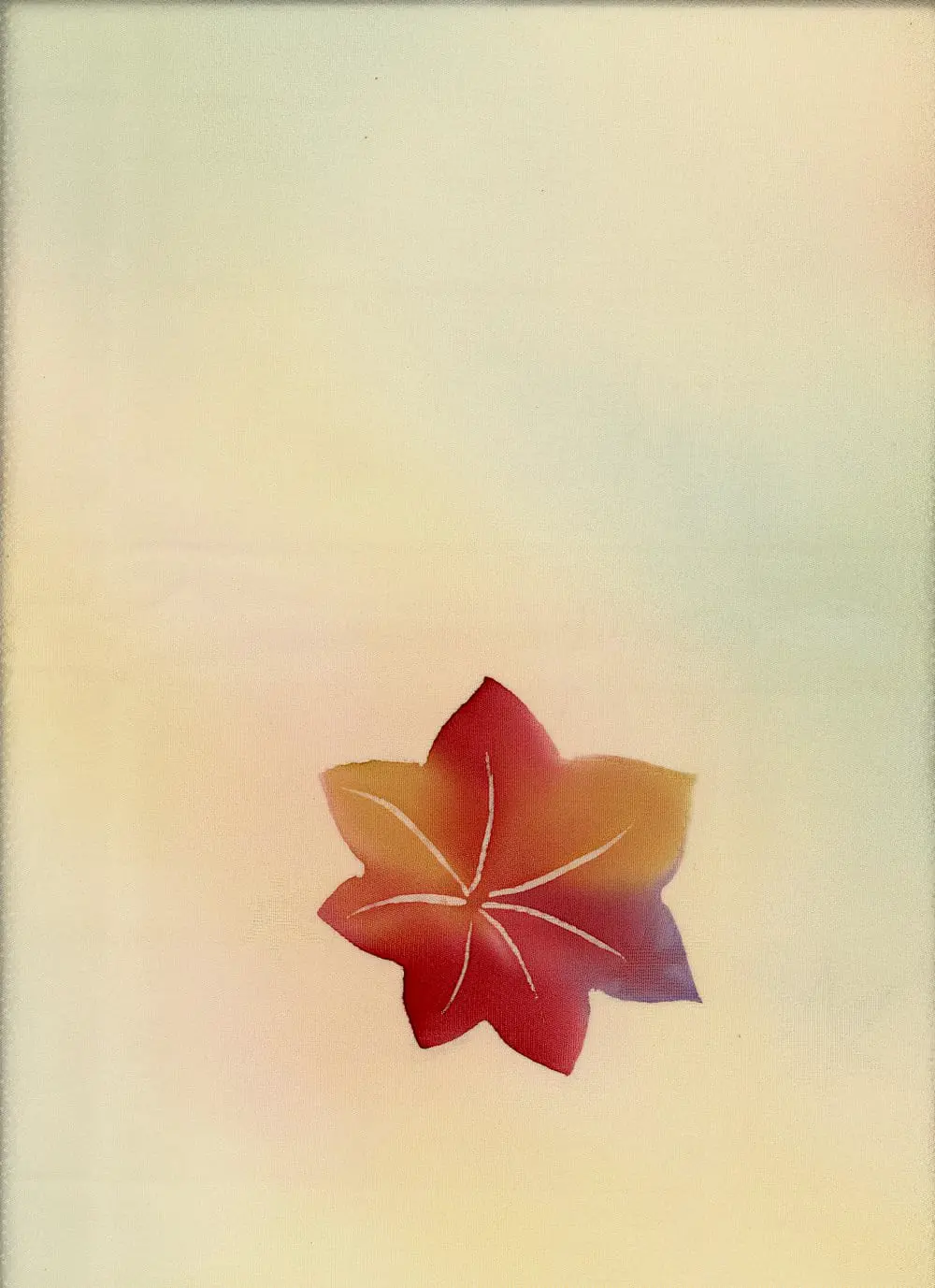
This radiant textile originates from Japan’s late Showa period (1950–1980) and is a scholarly example of the refined, painterly botanical designs used for high-status seasonal attire. Measuring an impressive 14 inches by 86 inches (36 cm x 218 cm), the piece represents a complete panel from a disassembled kimono, preserved in excellent condition with its original assembly threads meticulously removed. Crafted from premium silk, the substrate exhibits a slight glossiness that catches the light, offering a soft tactile quality and a beautiful, fluid drape.
The visual narrative is set against a very pale creamy yellow background, which serves as a luminous canvas for scattered momiji (maple leaf) motifs. These leaves are executed in a vibrant watercolor style, featuring rich gradients of jewel tones including emerald green, deep crimson, golden amber, and sapphire blue. The composition utilizes a sophisticated fubuki or "drifting" aesthetic, where the leaves appear to float effortlessly across a misty field of soft pastel blue and pink clouds. This masterful use of negative space and color bleeding reflects the mid-to-late century's move toward impressionistic interpretations of autumn, celebrating the transient beauty of changing foliage.

Payment Options: We primarily accept PayPal for all transactions. Credit and debit cards are not accepted. If you prefer to pay by personal check instead of PayPal, please note this preference in the "Additional comments" field when placing your order.Ordering Process
To receive your PayPal invoice, simply fill out the form.
Shipping Details: We ship all orders to the address associated with your PayPal payment. Please ensure your PayPal shipping address is current and accurate.A phone number is required during checkout, as our shipping carrier may need to contact you regarding delivery questions.Shipping RatesUnited States and Canada: $20International destinations (air mail): $40
