Copyright © 2026 Yorke Antique Textiles
.avif)


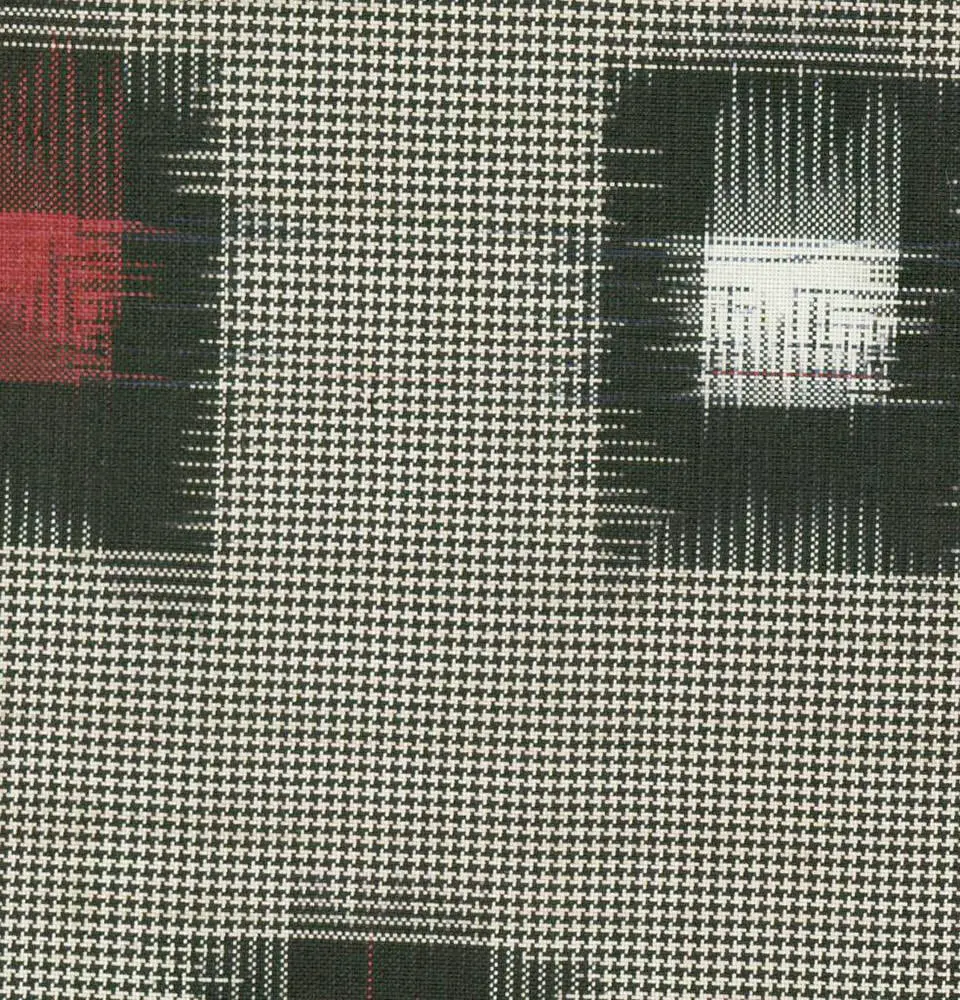

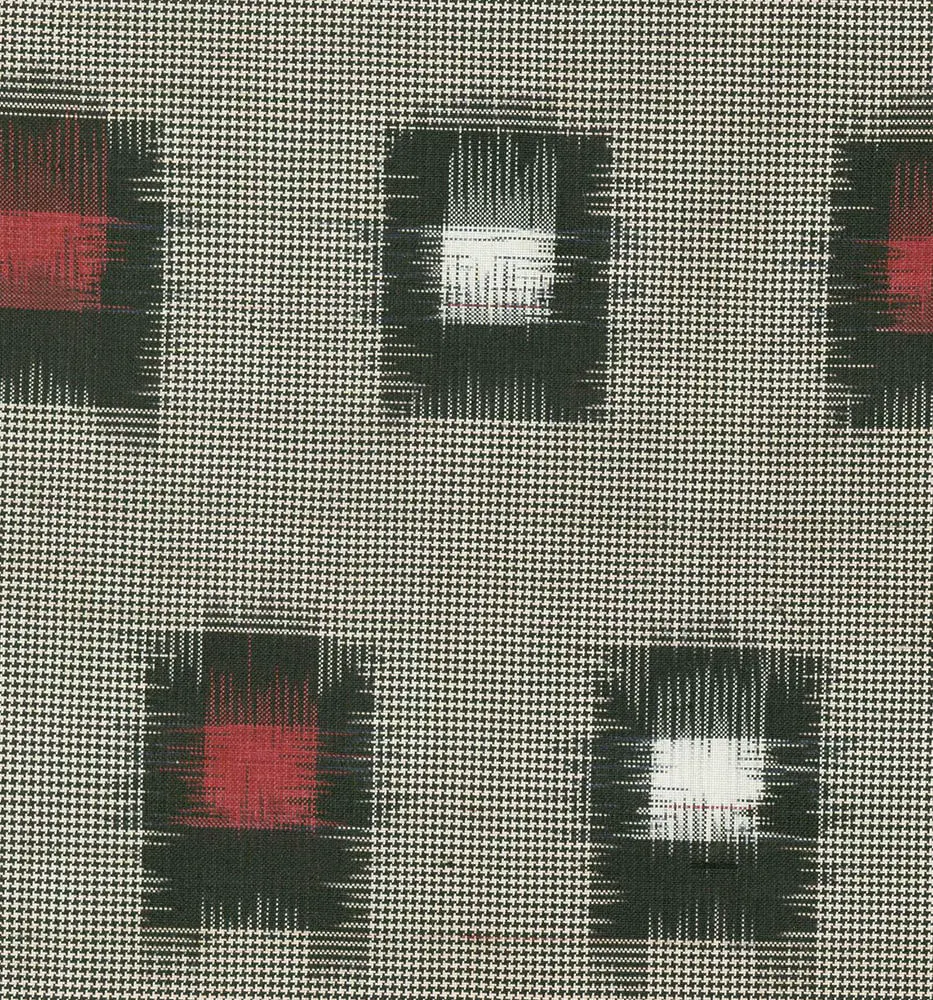
This striking silk panel originates from Japan and dates to the transition between the late Taisho and early Showa periods (1918–1935). Measuring 14 inches by 48 inches (36 cm x 122 cm), the textile is characterized by a somewhat stiff hand, typical of the sturdy, high-quality silks used for daily-wear kimono during this era of rapid modernization. The panel is decorated using the traditional kasuri (ikat) technique, where threads are resist-dyed before weaving to create patterns with intentionally softened, slightly blurred edges.
The visual narrative is defined by a rhythmic, grid-like arrangement of "modern" geometric motifs that suggest stylized windows. These small, rectangular forms are rendered in a sophisticated palette of deep madder red and crisp white, each framed by a feathered black border that exemplifies the precision of the kasuri-dyeing process. Set against a neutral grey-beige ground, this repeating pattern reflects the influence of Art Deco and Western architectural movements on Japanese textile design during the early 20th century. The excellent condition of the piece highlights the durability of the weave and the vibrancy of the historical dyes.

Payment Options: We primarily accept PayPal for all transactions. Credit and debit cards are not accepted. If you prefer to pay by personal check instead of PayPal, please note this preference in the "Additional comments" field when placing your order.Ordering Process
To receive your PayPal invoice, simply fill out the form.
Shipping Details: We ship all orders to the address associated with your PayPal payment. Please ensure your PayPal shipping address is current and accurate.A phone number is required during checkout, as our shipping carrier may need to contact you regarding delivery questions.Shipping RatesUnited States and Canada: $20International destinations (air mail): $40
