Copyright © 2026 Yorke Antique Textiles
.avif)

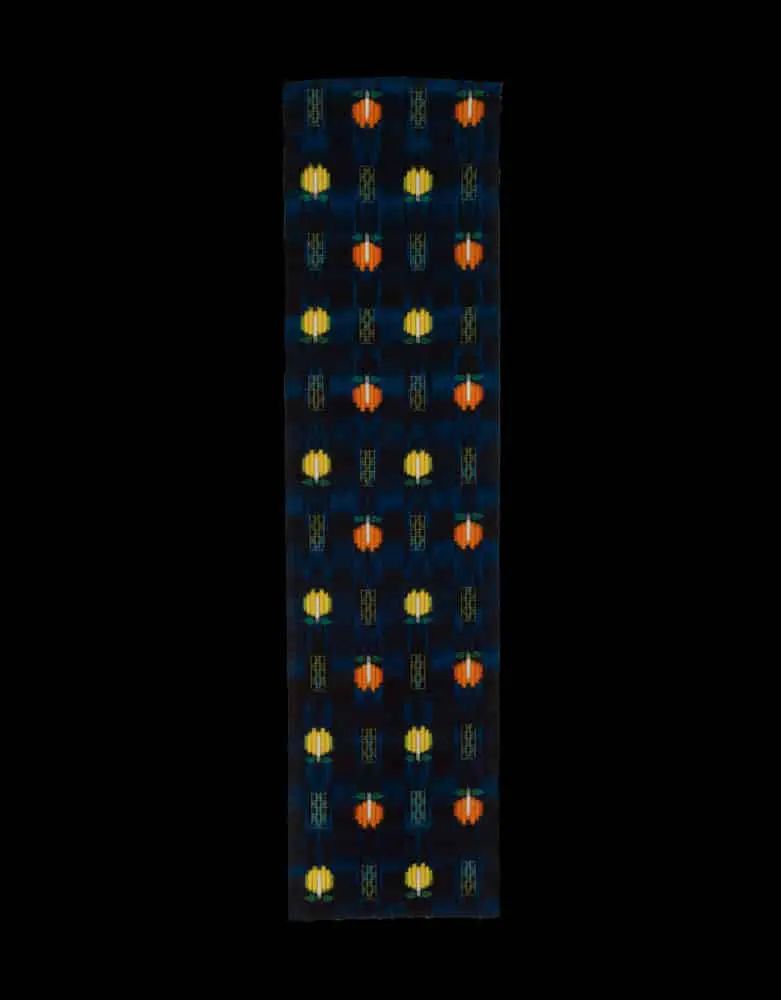
This distinctive textile originates from Japan’s late Showa period (1960–1980) and is a scholarly example of the practical yet artistically bold wool kasuri produced during the post-war era. Measuring 14.5 inches by 42 inches (37 cm x 107 cm), this panel was taken from a roll (tanmono) and remains in excellent condition. During this period, wool became a favored material for everyday winter kimono due to its warmth and durability, often featuring geometric patterns that bridged the gap between traditional folk craft and modern graphic design.
The visual narrative is defined by a rhythmic, grid-like arrangement of stylized motifs set against a deep navy blue ground. The pattern consists of alternating rows of vibrant orange and lemon-yellow circular forms, each featuring a crisp white vertical "stamen" detail. These pops of color are separated by elongated, dark green rectangular lattices, creating a structured, architectural feel. The execution uses the kasuri (ikat) technique, where threads are tie-dyed prior to weaving to produce the signature slightly feathered edges seen in the motifs. This specific combination of high-contrast primary colors and a rigid geometric layout reflects the mid-to-late 20th-century trend of revitalizing mingei (folk art) styles for a contemporary audience.

Payment Options: We primarily accept PayPal for all transactions. Credit and debit cards are not accepted. If you prefer to pay by personal check instead of PayPal, please note this preference in the "Additional comments" field when placing your order.Ordering Process
To receive your PayPal invoice, simply fill out the form.
Shipping Details: We ship all orders to the address associated with your PayPal payment. Please ensure your PayPal shipping address is current and accurate.A phone number is required during checkout, as our shipping carrier may need to contact you regarding delivery questions.Shipping RatesUnited States and Canada: $20International destinations (air mail): $40
