Copyright © 2026 Yorke Antique Textiles
.avif)

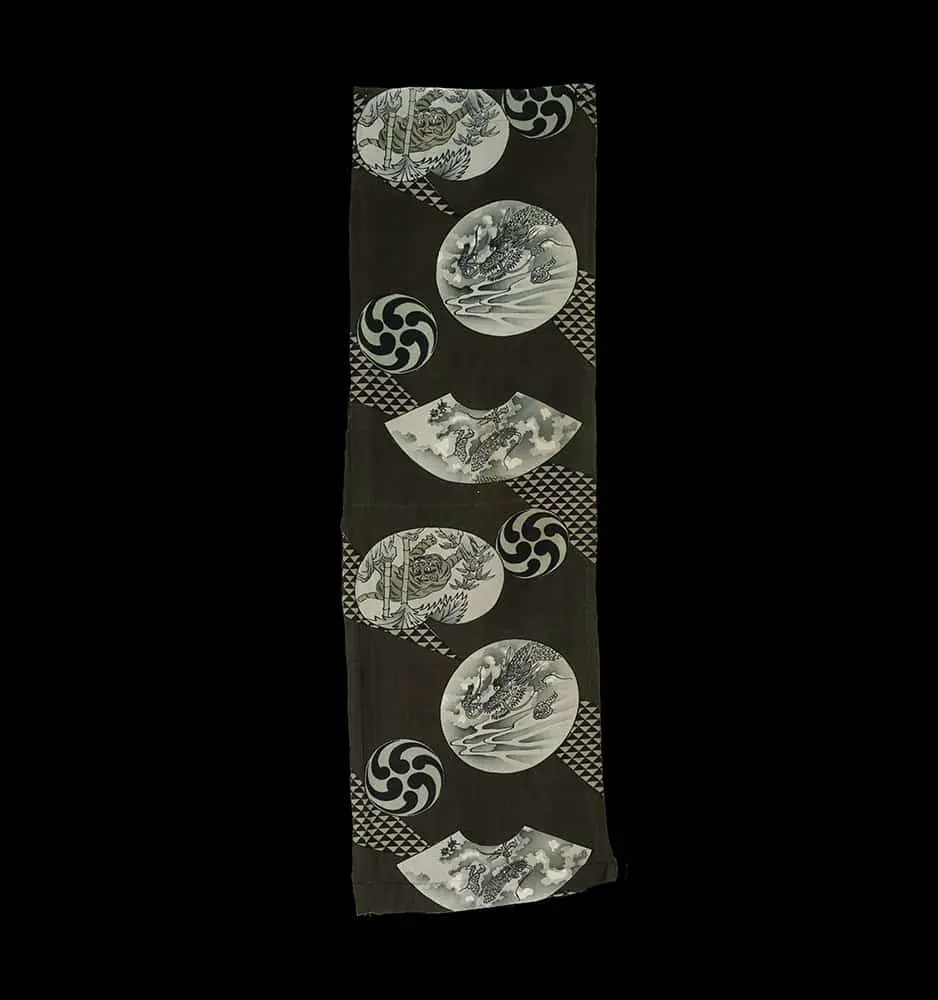
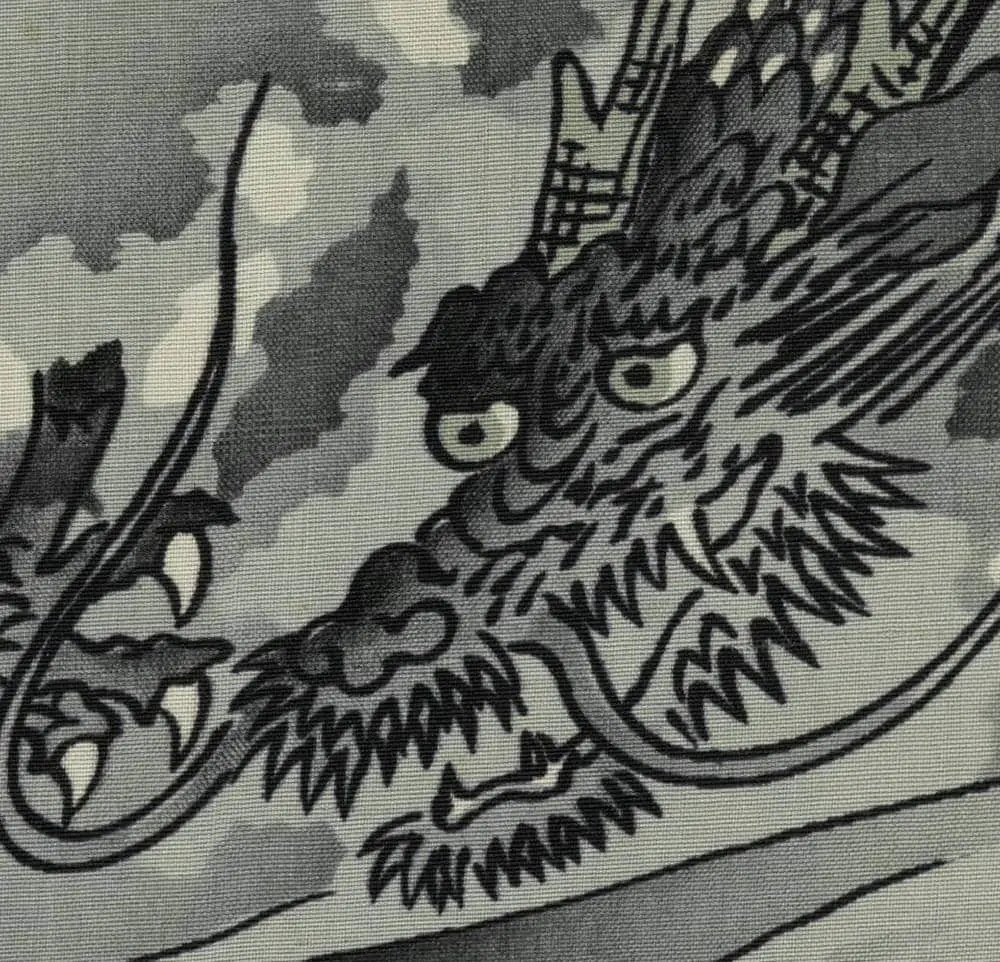
This compelling silk panel originates from Japan and dates to the early Showa period (1927–1945). Measuring 14.5 inches by 44 inches (37 cm x 112 cm), the textile was extracted from a man's juban, a traditional under-kimono often featuring hidden, elaborate designs. While the piece is in generally good condition, it possesses some noticeable staining in larger areas consistent with its age and use as a functional garment.
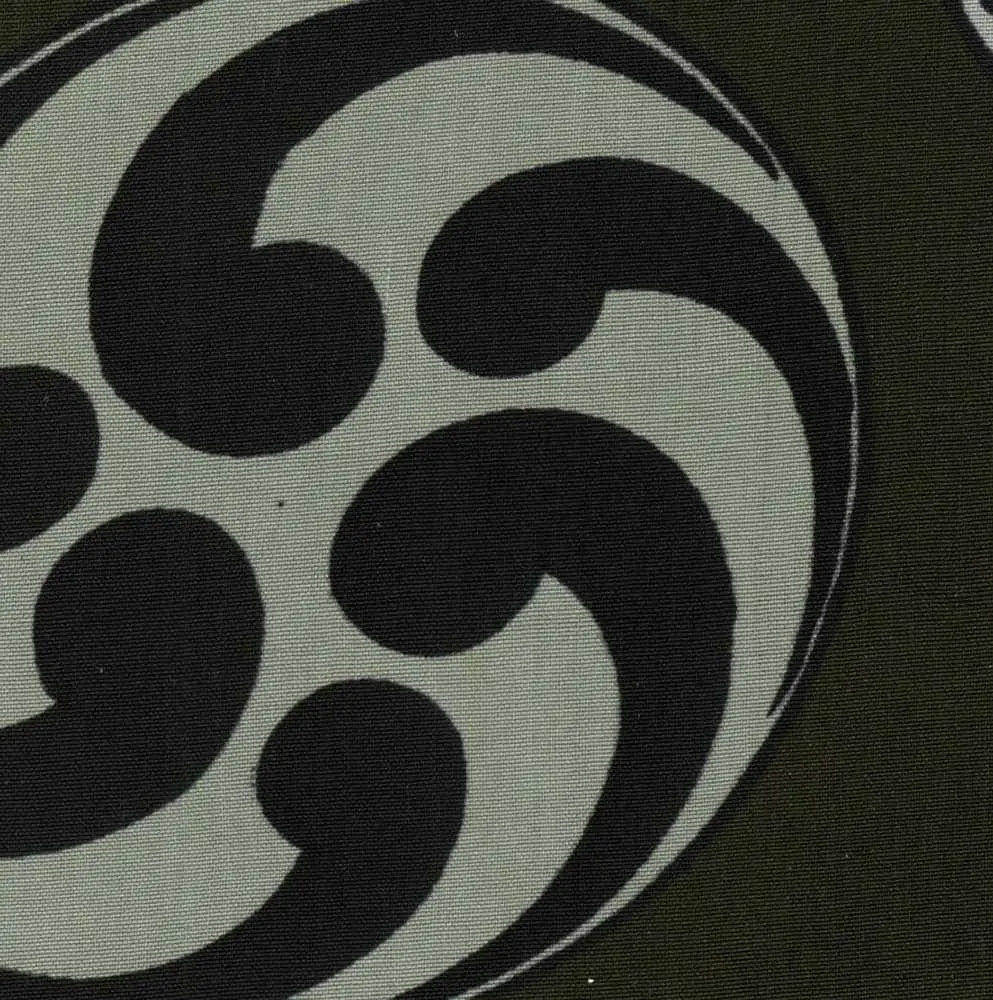
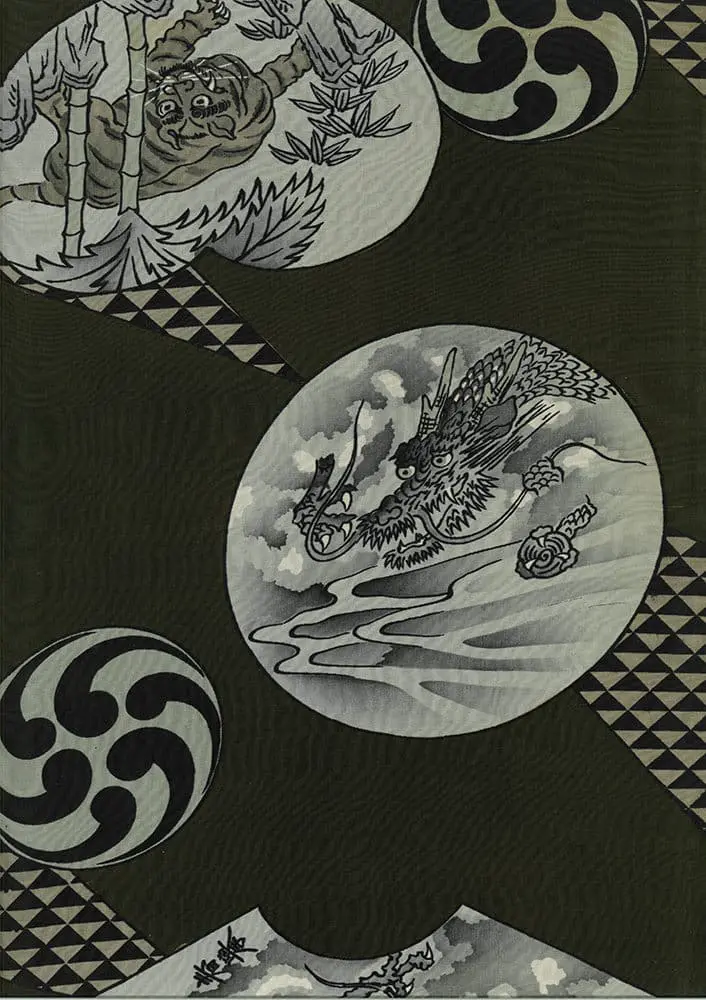
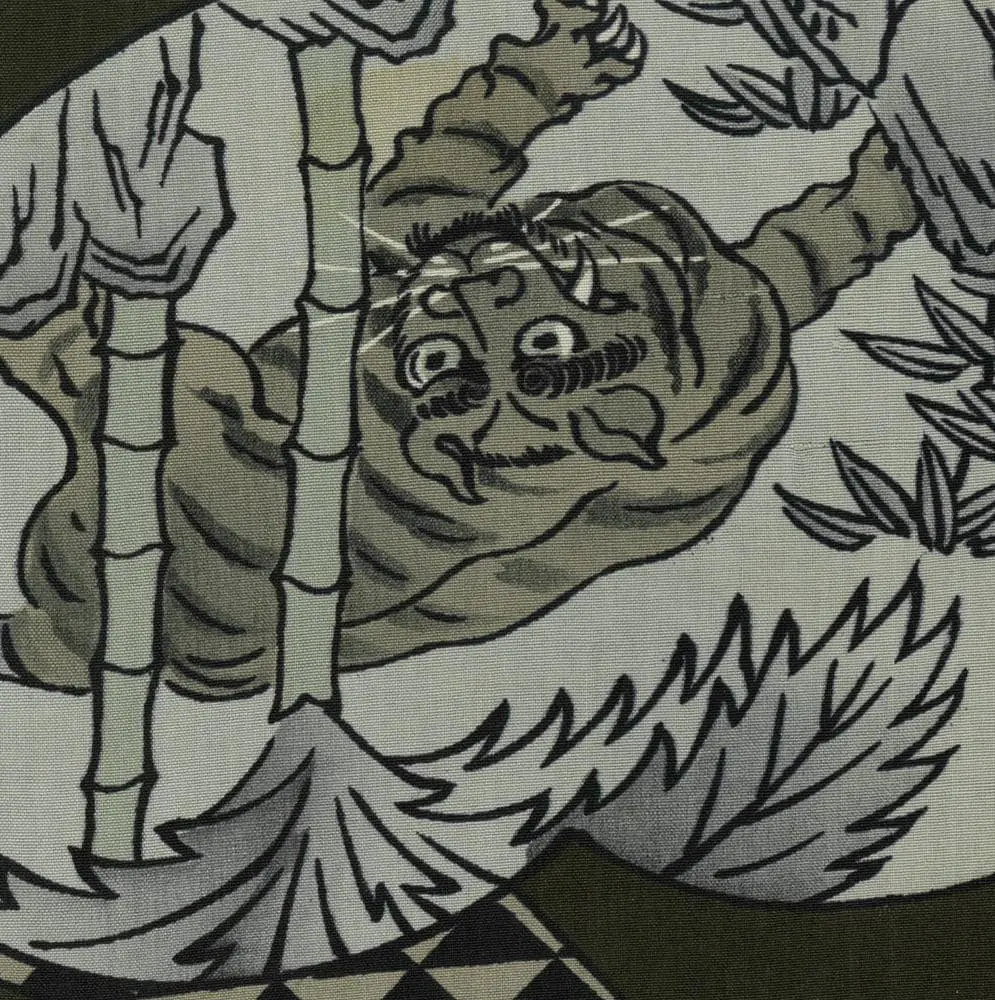
The visual narrative centers on the powerful pairing of the dragon (ryu) and the tiger (tora), ancient symbols representing the forces of nature and martial prowess. These motifs are rendered within circular and fan-shaped frames (uchiwa and sensu) against a deep charcoal or black ground. The dragon is shown emerging from swirling mist, while the tiger is depicted in a bamboo grove, both executed in a sophisticated monochromatic palette of grey and white that mimics ink-wash painting. Interspersed between these creatures are bold tomoe (comma-like swirls) and geometric triangle patterns, which add a sense of rhythmic movement and protective symbolism to the under-garment.

Payment Options: We primarily accept PayPal for all transactions. Credit and debit cards are not accepted. If you prefer to pay by personal check instead of PayPal, please note this preference in the "Additional comments" field when placing your order.Ordering Process
To receive your PayPal invoice, simply fill out the form.
Shipping Details: We ship all orders to the address associated with your PayPal payment. Please ensure your PayPal shipping address is current and accurate.A phone number is required during checkout, as our shipping carrier may need to contact you regarding delivery questions.Shipping RatesUnited States and Canada: $20International destinations (air mail): $40
