Copyright © 2026 Yorke Antique Textiles
.avif)

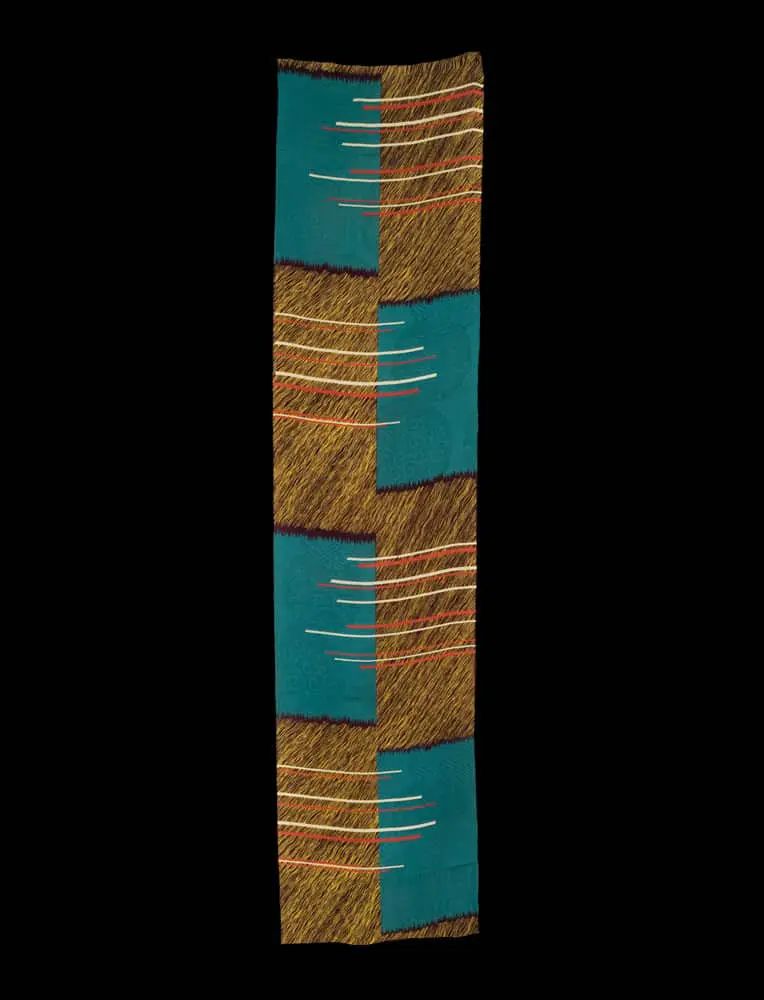
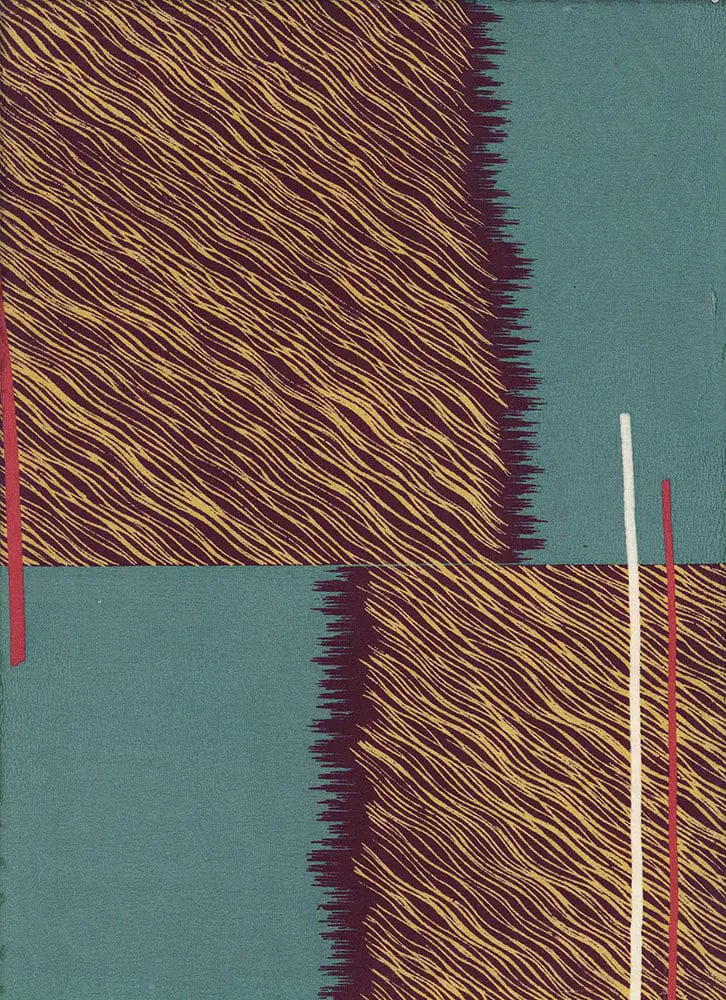
This sophisticated textile originates from Japan’s mid-Showa period (1945–1960) and is a scholarly example of the "modern" style that emerged as designers sought to harmonize traditional motifs with contemporary graphic sensibilities. Measuring 14 inches by 59 inches (36 cm x 150 cm), this panel was extracted from an unused kimono roll (tanmono) and remains in excellent condition. It is crafted from exceptionally soft, fine silk, providing a lustrous and fluid substrate for its bold visual narrative.
The composition is defined by a large-scale, staggered checkerboard or ichimatsu layout. Alternating blocks feature a rich teal-blue with subtle figured damask patterns, juxtaposed against blocks of golden-brown "grass" or grain-like textures. Breaking the rigidity of the grid are series of dynamic, sweeping horizontal lines in white and orange-red, which suggest wind or movement across a landscape. This combination of geometric structure and fluid, gestural lines reflects the post-war trend of reimagining nature through a lens of mid-century abstraction.

Payment Options: We primarily accept PayPal for all transactions. Credit and debit cards are not accepted. If you prefer to pay by personal check instead of PayPal, please note this preference in the "Additional comments" field when placing your order.Ordering Process
To receive your PayPal invoice, simply fill out the form.
Shipping Details: We ship all orders to the address associated with your PayPal payment. Please ensure your PayPal shipping address is current and accurate.A phone number is required during checkout, as our shipping carrier may need to contact you regarding delivery questions.Shipping RatesUnited States and Canada: $20International destinations (air mail): $40
