Copyright © 2026 Yorke Antique Textiles
.avif)

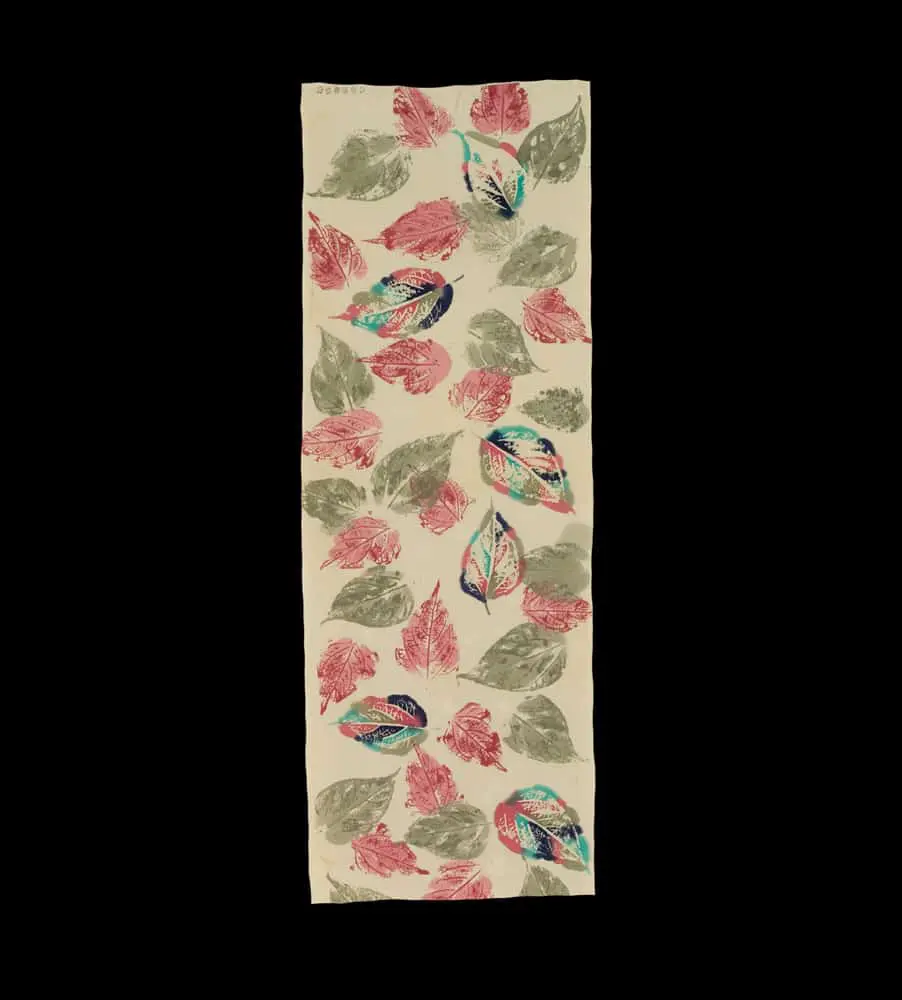
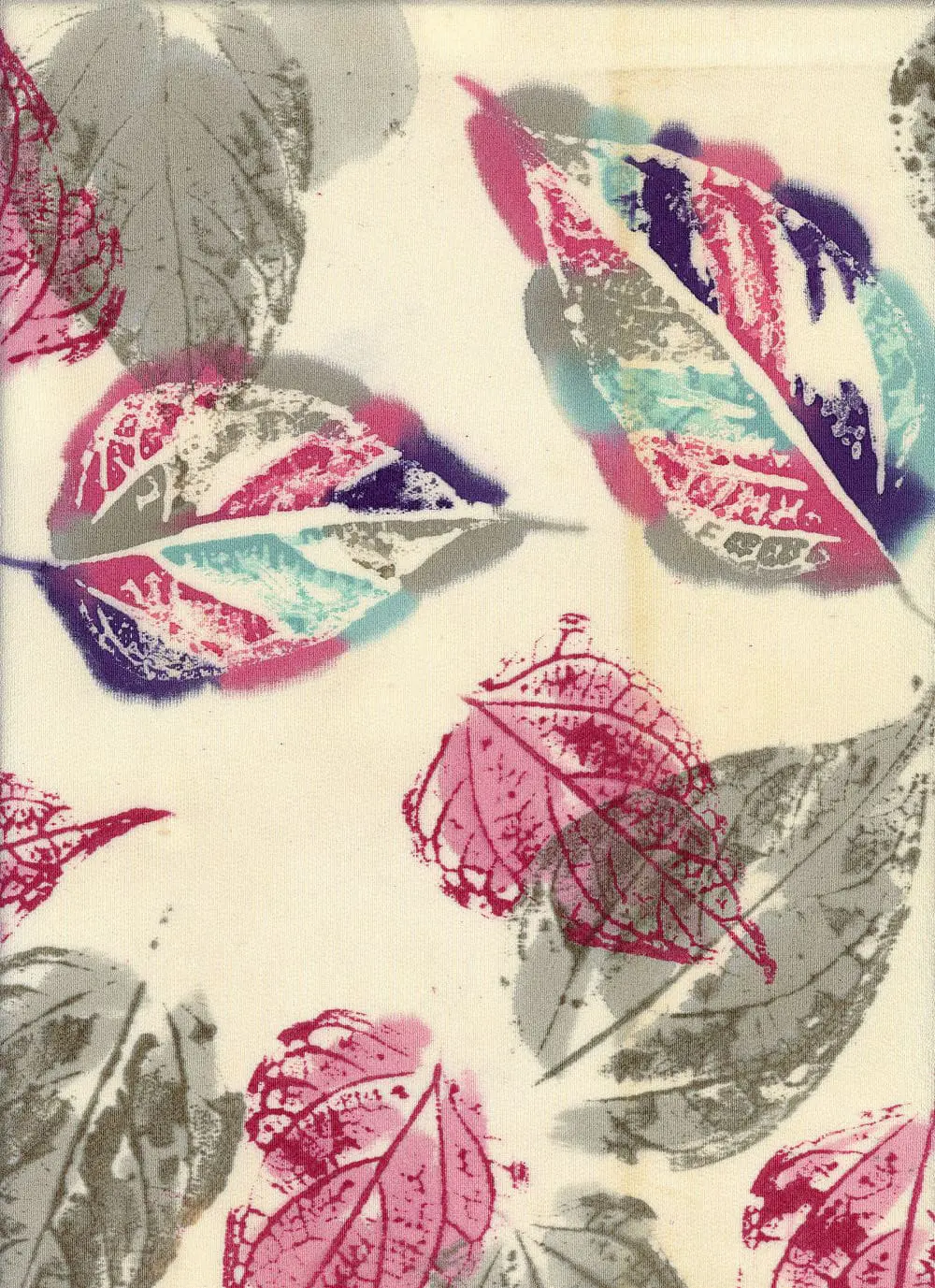
This distinctive textile originates from Japan’s mid-Showa period (1950–1960) and is a scholarly example of the naturalistic, experimental dyeing techniques that gained popularity in the post-war era. Measuring 14 inches by 39 inches (36 cm x 99 cm), the panel is crafted from high-quality silk and remains in good condition, bearing several small stains that reflect its history and authentic character. The design features an all-over composition of scattered leaves, rendered in a style that mimics organic leaf impressions or stenciled block prints.
The visual narrative is composed of a diverse array of foliage in various stages of seasonal transition. The color palette is a sophisticated blend of dusty rose, sage green, and muted red, set against a warm cream ground. Notably, several "hero" leaves feature a complex tri-color internal pattern of navy blue, teal, and magenta, suggesting the detailed veins and variegated surfaces of real botanical specimens. This rhythmic, non-linear arrangement of leaves represents a "modern" mid-century departure from the highly structured floral compositions of the previous generation, embracing a more spontaneous and nature-driven aesthetic.

Payment Options: We primarily accept PayPal for all transactions. Credit and debit cards are not accepted. If you prefer to pay by personal check instead of PayPal, please note this preference in the "Additional comments" field when placing your order.Ordering Process
To receive your PayPal invoice, simply fill out the form.
Shipping Details: We ship all orders to the address associated with your PayPal payment. Please ensure your PayPal shipping address is current and accurate.A phone number is required during checkout, as our shipping carrier may need to contact you regarding delivery questions.Shipping RatesUnited States and Canada: $20International destinations (air mail): $40
