Copyright © 2026 Yorke Antique Textiles
.avif)


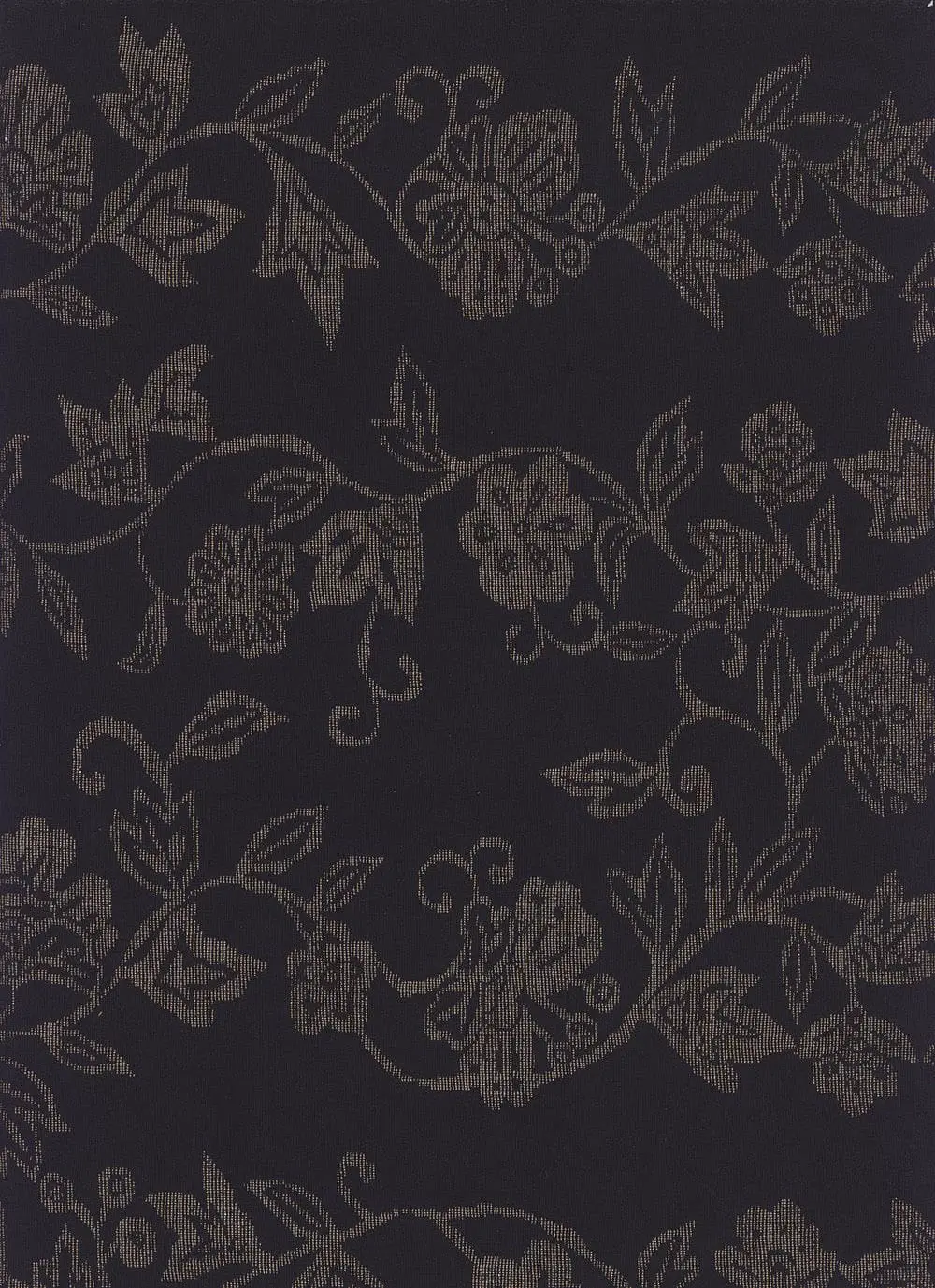

This elegant textile originates from the late Taisho or early Showa period (1920–1940) and is a scholarly example of the sophisticated urushi-fukkura weaving technique. Measuring 14.5 inches by 44 inches (37 cm x 112 cm), the panel is crafted from fine silk and remains in very good condition. The composition is defined by its dramatic, matte black background, which provides a high-contrast stage for the dark bronze floral motifs.
The visual narrative consists of four vertical, undulating vine columns featuring stylized blossoms and delicate serrated leaves. These patterns are executed using a complex brocade technique with urushi lacquered thread, where paper or silk filaments are coated with traditional Japanese lacquer to create a metallic, slightly raised texture. The bronze threads possess a muted, antique luster that shifts from a dark chocolate brown to a warm metallic glow depending on the angle of observation. This specific use of dark lacquer on a matte ground reflects the pre-war era's "Modern Classic" aesthetic, which favored understated luxury and architectural repetition over the flamboyant colors of earlier periods.

Payment Options: We primarily accept PayPal for all transactions. Credit and debit cards are not accepted. If you prefer to pay by personal check instead of PayPal, please note this preference in the "Additional comments" field when placing your order.Ordering Process
To receive your PayPal invoice, simply fill out the form.
Shipping Details: We ship all orders to the address associated with your PayPal payment. Please ensure your PayPal shipping address is current and accurate.A phone number is required during checkout, as our shipping carrier may need to contact you regarding delivery questions.Shipping RatesUnited States and Canada: $20International destinations (air mail): $40
