Copyright © 2026 Yorke Antique Textiles
.avif)


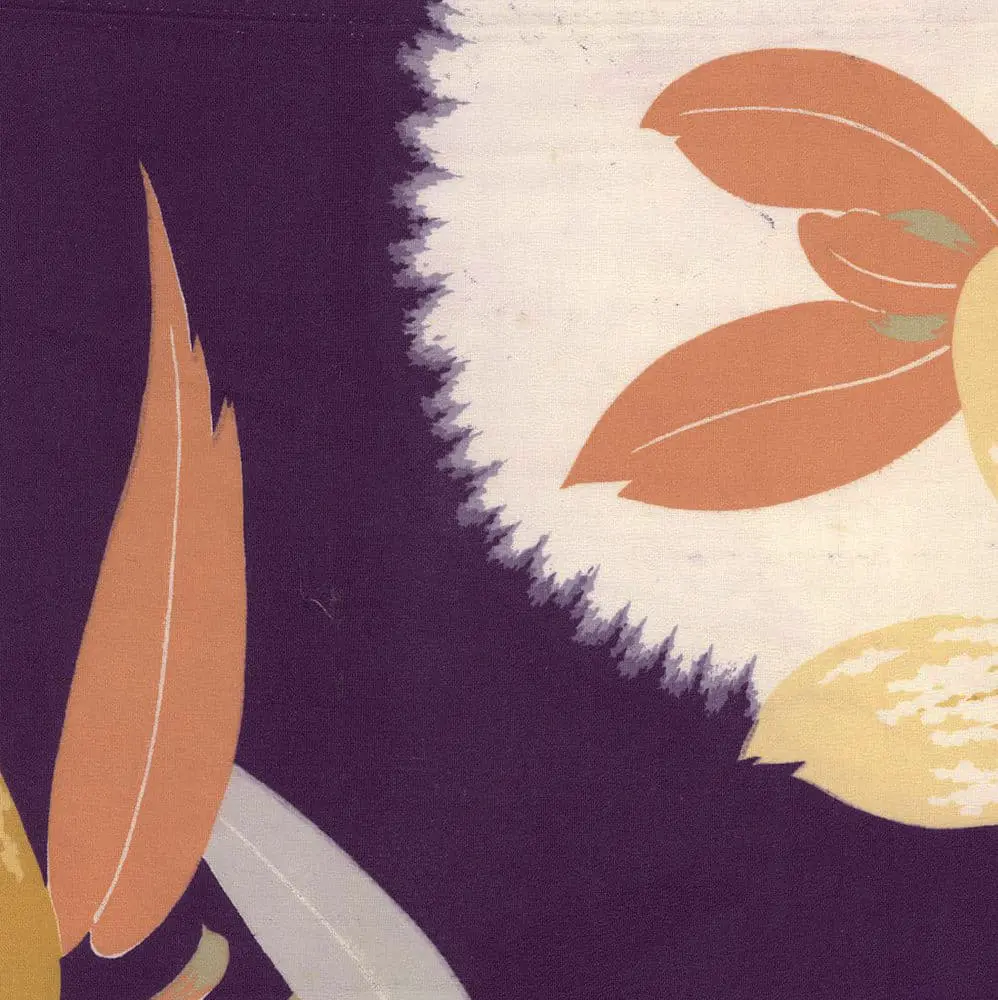
This striking silk panel originates from Japan and dates to the early Showa period (1930–1940). Measuring 14 inches by 40 inches (36 cm x 102 cm), the textile was originally part of a man's juban, a traditional under-kimono known for featuring bold, expressive designs hidden beneath the outer layers of formal dress. The panel is in very good condition, showing only minimal color loss in a few tiny spots and minor dye splashes—characteristic "beauty marks" resulting from the manual silkscreening process used during its manufacture.
The visual narrative is dominated by large-scale, graphic floral blooms and slender bamboo-like leaves rendered in a vibrant palette of cream, orange, and pale yellow. These motifs are set against a rich, saturated purple ground, creating a high-contrast aesthetic that was highly popular during the pre-war era. The flowers feature a distinctive "soft-focus" edge, a stylistic choice in silkscreening that mimics the feathered appearance of traditional shibori or kasuri techniques. This bold, illustrative style reflects the influence of the Art Deco movement on Japanese commercial textiles, resulting in a design that feels both historically grounded and remarkably modern.

Payment Options: We primarily accept PayPal for all transactions. Credit and debit cards are not accepted. If you prefer to pay by personal check instead of PayPal, please note this preference in the "Additional comments" field when placing your order.Ordering Process
To receive your PayPal invoice, simply fill out the form.
Shipping Details: We ship all orders to the address associated with your PayPal payment. Please ensure your PayPal shipping address is current and accurate.A phone number is required during checkout, as our shipping carrier may need to contact you regarding delivery questions.Shipping RatesUnited States and Canada: $20International destinations (air mail): $40
