Copyright © 2026 Yorke Antique Textiles
.avif)

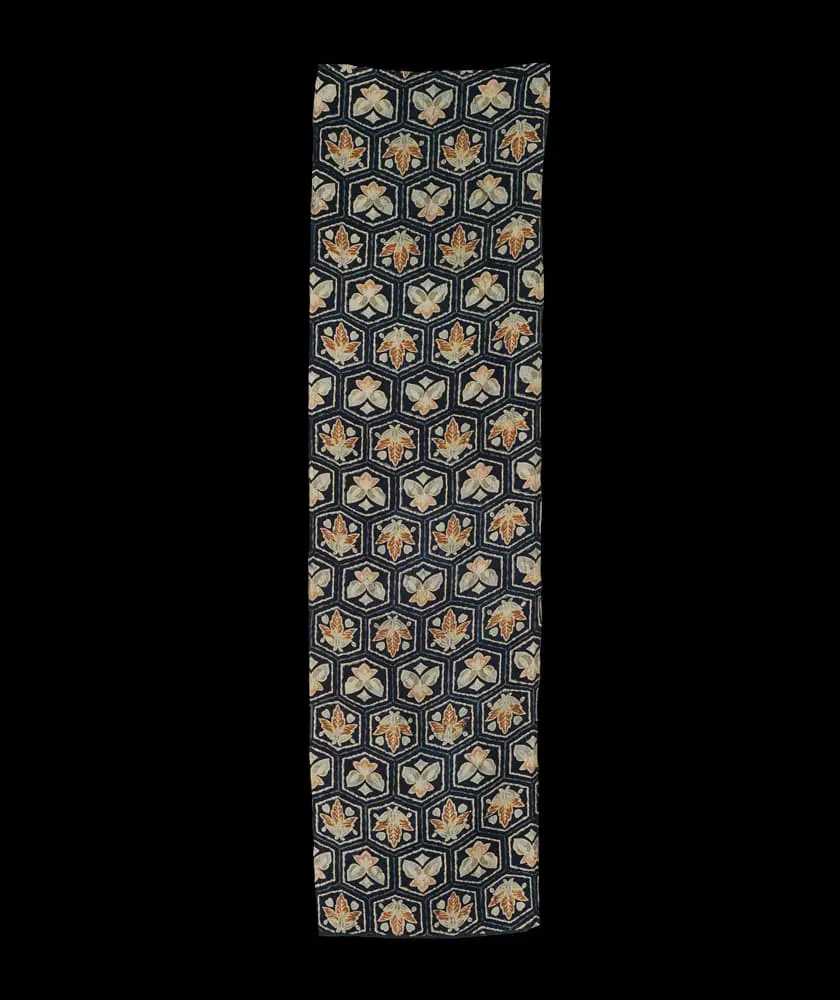
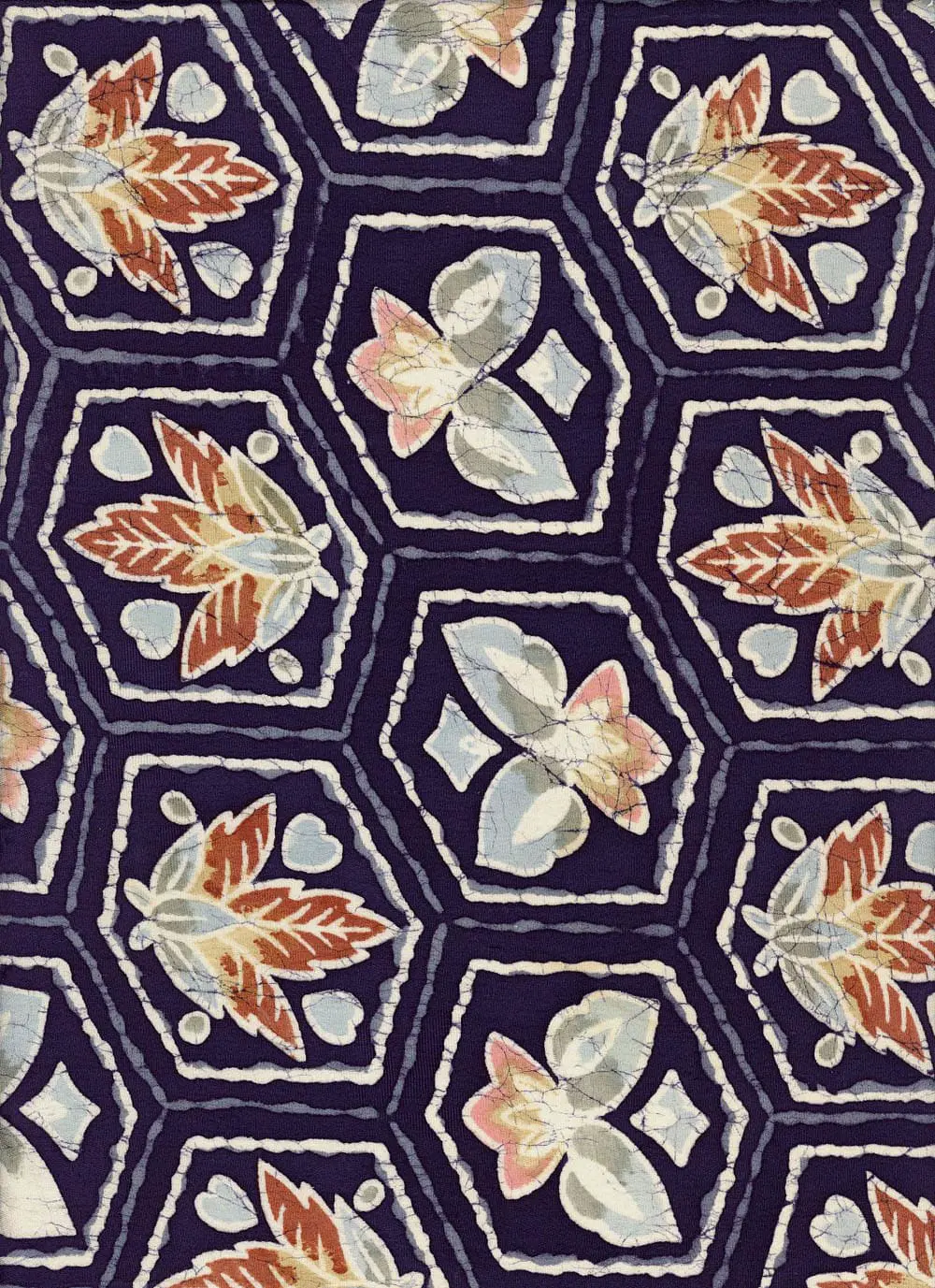
This exquisite textile originates from Japan’s mid-Showa period (1950–1960) and was originally a decorative component of a haori (formal kimono jacket). Measuring 14.5 inches by 51 inches (37 cm x 130 cm), the panel is crafted from high-quality silk and remains in excellent condition. The design is a scholarly example of the roketsu-zome (wax-resist batik) technique, which allowed mid-century artisans to achieve a unique, textured depth within traditional geometric frameworks.
The visual narrative is structured around a dense kikko (tortoiseshell) lattice, a classical hexagonal motif representing longevity. Within each hexagon, the artisan has placed stylized ivy or maple-like leaves, rendered in a warm palette of autumnal orange, soft cream, and muted ochre. The background is a deep, variegated navy blue that retains the subtle "crackling" effect characteristic of the batik process. This combination of a rigid geometric grid with organic, hand-dyed botanical elements reflects the mid-Showa era's penchant for revitalizing ancient patterns with more expressive, artisan-led craft techniques.

Payment Options: We primarily accept PayPal for all transactions. Credit and debit cards are not accepted. If you prefer to pay by personal check instead of PayPal, please note this preference in the "Additional comments" field when placing your order.Ordering Process
To receive your PayPal invoice, simply fill out the form.
Shipping Details: We ship all orders to the address associated with your PayPal payment. Please ensure your PayPal shipping address is current and accurate.A phone number is required during checkout, as our shipping carrier may need to contact you regarding delivery questions.Shipping RatesUnited States and Canada: $20International destinations (air mail): $40
