Copyright © 2026 Yorke Antique Textiles
.avif)

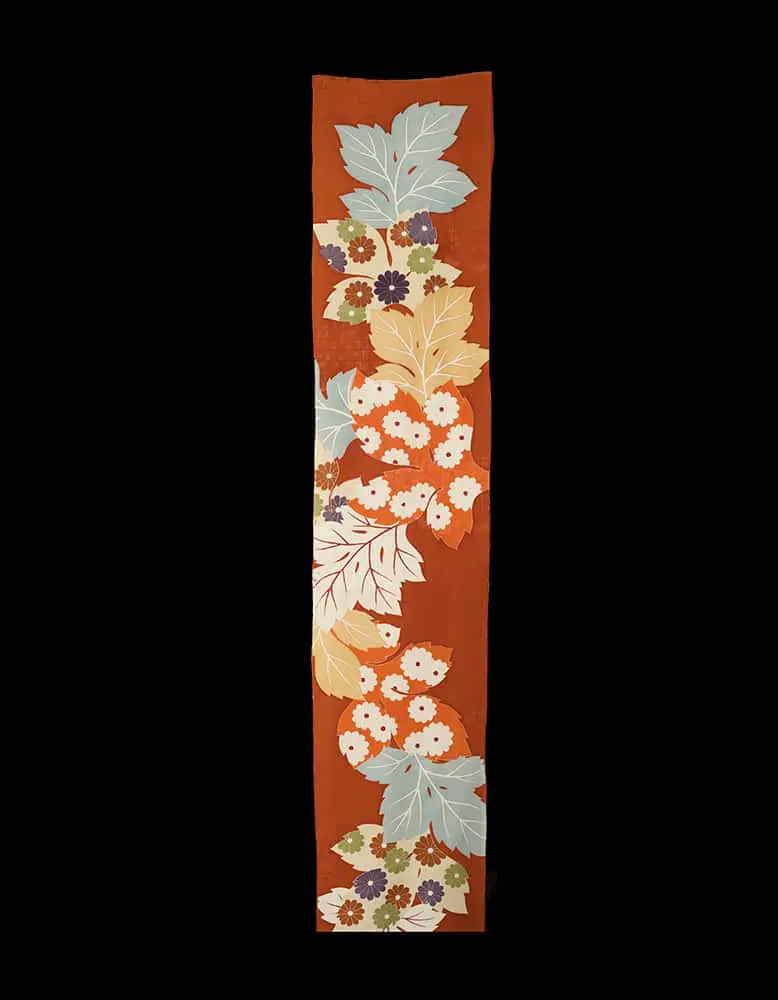
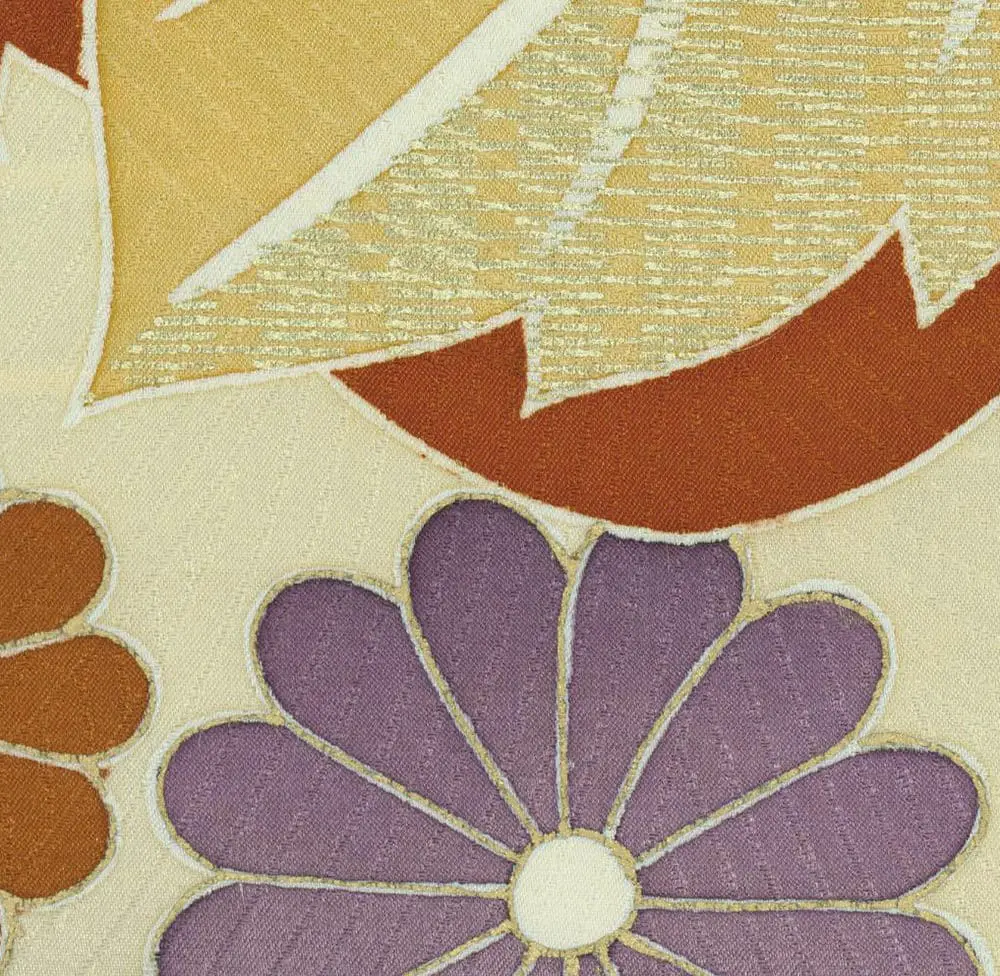
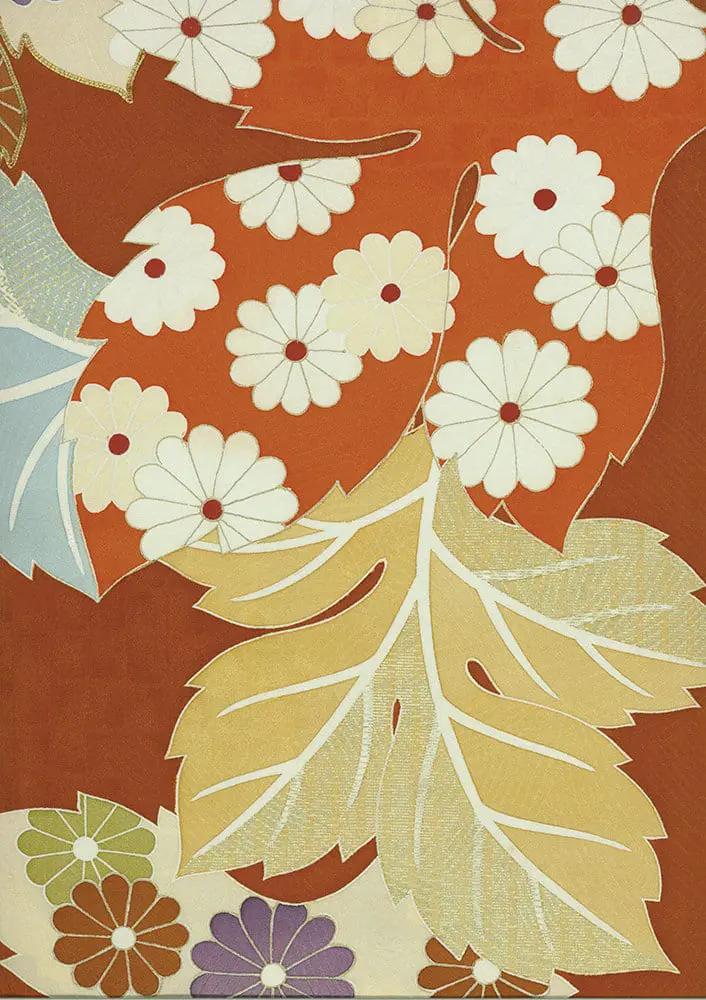
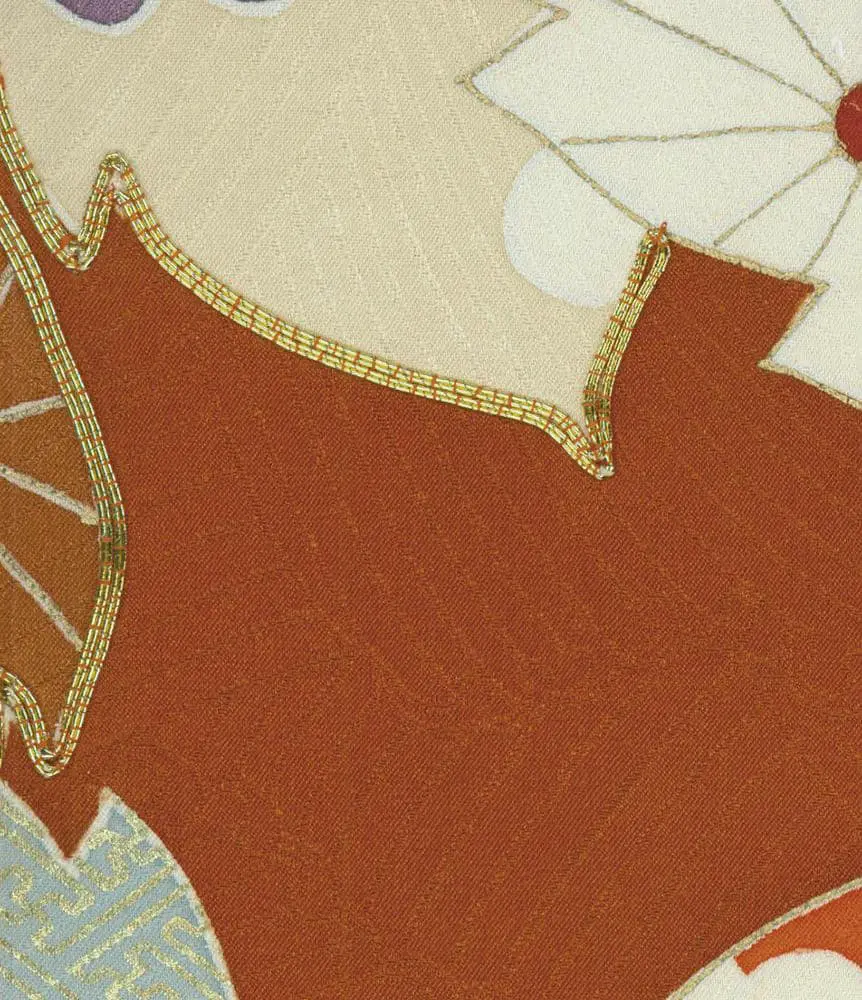

This monumental textile originates from Japan’s mid-Showa period (1940–1960) and is a scholarly example of the radiant, seasonal imagery used in high-status formal wear. Measuring an extraordinary 14.25 inches by 104 inches (36 cm x 264 cm), this exceptionally long panel was extracted from a formal kimono and remains in excellent condition, with only a singular, inconspicuous patina stain. The substrate is a premium rinzu (silk damask), dyed in a saturated, fiery orange that provides a luminous and structurally rich foundation for the cascading botanical design.
The visual narrative is a celebration of autumn, featuring oversized, hand-painted momiji (maple) leaves and kiku (chrysanthemum) blossoms executed in the yuzen tradition. The leaves are rendered in a sophisticated palette of pale icy blue, cream, and sage green, with several maple silhouettes containing intricate, internal floral patterns. A defining feature of this piece is the meticulous gold foil outlining that defines the edges of the primary motifs, adding a regal shimmer and architectural clarity to the organic forms. Small clusters of purple and olive-green mums provide dark, grounding accents to the warm-toned field, reflecting the mid-century's mastery of blending classical symbols of longevity and changing seasons with a vibrant, modern energy.

Payment Options: We primarily accept PayPal for all transactions. Credit and debit cards are not accepted. If you prefer to pay by personal check instead of PayPal, please note this preference in the "Additional comments" field when placing your order.Ordering Process
To receive your PayPal invoice, simply fill out the form.
Shipping Details: We ship all orders to the address associated with your PayPal payment. Please ensure your PayPal shipping address is current and accurate.A phone number is required during checkout, as our shipping carrier may need to contact you regarding delivery questions.Shipping RatesUnited States and Canada: $20International destinations (air mail): $40
