Copyright © 2026 Yorke Antique Textiles
.avif)

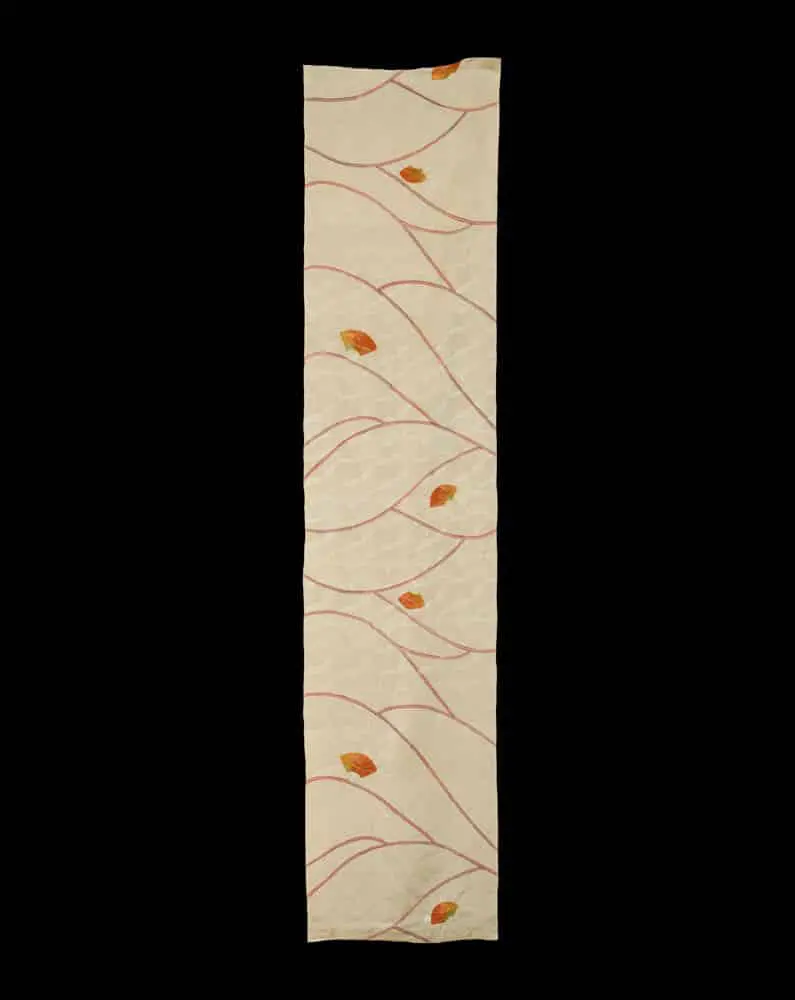
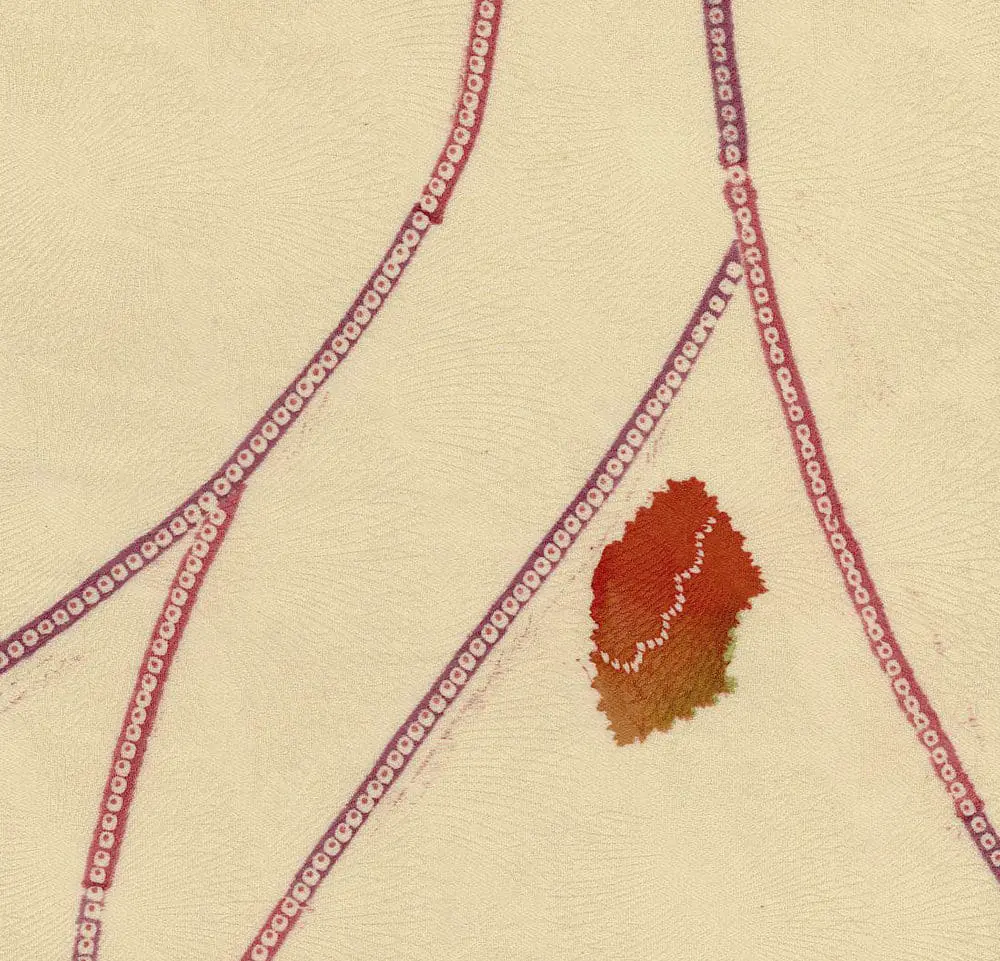
This elegant textile originates from Japan’s mid-Showa period (1940–1960) and is a scholarly example of the refined rinzu (silk damask) weaving technique. Measuring 14 inches by 63 inches (36 cm x 160 cm), the panel is in excellent condition and features a sophisticated cream-colored figured ground with a subtle tonal pattern woven into the substrate. The composition is defined by graceful, undulating pink lines that zigzag across the fabric, utilizing a "faux-shibori" stenciling technique to imitate the soft, dappled appearance of traditional tie-dyeing.
The visual narrative is punctuated by small, strategically placed shibori fans. Unlike the printed lines, these tiny fans are created through authentic resist-dyeing, resulting in a distinct textured "puckering" and saturated orange-to-yellow gradients. The rhythmic interplay between the broad, sweeping curves and the delicate, authentic hand-dyeing highlights the era's ability to combine cost-effective production methods with high-status artisanal accents. This specific arrangement of flowing lines and fans evokes the classical image of fans floating upon a stream, a motif known as ougi-nagashi, reimagined with a minimalist mid-century aesthetic.

Payment Options: We primarily accept PayPal for all transactions. Credit and debit cards are not accepted. If you prefer to pay by personal check instead of PayPal, please note this preference in the "Additional comments" field when placing your order.Ordering Process
To receive your PayPal invoice, simply fill out the form.
Shipping Details: We ship all orders to the address associated with your PayPal payment. Please ensure your PayPal shipping address is current and accurate.A phone number is required during checkout, as our shipping carrier may need to contact you regarding delivery questions.Shipping RatesUnited States and Canada: $20International destinations (air mail): $40
