Copyright © 2026 Yorke Antique Textiles
.avif)

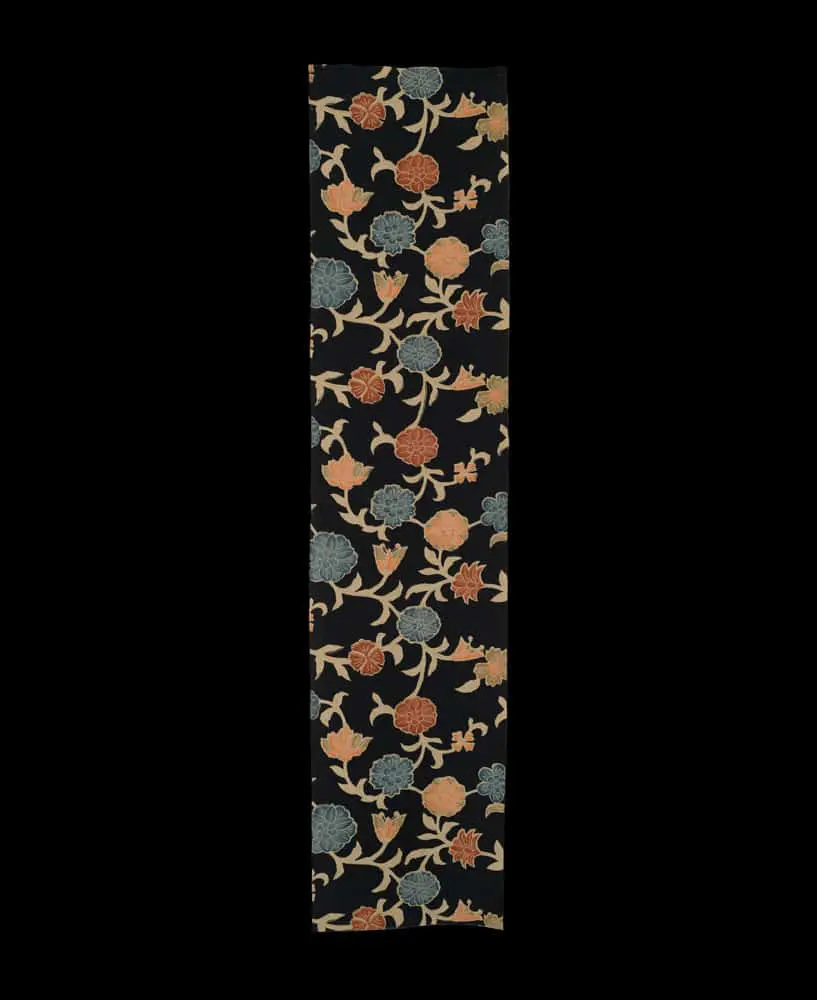

This elegant textile originates from Japan’s early Showa period (1930–1950) and is a scholarly example of the understated, organic beauty found in raw silk craftsmanship. Measuring 14.25 inches by 62 inches (36 cm x 158 cm), the piece represents a complete panel from a disassembled kimono, preserved in excellent condition. It is crafted from tsumugi silk, a material celebrated for its slightly dry texture and characteristic natural slubs, which arise from the use of hand-spun raw silk threads during the weaving process.
The visual narrative is defined by a dense, repeating botanical pattern of botan (peony) blossoms and scrolling vines set against a deep midnight-black ground. The color palette is sophisticated and grounded, featuring peonies in muted shades of slate blue, dusty terracotta, and soft ochre. Each blossom is connected by an intricate network of scrolling cream-colored vines that create a rhythmic, almost tapestry-like effect across the entire surface. This composition reflects a bridge between traditional floral motifs and the structured, pattern-heavy aesthetics of the early mid-century, where the rustic quality of the tsumugi fabric provides a matte, non-reflective canvas that emphasizes the richness of the hand-dyed colors.

Payment Options: We primarily accept PayPal for all transactions. Credit and debit cards are not accepted. If you prefer to pay by personal check instead of PayPal, please note this preference in the "Additional comments" field when placing your order.Ordering Process
To receive your PayPal invoice, simply fill out the form.
Shipping Details: We ship all orders to the address associated with your PayPal payment. Please ensure your PayPal shipping address is current and accurate.A phone number is required during checkout, as our shipping carrier may need to contact you regarding delivery questions.Shipping RatesUnited States and Canada: $20International destinations (air mail): $40
