Copyright © 2026 Yorke Antique Textiles
.avif)

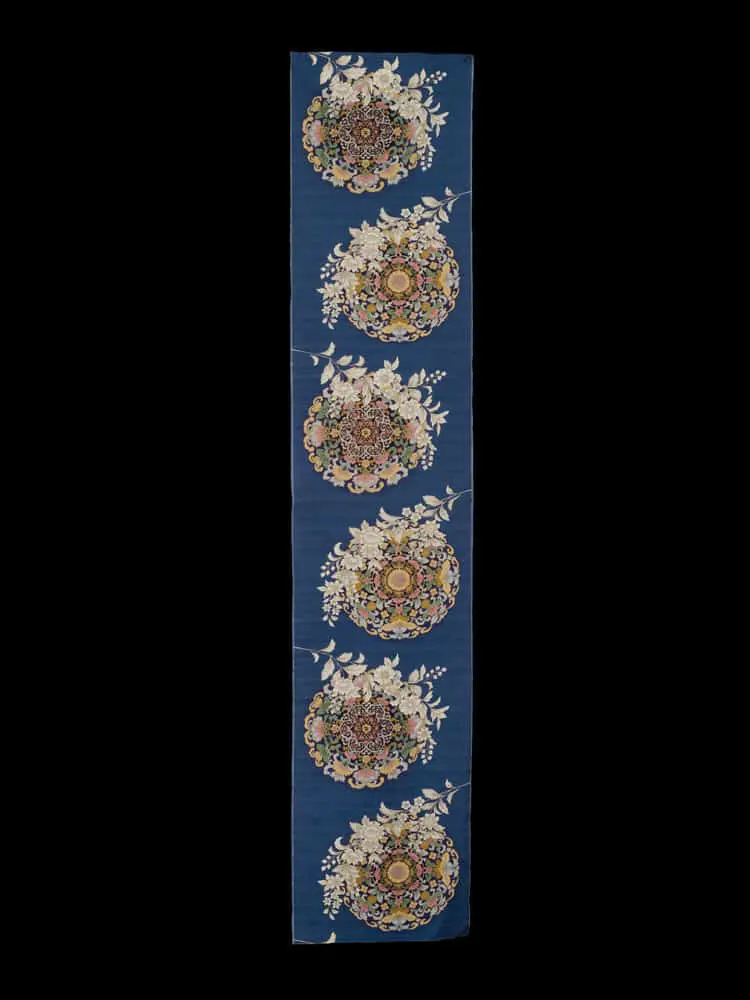
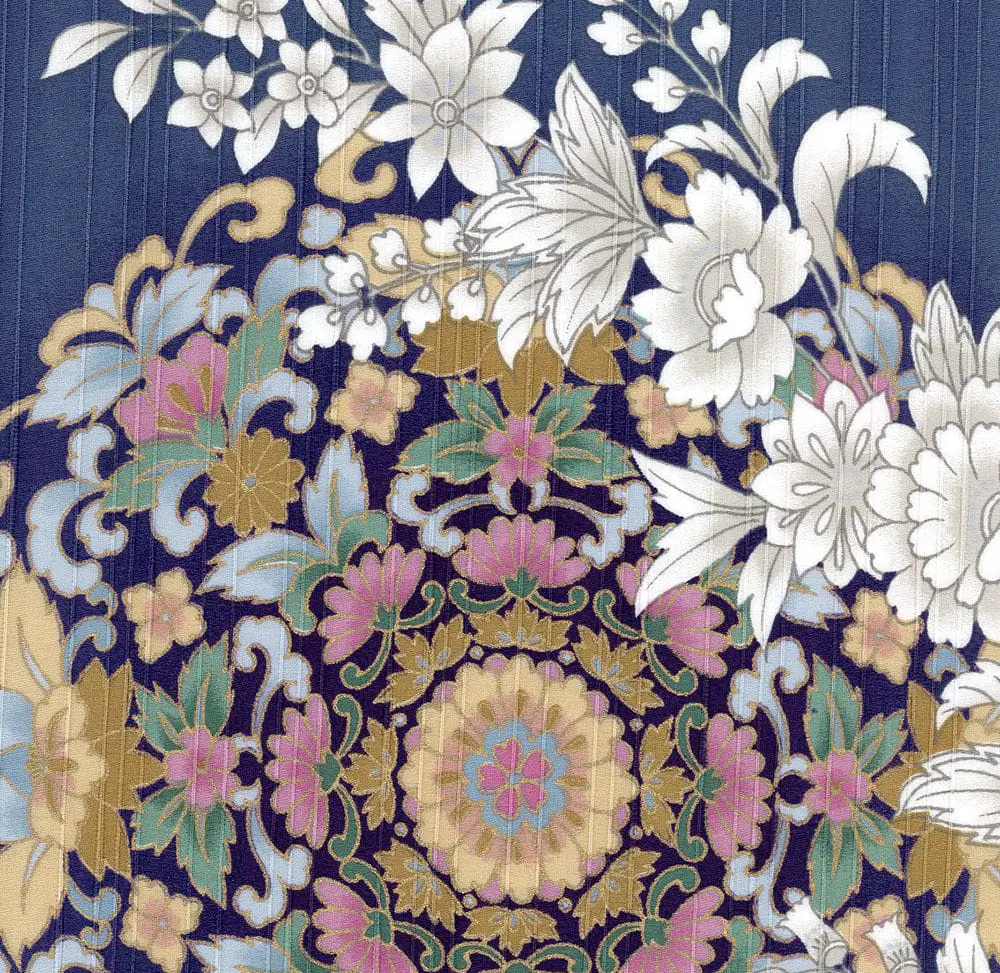
This striking textile originates from Japan’s mid-Showa period (1950–1975) and is a scholarly example of how classical formal motifs were reimagined for more casual, functional fabrics in the post-war era. Measuring 14 inches by 68 inches (36 cm x 173 cm), the panel appears to have been taken from a dead bolt of cloth rather than a deconstructed garment. It is crafted from a unique, irregularly-ribbed cotton that provides a textured, matte substrate for its highly detailed printed design, and it remains in excellent condition.
The visual narrative is defined by a rhythmic vertical series of six large, ornate roundels set against a deep indigo-blue ground. Each roundel is a complex "flower carriage" (hanaguruma) arrangement, featuring a central geometric mandala-like core surrounded by a lush variety of seasonal blossoms, including chrysanthemums and plum flowers. The color palette is exceptionally rich, utilizing shades of salmon pink, ochre yellow, and sage green, all highlighted with crisp white floral sprays that trail elegantly toward the upper right of each medallion. This combination of the prestigious hanaguruma motif with a sturdy cotton weave reflects the mid-century trend of making traditional aristocratic imagery accessible for everyday interior or apparel use.

Payment Options: We primarily accept PayPal for all transactions. Credit and debit cards are not accepted. If you prefer to pay by personal check instead of PayPal, please note this preference in the "Additional comments" field when placing your order.Ordering Process
To receive your PayPal invoice, simply fill out the form.
Shipping Details: We ship all orders to the address associated with your PayPal payment. Please ensure your PayPal shipping address is current and accurate.A phone number is required during checkout, as our shipping carrier may need to contact you regarding delivery questions.Shipping RatesUnited States and Canada: $20International destinations (air mail): $40
