Copyright © 2026 Yorke Antique Textiles
.avif)

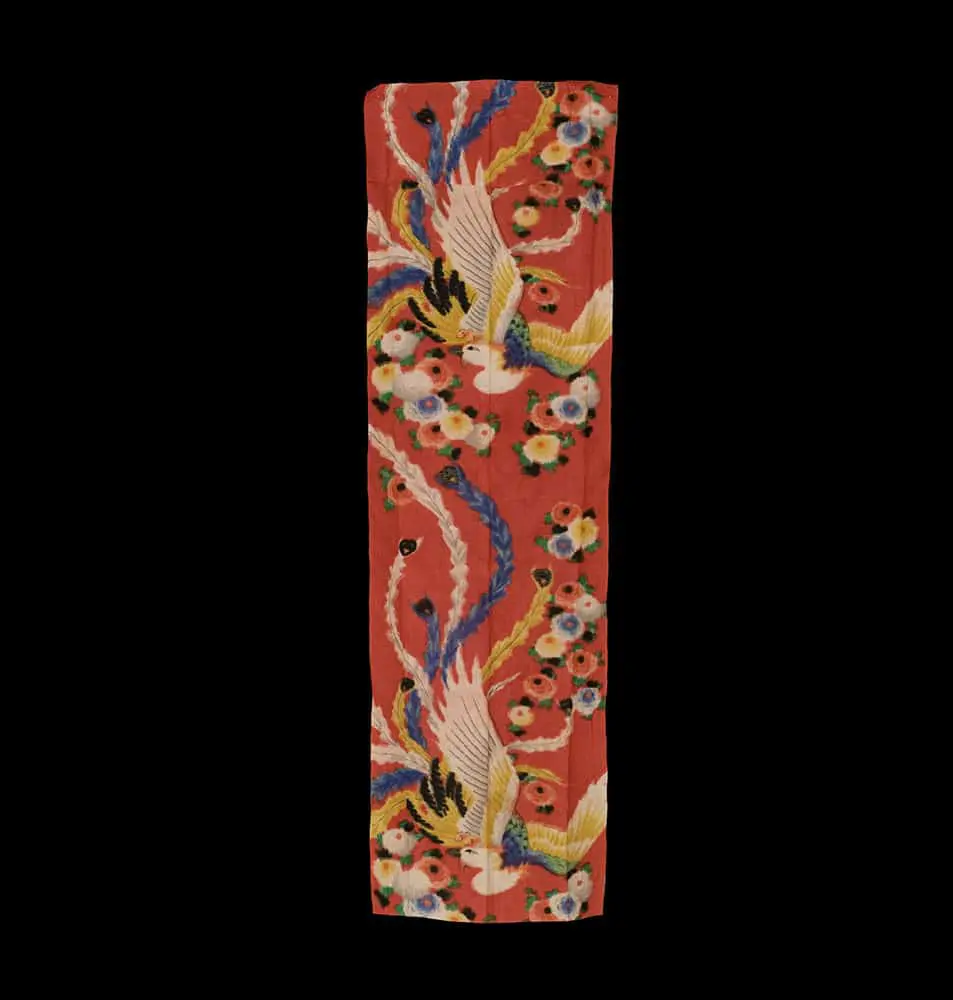
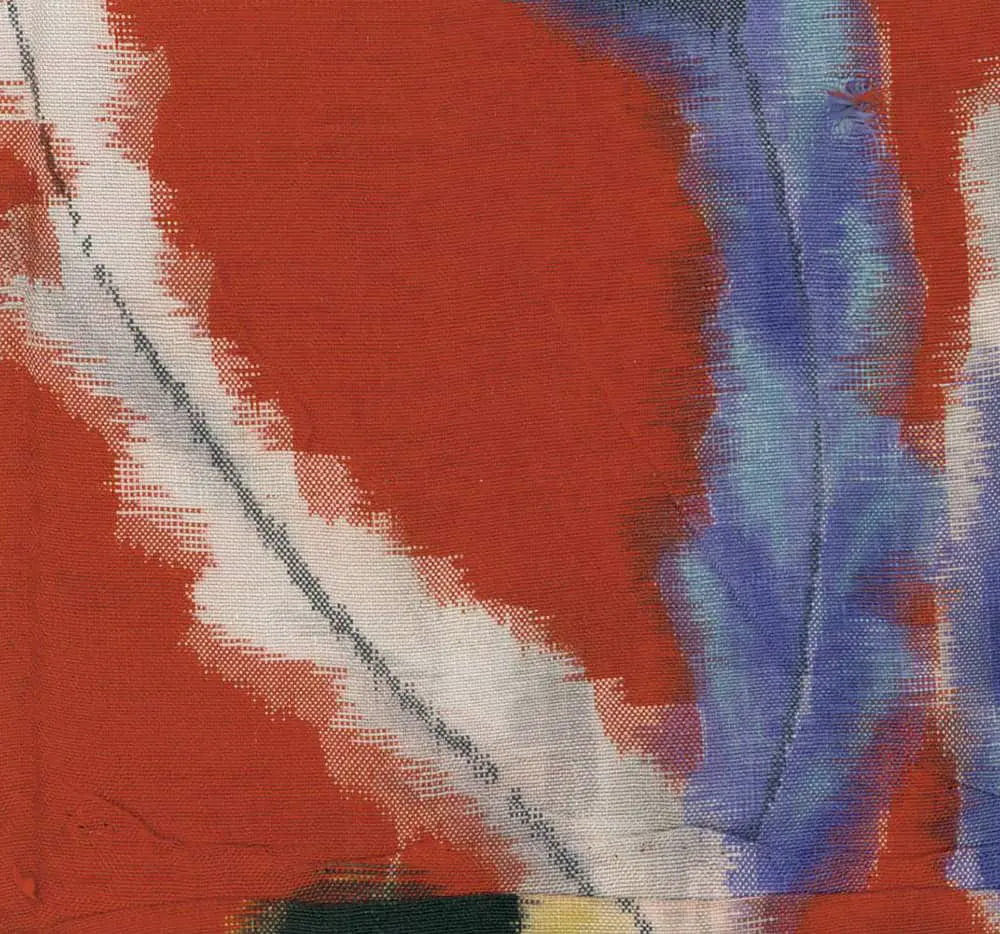
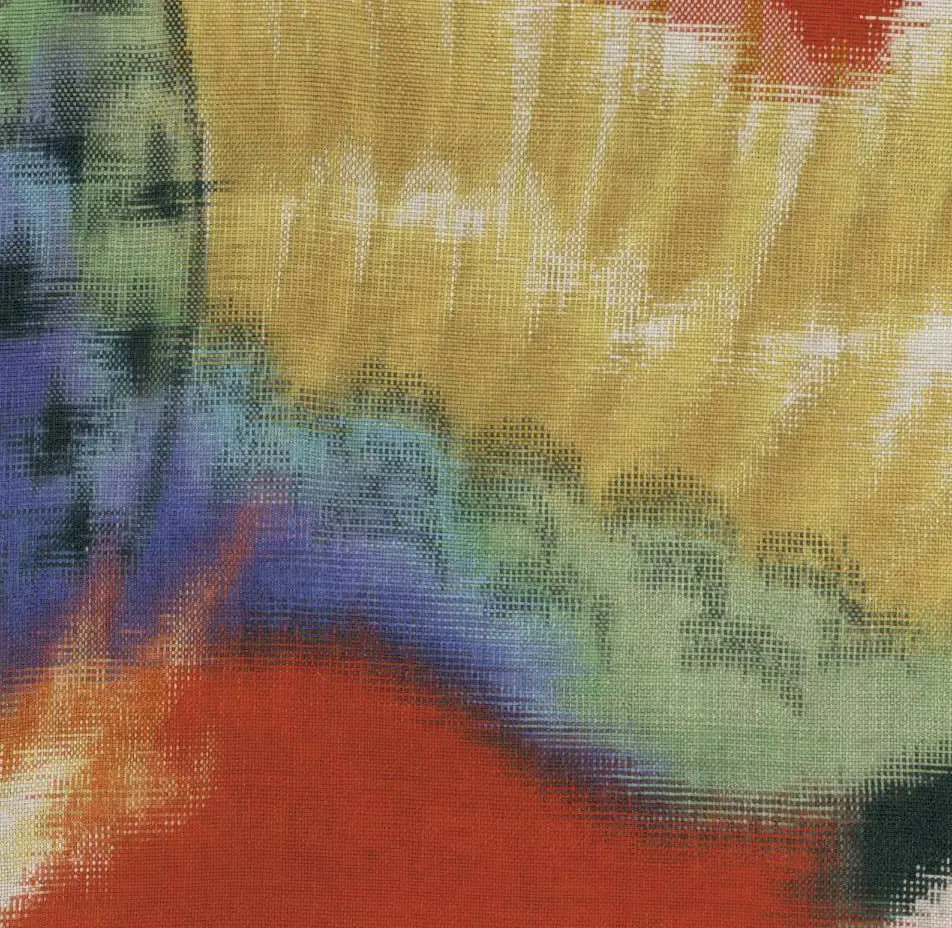
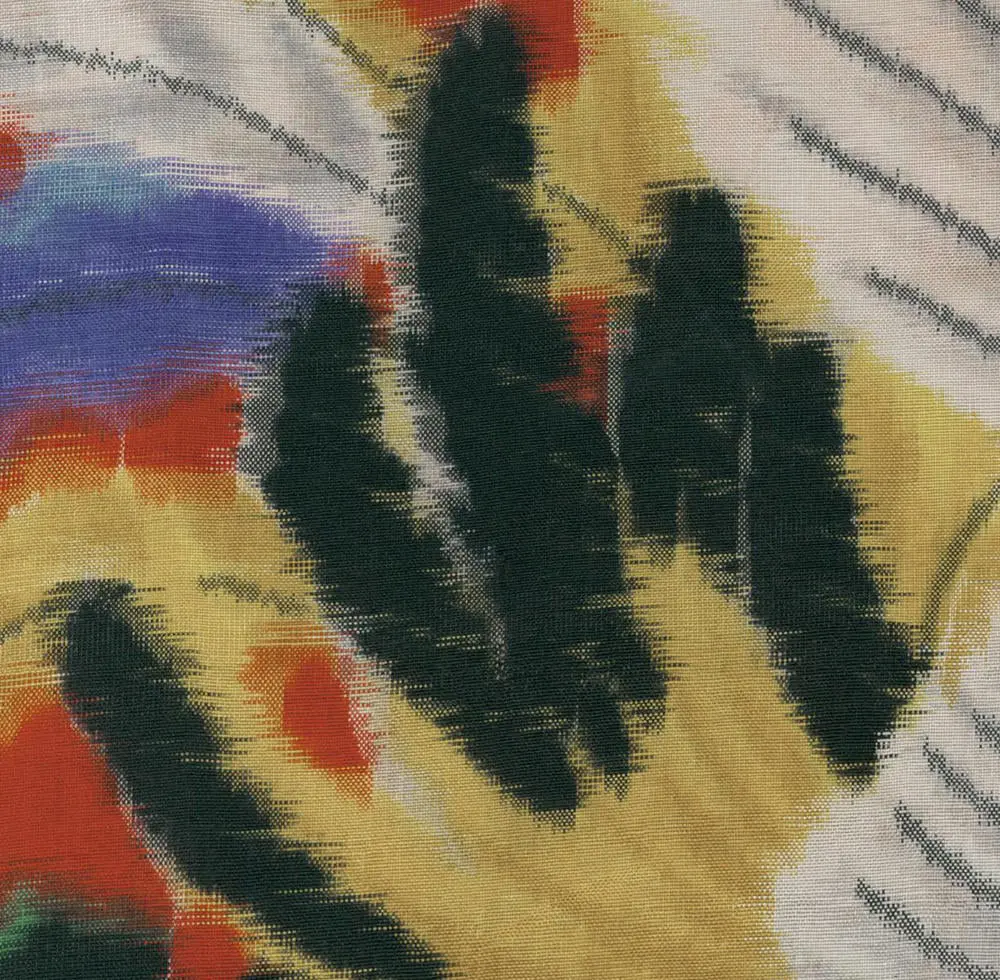
This masterful textile originates from the early Showa period (1930–1940) and is a scholarly example of the high-chroma, mythic imagery favored for haori (kimono jackets) during the pre-war era. Measuring 11 inches by 48 inches (28 cm x 122 cm), the piece is a complete panel from a disassembled garment and remains in very good condition. It is crafted from meisen silk, a material renowned for its crisp structural integrity and the vibrant depth of its patterns, which are achieved through the technical precision of pre-dyed threads.
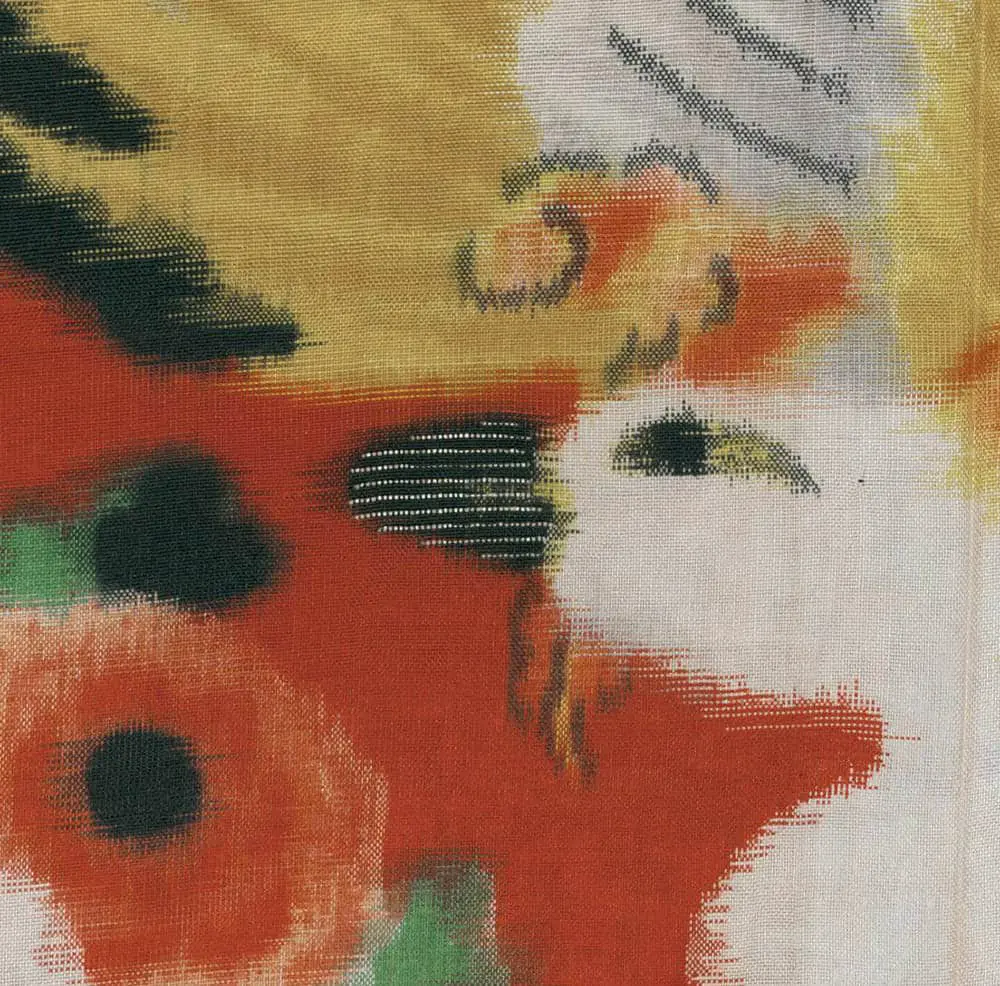
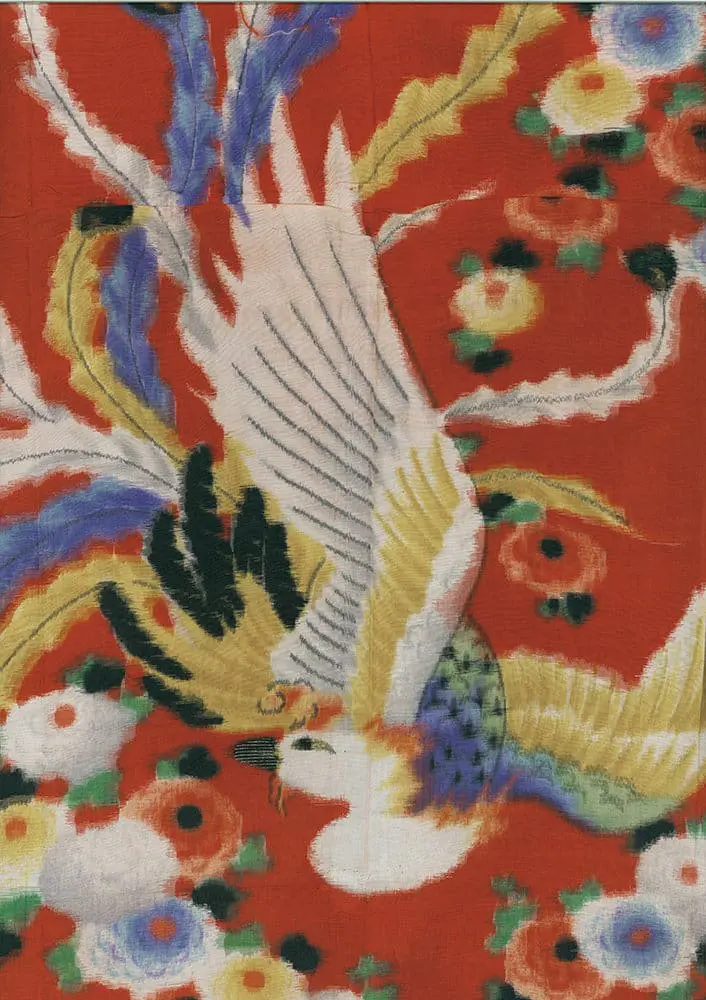
The visual narrative is dominated by a majestic Ho-o (Phoenix) set against a brilliant scarlet backdrop. The mythical bird is rendered in a regal palette: ivory for the head and breast, sunflower yellow for the wings, and a combination of peacock and sky blues for the back and tail feathers. Small clusters of multi-colored flowers in yellow, blue, and green are scattered throughout the composition. A defining detail is the inclusion of subtle metallic threads woven through the beak and the "eyes" of the tail feathers, providing a sophisticated shimmer. While the panel shows minor historic evidence of its previous life—including a small patina mark and tiny pinholes on the upper phoenix's breast—these traces of wear only serve to authenticate its heritage as a functional piece of early 20th-century fashion.

Payment Options: We primarily accept PayPal for all transactions. Credit and debit cards are not accepted. If you prefer to pay by personal check instead of PayPal, please note this preference in the "Additional comments" field when placing your order.Ordering Process
To receive your PayPal invoice, simply fill out the form.
Shipping Details: We ship all orders to the address associated with your PayPal payment. Please ensure your PayPal shipping address is current and accurate.A phone number is required during checkout, as our shipping carrier may need to contact you regarding delivery questions.Shipping RatesUnited States and Canada: $20International destinations (air mail): $40
