Copyright © 2026 Yorke Antique Textiles
.avif)

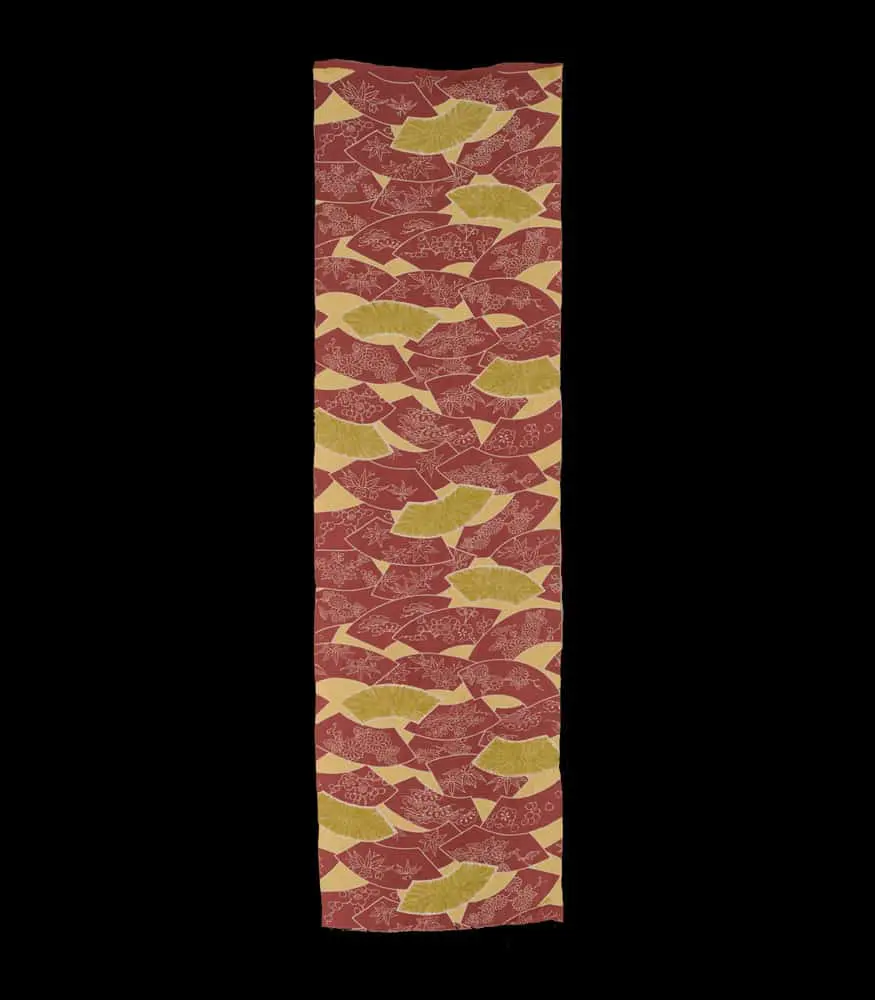
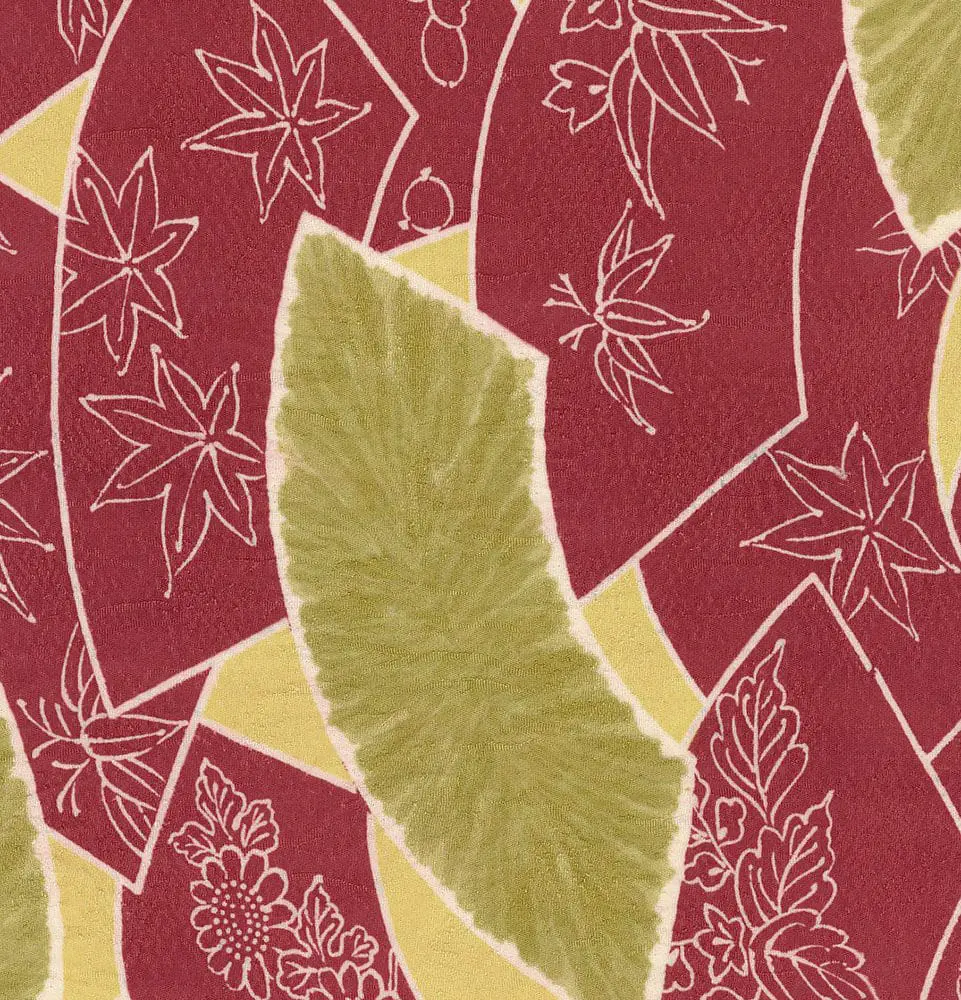
This elegant textile originates from Japan’s early to mid-Showa period (1930–1950) and is a scholarly example of the refined shibori (resist-dyeing) techniques used for high-quality kimono components. Measuring 14.25 inches by 52 inches (36 cm x 132 cm), the panel is crafted from soft, high-quality silk and remains in excellent condition. The composition is defined by a dense, all-over pattern of overlapping fans, a classical motif known as sensu or ougi, which symbolizes expanding prosperity and future growth.
The visual narrative is executed in a sophisticated palette of deep wine-red and golden-green. The golden-green fans are created using a precise resist-dyeing method that allows the color to remain consistent on both the front and back of the textile, a hallmark of master-level craftsmanship. Within the wine-red fans, delicate floral and botanical outlines—including maple leaves and chrysanthemums—are rendered in fine white lines, suggesting the detailed paintings often found on real paper fans. This rhythmic, interlocking arrangement of seasonal imagery reflects the transition from the bold, graphic styles of the 1930s to the more refined, naturalistic elegance of the post-war era.

Payment Options: We primarily accept PayPal for all transactions. Credit and debit cards are not accepted. If you prefer to pay by personal check instead of PayPal, please note this preference in the "Additional comments" field when placing your order.Ordering Process
To receive your PayPal invoice, simply fill out the form.
Shipping Details: We ship all orders to the address associated with your PayPal payment. Please ensure your PayPal shipping address is current and accurate.A phone number is required during checkout, as our shipping carrier may need to contact you regarding delivery questions.Shipping RatesUnited States and Canada: $20International destinations (air mail): $40
