Copyright © 2026 Yorke Antique Textiles
.avif)

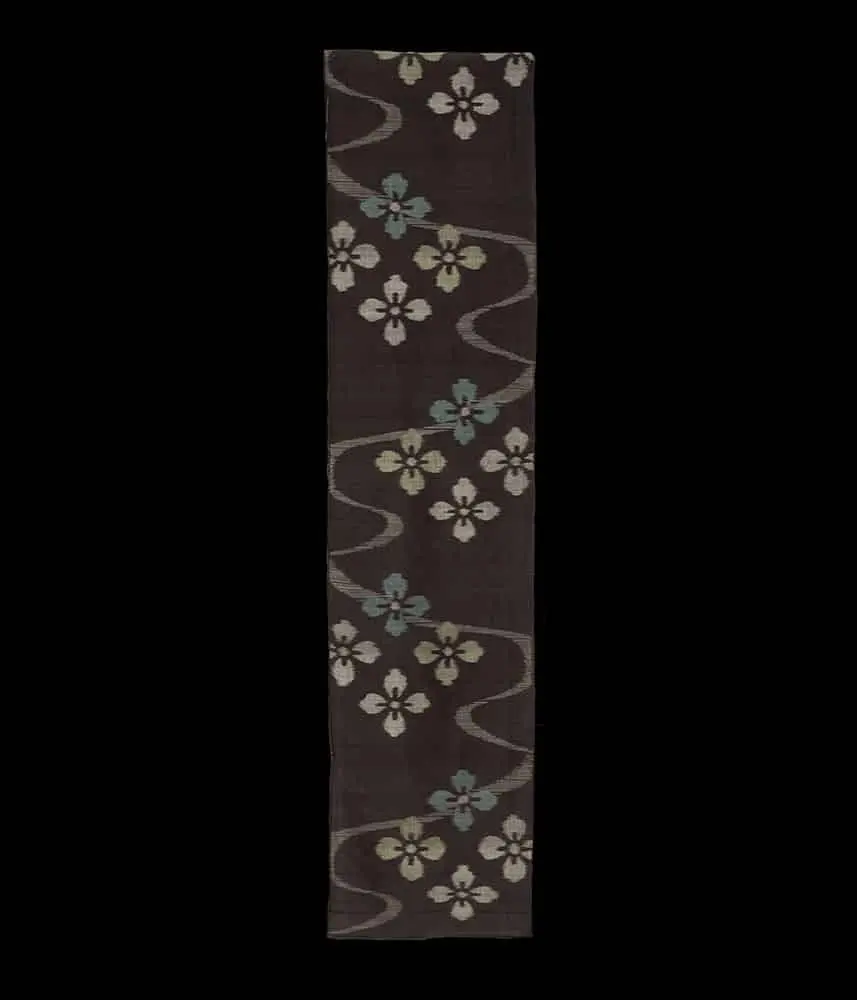
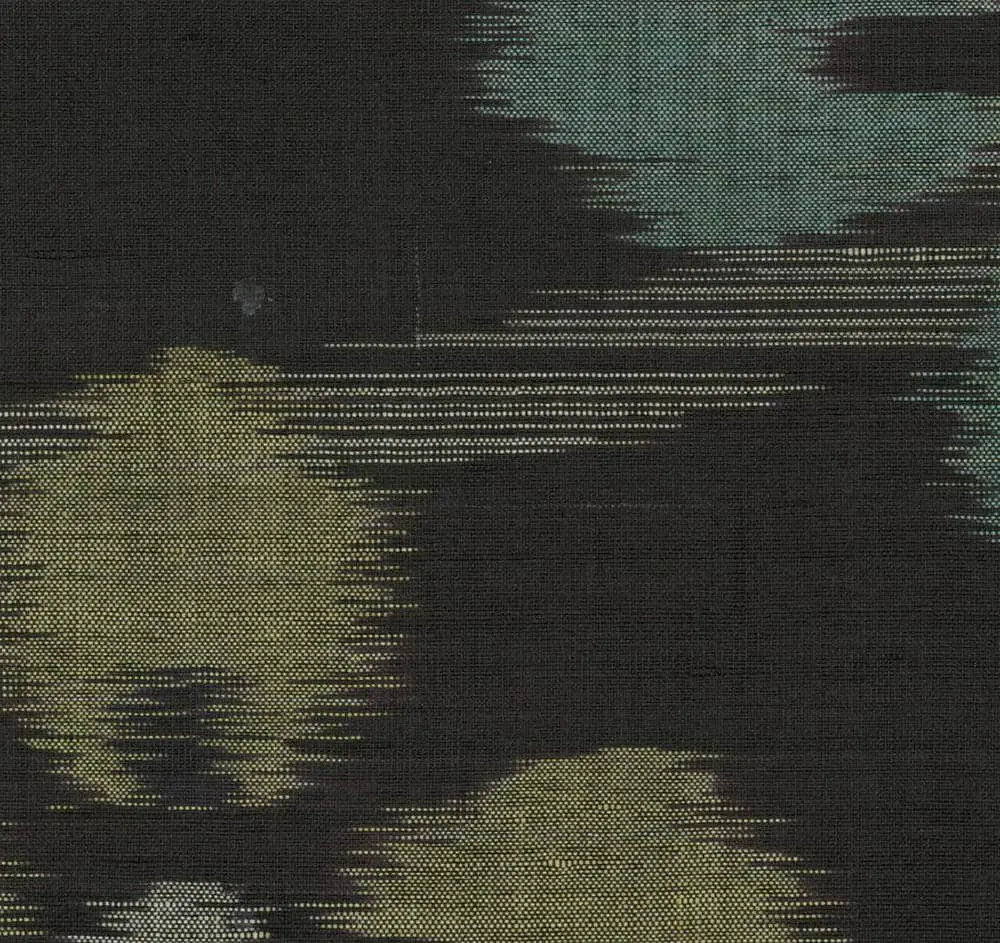
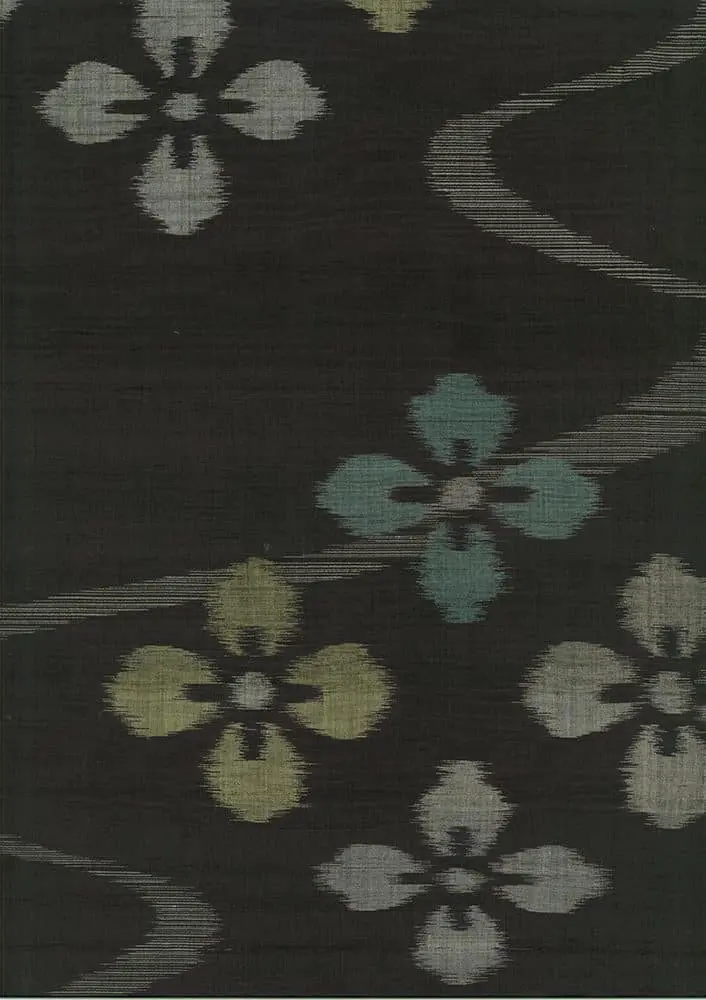
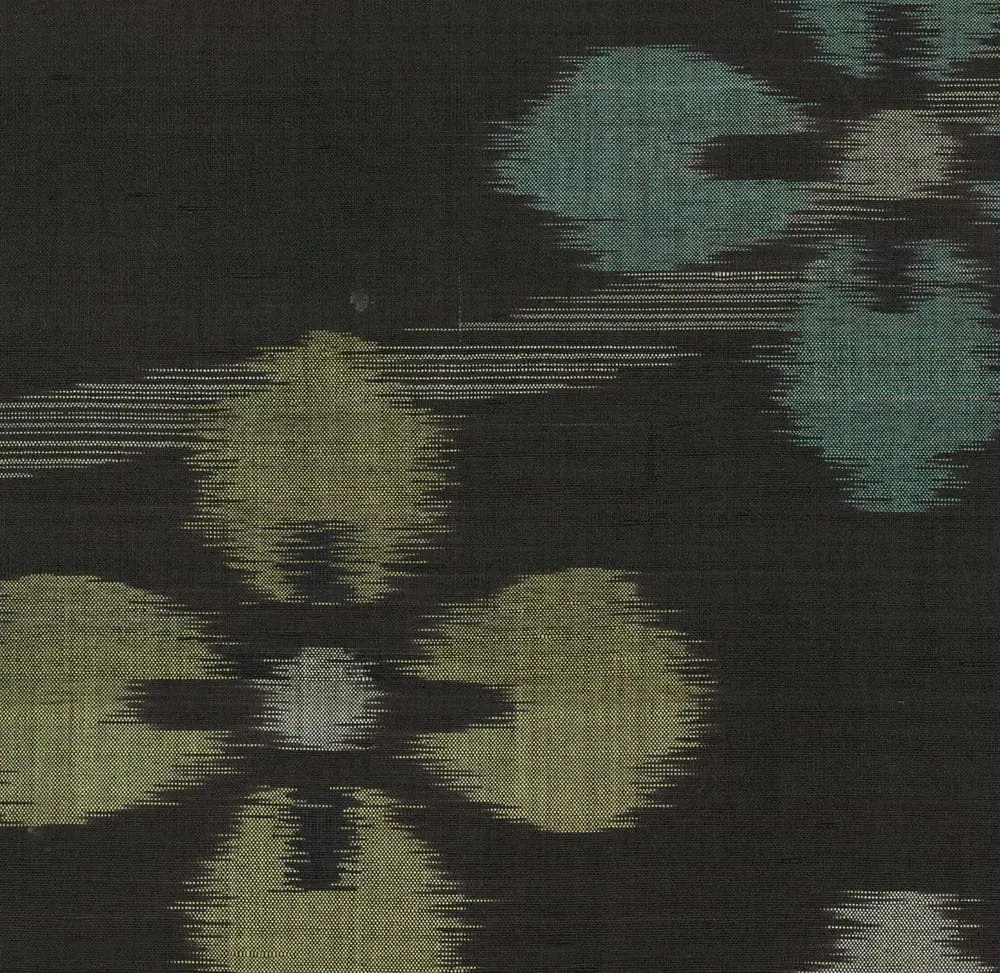
This striking textile originates from Japan’s early to mid-Showa period (1935–1950) and is a scholarly example of the bold, geometric experimentation that defined meisen silk production during the mid-20th century. Measuring 14.25 inches by 60 inches (36 cm x 152 cm), the panel is in excellent condition and exhibits the characteristic slight crispness of high-quality meisen. The design is set against a deep, matte chocolate-brown ground, providing a sophisticated backdrop for the vibrant ikat motifs.
The visual narrative features a rhythmic vertical trail of hanabishi (diamond-flower) motifs, rendered in a variegated palette of mint green, pale yellow, and cream. These flowers are arranged in clusters of four, creating larger diamond silhouettes that appear to float across the fabric. Interspersed among the floral clusters are delicate, undulating silver-gray lines that suggest a flowing stream or shifting mist, a motif known as kōrin-maki. The entire design is executed using the kasuri (ikat) technique, where threads are tie-dyed before weaving to create the signature "blurred" edges that give the pattern its soft, painterly energy. This specific combination of classical heraldic symbols and fluid, abstract lines reflects the era's unique bridge between traditional Japanese iconography and modern graphic design.

Payment Options: We primarily accept PayPal for all transactions. Credit and debit cards are not accepted. If you prefer to pay by personal check instead of PayPal, please note this preference in the "Additional comments" field when placing your order.Ordering Process
To receive your PayPal invoice, simply fill out the form.
Shipping Details: We ship all orders to the address associated with your PayPal payment. Please ensure your PayPal shipping address is current and accurate.A phone number is required during checkout, as our shipping carrier may need to contact you regarding delivery questions.Shipping RatesUnited States and Canada: $20International destinations (air mail): $40
