Copyright © 2026 Yorke Antique Textiles
.avif)

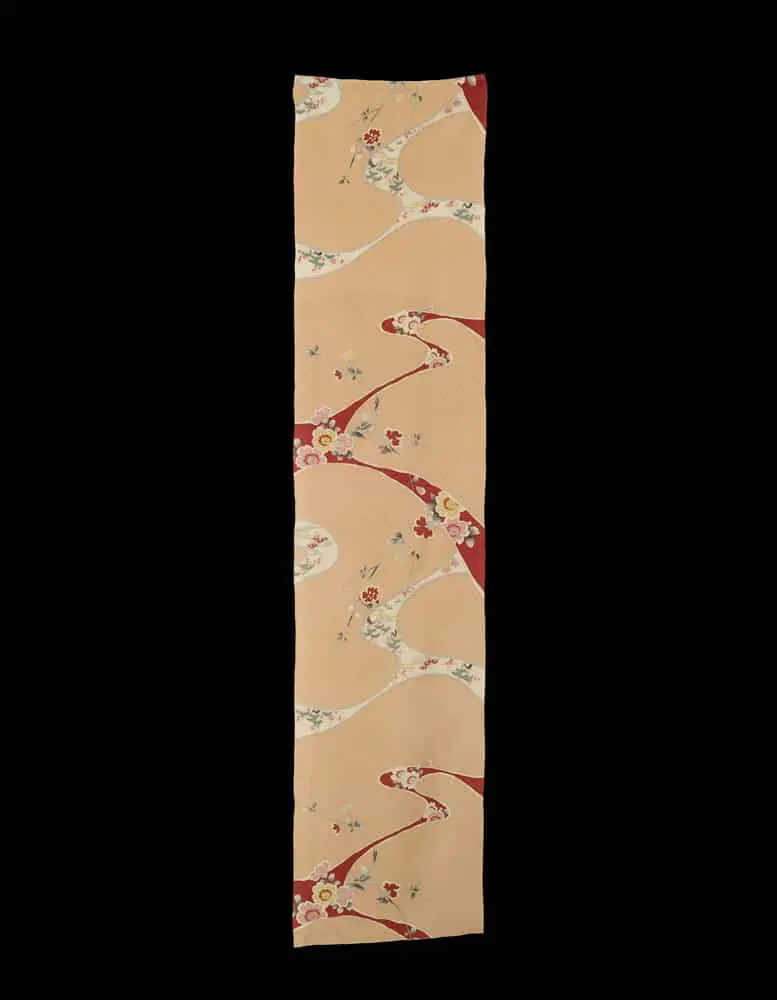
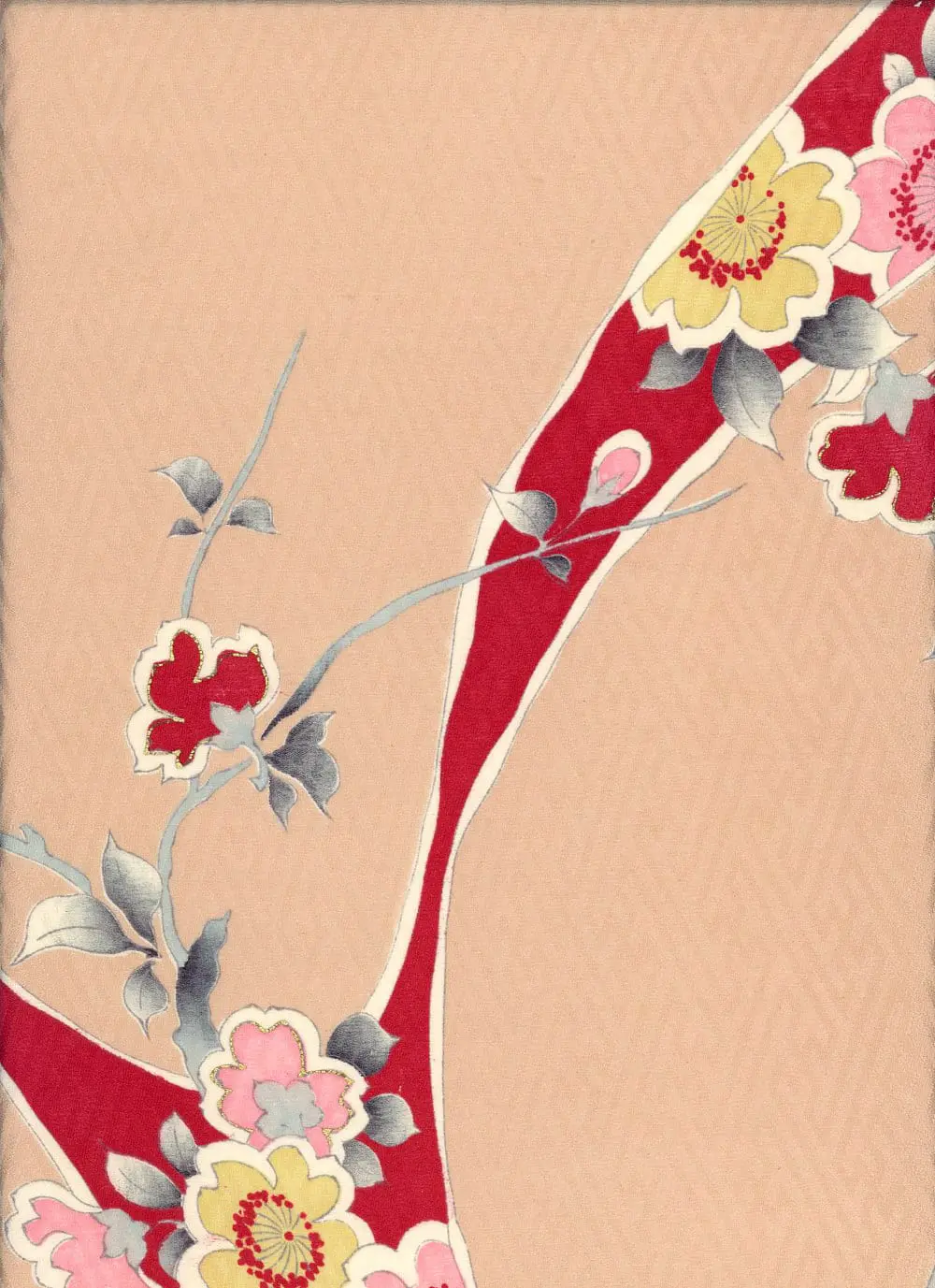
This elegant textile originates from Japan’s early Showa period (1930–1940) and is a scholarly example of the refined rinzu (silk damask) weaving technique used for high-quality formal garments. Measuring 13.5 inches by 62 inches (34 cm x 157 cm), the panel is crafted from fine silk and remains in excellent condition. The composition is defined by its soft peach-colored ground, which features a tonal, figured pattern woven into the substrate that creates a subtle play of light across the surface.
The visual narrative showcases a rhythmic, vertical arrangement of flowing river-like bands and floral clusters. These bands are rendered in a deep crimson-red and crisp white, filled with delicate multicolored blossoms including chrysanthemums and plum flowers. The use of winding, organic pathways to frame botanical elements—a motif often referred to as michi (the path)—reflects the early Showa trend of maintaining classical Edo-period themes while softening the color palette to suit the era's preference for graceful, understated femininity. Small floral sprays are scattered between the larger crimson bands, creating a balanced sense of movement and "floating" space across the long panel.

Payment Options: We primarily accept PayPal for all transactions. Credit and debit cards are not accepted. If you prefer to pay by personal check instead of PayPal, please note this preference in the "Additional comments" field when placing your order.Ordering Process
To receive your PayPal invoice, simply fill out the form.
Shipping Details: We ship all orders to the address associated with your PayPal payment. Please ensure your PayPal shipping address is current and accurate.A phone number is required during checkout, as our shipping carrier may need to contact you regarding delivery questions.Shipping RatesUnited States and Canada: $20International destinations (air mail): $40
