Copyright © 2026 Yorke Antique Textiles
.avif)

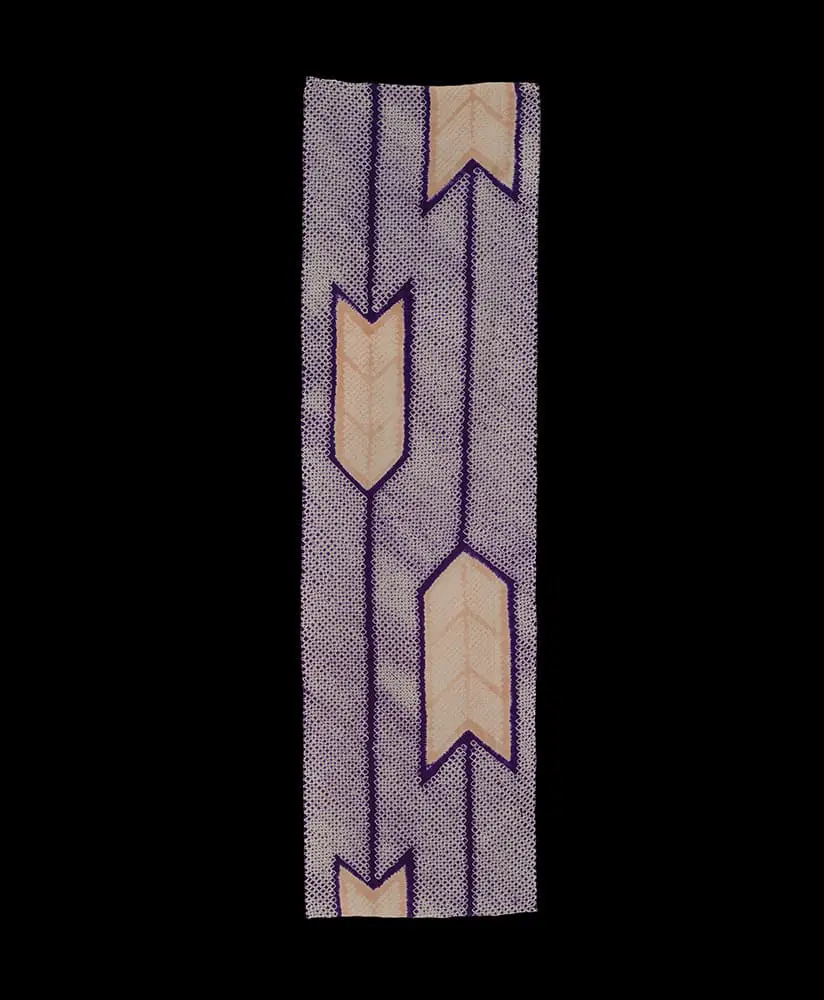
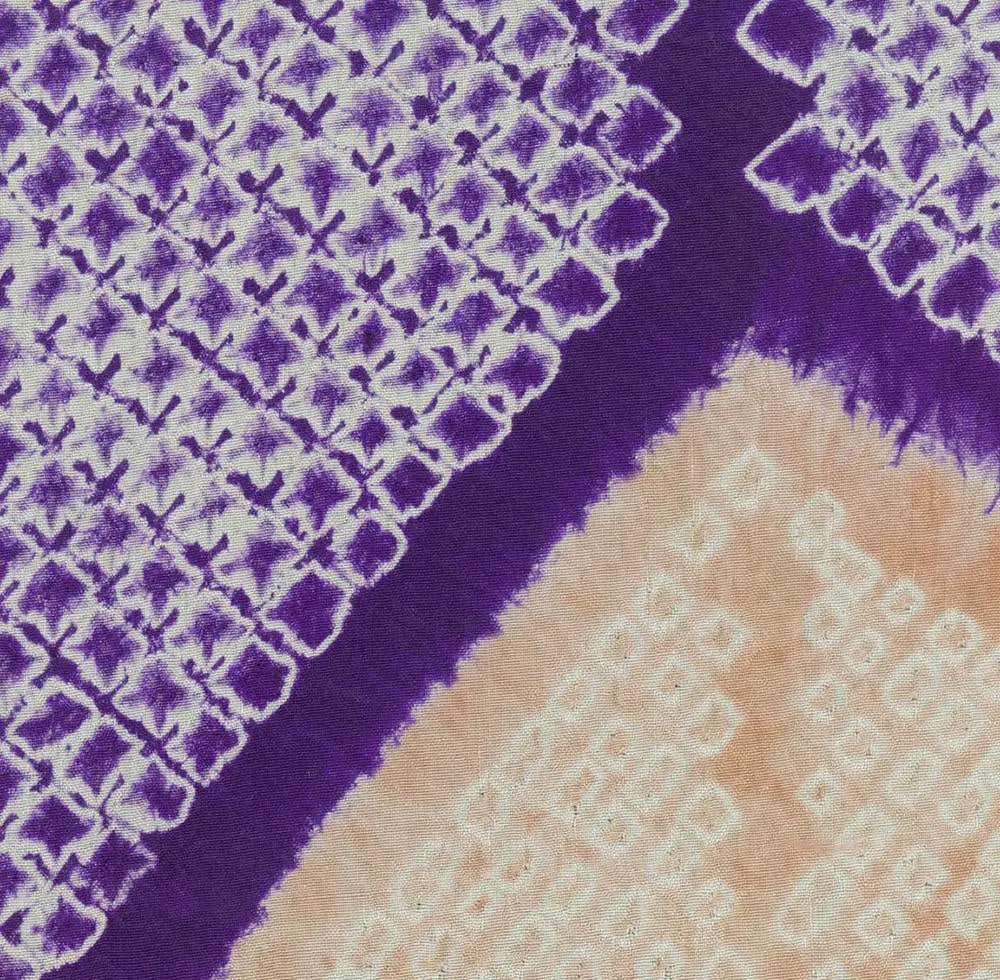

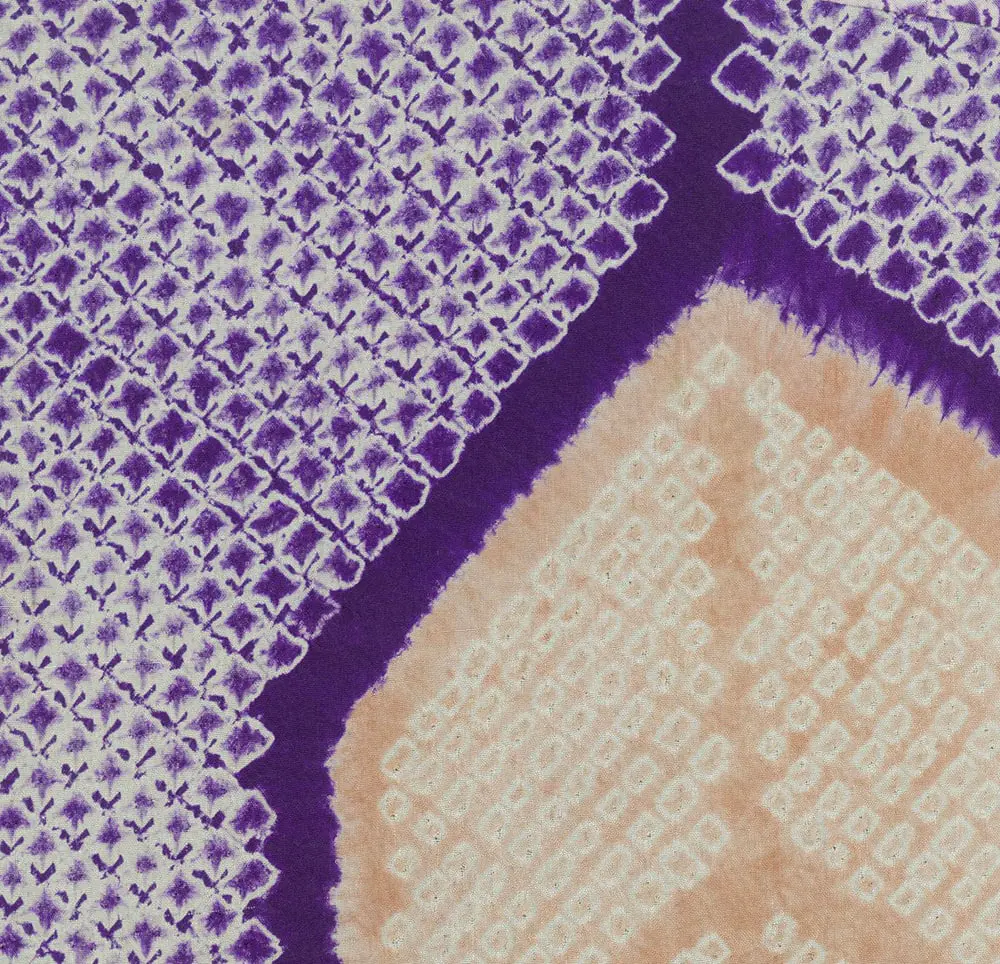
This delicate textile originates from Japan’s early Showa period (1930–1940) and is a scholarly example of the masterful application of resist-dyeing to classical motifs. Measuring 14.25 inches by 51 inches (36 cm x 130 cm), the panel is crafted from high-quality soft silk and remains in excellent condition. The composition features a bold, vertical arrangement of oversized arrow fletchings set against a densely patterned lavender-purple ground.
The visual narrative utilizes the shibori technique to create a highly textured and symbolic design. The arrow motifs, known as yagasuri, are a traditional pattern signifying steadfastness and protection, as an arrow shot forward never returns. These large fletchings are rendered in a soft cream with pale peach highlights, outlined by deep purple borders that provide a crisp, architectural definition. The background is composed of thousands of tiny, hand-tied kanoko (fawn-spot) dots, creating a rhythmic, pointillist effect that softens the rigid geometry of the arrows. This specific combination of large-scale graphic symbols and intricate, labor-intensive resist-work reflects the pre-war trend of revitalizing folk-art patterns for sophisticated urban apparel.

Payment Options: We primarily accept PayPal for all transactions. Credit and debit cards are not accepted. If you prefer to pay by personal check instead of PayPal, please note this preference in the "Additional comments" field when placing your order.Ordering Process
To receive your PayPal invoice, simply fill out the form.
Shipping Details: We ship all orders to the address associated with your PayPal payment. Please ensure your PayPal shipping address is current and accurate.A phone number is required during checkout, as our shipping carrier may need to contact you regarding delivery questions.Shipping RatesUnited States and Canada: $20International destinations (air mail): $40
