Copyright © 2026 Yorke Antique Textiles
.avif)

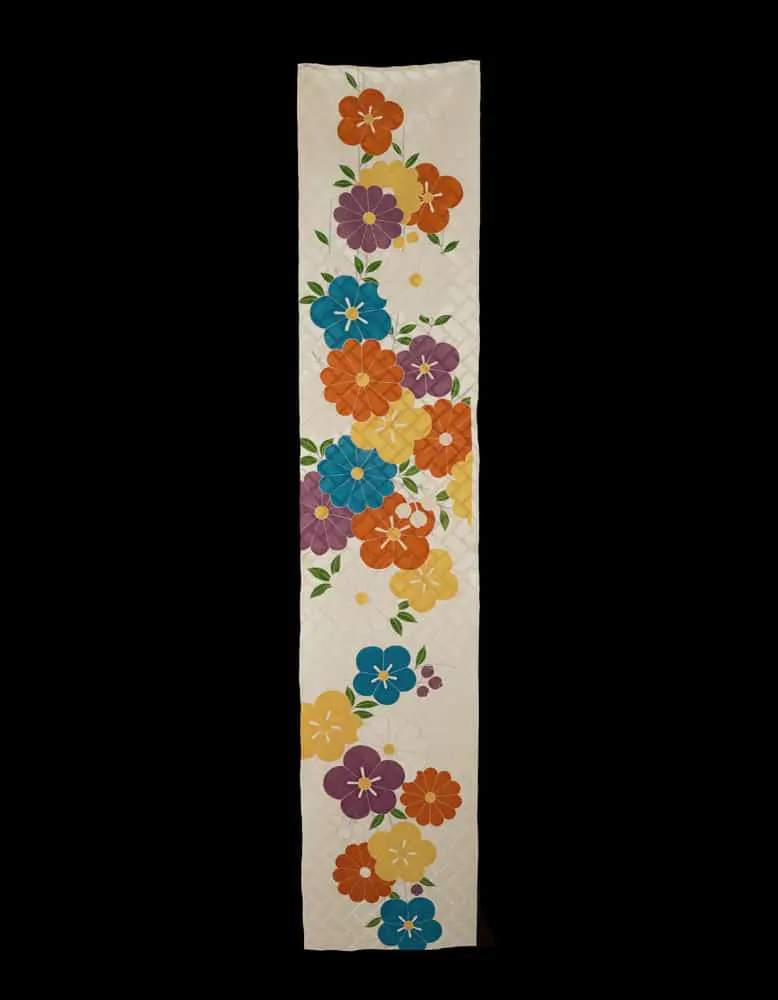
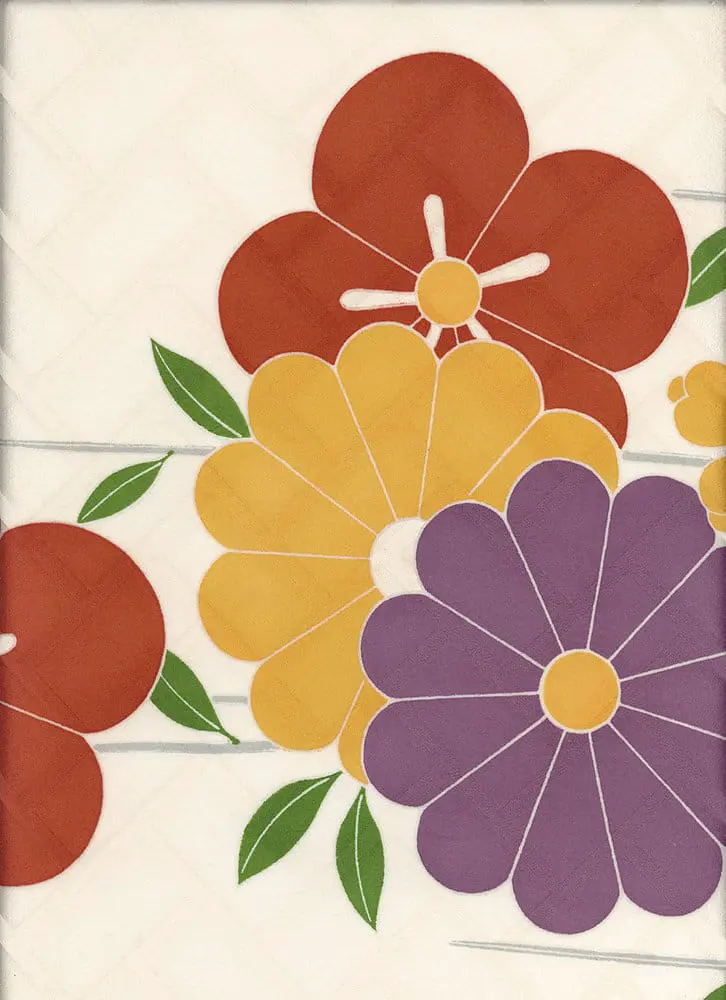
This radiant textile originates from Japan’s mid-Showa period (1950–1970) and is a scholarly example of the exuberant, high-chroma floral designs favored for furisode—the most formal style of kimono for young women. Measuring an impressive 14.5 inches by 87 inches (37 cm x 221 cm), this exceptionally long panel remains in excellent condition. The substrate is a soft, high-quality rinzu (silk damask), featuring a tonal geometric background weave that adds a subtle, shimmering depth to the ivory field.
The visual narrative is defined by a cascading vertical arrangement of stylized blossoms, including chrysanthemums and plum flowers, rendered in a vibrant mid-century palette. The composition utilizes jewel tones of cerulean blue, deep amethyst purple, pumpkin orange, and goldenrod yellow, creating a playful yet sophisticated floral stream. A defining luxury feature is the meticulous gold metallic outlining that defines the edges of each petal, providing architectural clarity and a regal finish. This combination of traditional botanical symbols with a bold, saturated color theory reflects the optimism and craftsmanship of post-war Japanese celebratory fashion.

Payment Options: We primarily accept PayPal for all transactions. Credit and debit cards are not accepted. If you prefer to pay by personal check instead of PayPal, please note this preference in the "Additional comments" field when placing your order.Ordering Process
To receive your PayPal invoice, simply fill out the form.
Shipping Details: We ship all orders to the address associated with your PayPal payment. Please ensure your PayPal shipping address is current and accurate.A phone number is required during checkout, as our shipping carrier may need to contact you regarding delivery questions.Shipping RatesUnited States and Canada: $20International destinations (air mail): $40
